Best Snorkeling Spots in Bora Bora: Where to See Fish, Rays and Coral
The best snorkeling spots in Bora Bora, from the Aquarium and Toopua coral gardens to the Anau manta area, the shark and ray shallows and Matira Beach. Which you can reach from shore, which need a boat, and how to visit each.
From the beach, Bora Bora’s lagoon looks like one huge swimming pool between the mountains and the outer reef. Underwater it is several different places: coral gardens full of butterflyfish and parrotfish, sandy shallows where stingrays and blacktip reef sharks gather, and, on the east side, a cleaning station where reef manta rays sometimes stop.
The catch is that the best snorkeling is rarely in front of the best beaches. Much of the shoreline is sand, and the richest reefs and wildlife areas are reached by boat. Matira Beach is lovely for a relaxed swim, but a single guided trip shows you a very different lagoon. This guide covers seven areas, what lives at each, who each one suits and how to get there.
The easiest way to see several of them in one morning is the Reef Discovery Half-Day Snorkel Tour: 3.5 hours, $135 per person, rated 5.0 from 1,050+ reviews on Viator, with recent guests describing a manta cleaning station, a large coral garden and a shark and ray stop. You can check dates for it just below.
Check Availability
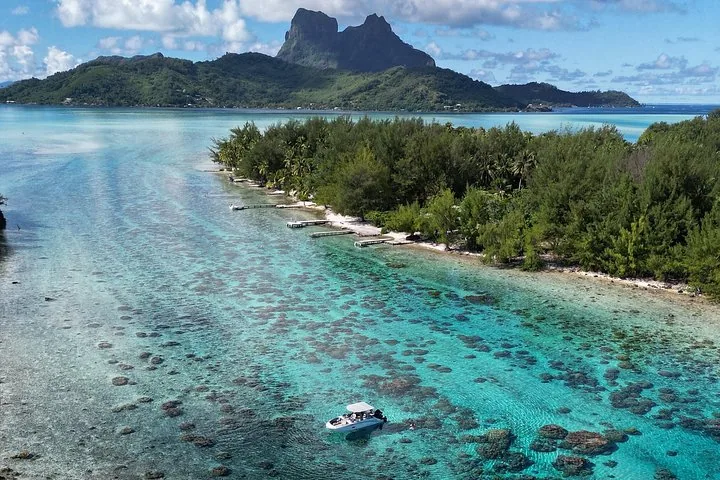
Reef Discovery Half-Day Snorkel Tour
- 5.0/5 (1,050+ reviews)
- 3.5 hours
- Free cancellation
- Operated by Reef Discovery
Includes Pickup and drop-off at your accommodation · Guide and guided snorkeling in the water · Snorkeling equipment including …
You'll choose your date and complete the booking on Viator. Free cancellation up to 24 hours before departure.
Same trip, also on GetYourGuide
From $143 per person · ★ 5.0 from 9 GetYourGuide reviews
Each platform sets its own price and collects its own reviews, so compare both before you book on Viator.
Quick answer: Where is the best snorkeling in Bora Bora?
For coral and tropical fish, the best all-round snorkeling is in the lagoon’s coral gardens, especially the Aquarium near Motu Piti Uu in the south and the reefs around Motu Toopua in the west. Our Bora Bora coral gardens guide covers those reefs in more depth.
For bigger animals, Anau on the east side is the best-known manta ray area, and guided lagoon trips visit shallow sandy stops where stingrays and blacktip reef sharks are seen on most days. Matira Beach is the easiest public place to snorkel without a boat, although its sandy shallows hold far less coral and fish than the boat-access reefs.
Air Tahiti Nui’s snorkeling guide names the Aquarium, Motu Toopua, Anau and Motu Tapu among Bora Bora’s main underwater sites.
Bora Bora’s best snorkeling spots at a glance
| Snorkeling area | Best for | Access | Suitable for |
|---|---|---|---|
| The Aquarium, Motu Piti Uu | Tropical fish and coral | Boat | Beginners to experienced |
| Motu Toopua coral gardens | Reef fish and coral formations | Boat, or from some resorts | Most confident swimmers |
| Anau manta ray area | Possible manta ray sightings | Guided boat recommended | Confident snorkelers |
| Shark and ray sandbanks | Stingrays and blacktip reef sharks | Boat | Beginners with a guide |
| Matira Beach and Matira Point | Easy, free shore snorkeling | Public beach | Beginners |
| Motu Tapu and nearby reef areas | Fish and reef-edge habitats | Guided boat | Experienced snorkelers |
| Resort lagoons and house reefs | Convenient repeat snorkeling | Resort guests | Varies by property |
Depth, currents, clarity and the sites a tour operator picks all change from day to day, so treat a named site as a likely stop, not a fixed one.
Other Experiences
Other experiences you might enjoy
More Bora Bora snorkeling tours, each with its own page and booking link.
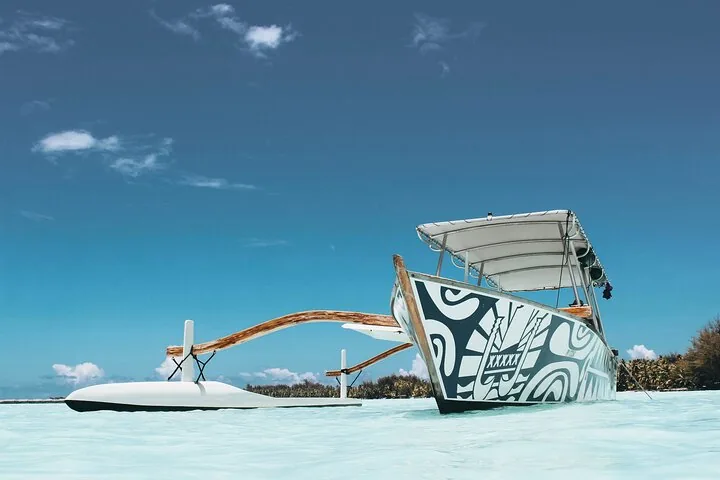
1. The Aquarium: Best for colorful tropical fish
Best for: colorful fish, underwater photography and a classic first Bora Bora snorkel.
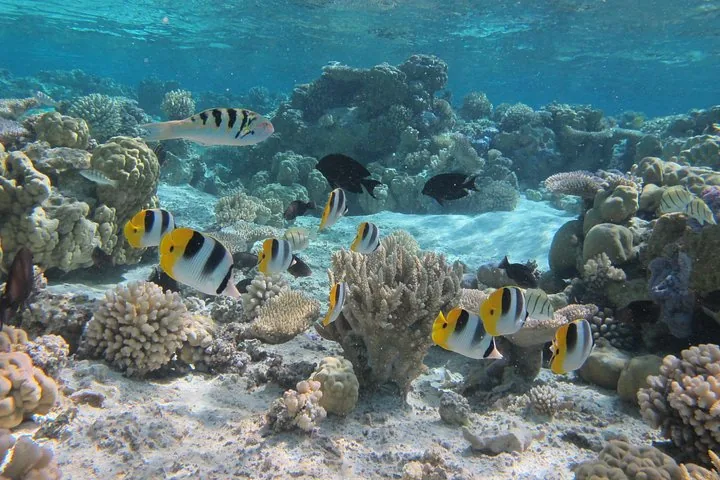
The Aquarium earns its name. Slip under the surface and tropical fish move between coral heads all around you, with sunlight falling on the pale sand patches in between.
It sits in the southern lagoon near Motu Piti Uu and is one of the best-known snorkeling areas in Bora Bora, so many lagoon tours stop here. The appeal is the variety of life packed into a small area.
What can you see?
Depending on the exact spot and the day, you may see butterflyfish, parrotfish, surgeonfish, sergeant majors, Moorish idols and many other reef fish. Some coral areas also hold giant clams, anemones and small invertebrates.
The mix of coral and white sand makes for good photos when visibility is clear.
Is the Aquarium suitable for beginners?
Often, yes. Guides can pick sheltered parts of the reef, and many lagoon tours carry flotation vests or noodles.
The Aquarium is not a shallow pool, though. Conditions vary across the site, and you will usually be swimming, not standing. For a first-time snorkeler, a guided visit is a better choice than trying to get there alone.
How do you get there?
Most visitors arrive on a snorkeling or lagoon tour. The site may look close to land on a map, but swimming across channels used by boats is not a safe shortcut.
Our recommendation: put the Aquarium near the top of your list on a first visit. It gives you the classic coral-and-fish snorkel, and the trip does not depend on any one animal turning up.
What to look for in a tour: a half-day trip with at least one stop named as a coral garden or reef snorkel. The Reef Discovery half day (above) makes that stop, and our Coral Garden snorkeling page lists the other tours that do.
2. Motu Toopua Coral Gardens: Best for reef diversity
Best for: exploring coral formations and spotting a range of reef fish.
Motu Toopua rises from the lagoon on Bora Bora’s west side, with coral gardens around parts of the islet. Here the reef itself is the attraction: coral structures shelter small fish, and the clearer sandy patches let you watch larger animals moving through. Air Tahiti Nui lists the Toopua coral garden as one of the island’s main snorkeling spots.
What marine life can you expect?
Look for butterflyfish, parrotfish, damselfish and surgeonfish. Depending on the conditions, rays may pass through nearby waters.
Eagle rays are sometimes seen over the deeper lagoon areas here, but they are a lucky extra. The reef fish are the part you can count on.
What makes it different from the Aquarium?
Both are excellent for tropical fish, but the coral formations, depth and underwater scenery differ. The Aquarium is the classic snorkeling stop. Toopua suits visitors who have already done the Aquarium and want to see a different section of the lagoon and more of its reef.
Can you snorkel here without a tour?
Access is the problem. Motu Toopua is separated from the main island by water, and parts of its shoreline belong to resorts, including the Conrad Bora Bora Nui. Unless you are staying at a property with lagoon access here, the practical way in is a boat trip.
Our recommendation: a good second reef for visitors who have already snorkeled the Aquarium and want a different one.
What to look for in a tour: a lagoon trip that names several reef stops, not one built almost entirely around the sharks and rays.
3. Anau: Best chance of seeing manta rays
Best for: wildlife lovers hoping to see reef manta rays.
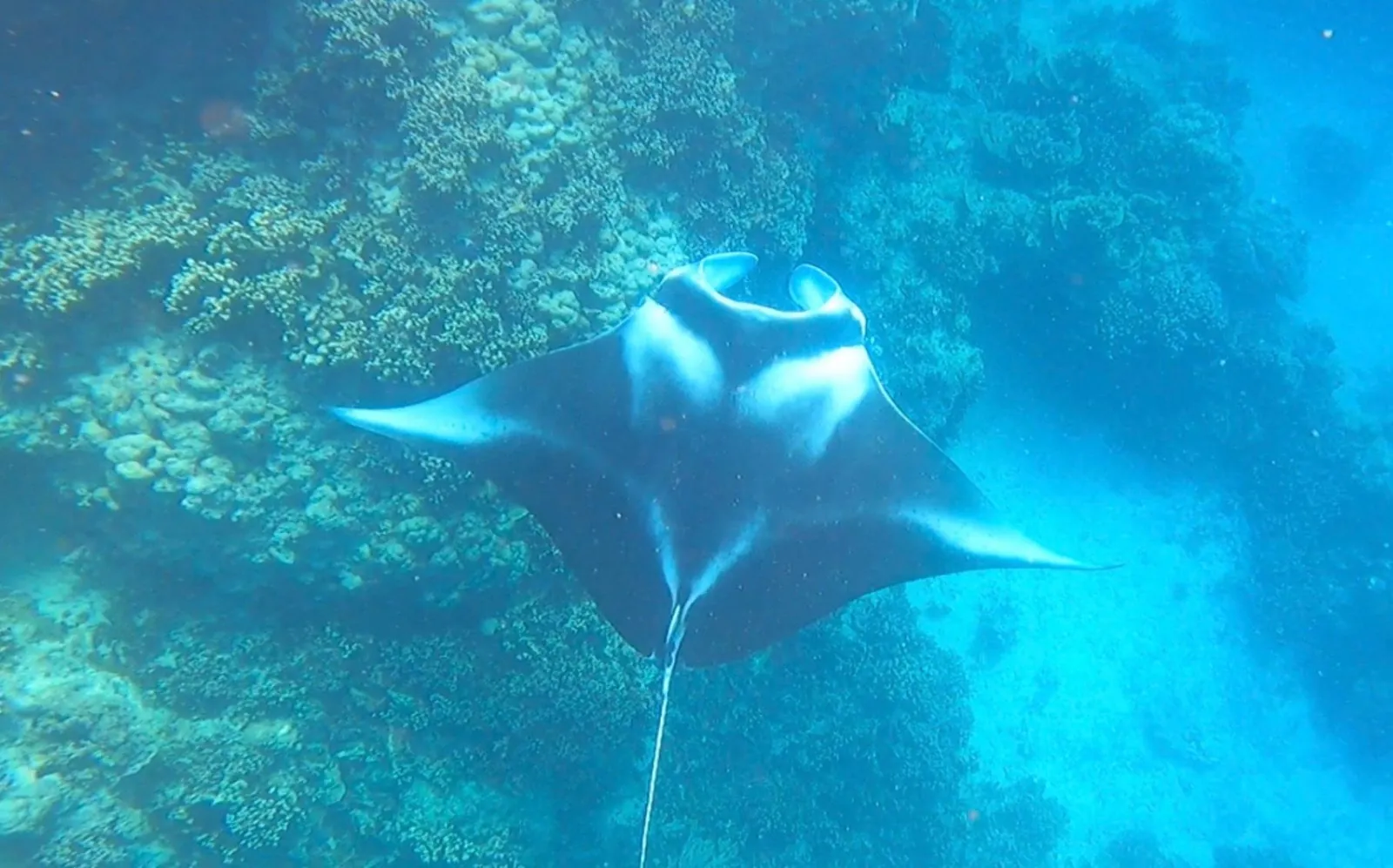
Few things in the lagoon match a manta passing beneath you. They have huge wing-like fins and swim with slow, effortless strokes, as if flying through the water.
Bora Bora’s eastern lagoon near Anau is known for reef manta rays. The area includes a cleaning station, where mantas slow down or hover while small fish pick parasites off their skin. PADI’s Anau site page places the cleaning station in a coral garden about 6 m (20 ft) deep, beside deeper channels. Our manta ray snorkeling in Bora Bora guide covers the mantas, the season and how to behave around them.
Can you really snorkel with manta rays in Bora Bora?
Yes, sometimes. Mantas can be watched from the surface, but only when they are there, the water is clear and the animals are within sight.
A cleaning station is not a show with set times. Some days the guide finds a manta quickly. On others the mantas are absent or too deep to see well from the surface.
How deep is the water?
Anau has coral areas, reef slopes and deeper channels. At the cleaning station, a manta may be several meters below you.
When visibility is good you can still watch from the surface, but that is not the same as swimming beside a manta in shallow water.
Is Anau suitable for beginners?
That depends on where the operator stops. Because of the deeper water and the currents that can run here, go with a guide, and be comfortable swimming where you cannot stand.
How should you behave around manta rays?
Keep your distance and stay calm. Do not hover directly over a manta at a cleaning station, and never chase it, touch it or block its path. A good guide puts the manta’s behavior ahead of getting you the closest photo.
Our recommendation: if mantas are your main reason to snorkel here, book a tour whose listing names a manta stop, and ask what other reef you will snorkel if the mantas are not around. Our manta ray snorkeling tours page compares the listings that name one.
What to look for in a tour: a small-group or private trip that names manta observation, not one that only lists rays among possible wildlife.
4. Shark and Ray Sandbanks: Best for close-up wildlife encounters
Best for: seeing blacktip reef sharks and stingrays in shallow lagoon water.
If you have seen photos of people standing in clear water while stingrays glide around them and sharks cruise nearby, they were almost certainly taken at one of Bora Bora’s shark and ray stops. These shallow sandy areas are a different experience from the coral gardens. You are not studying small fish among coral heads; you are watching larger animals move across open water.
What can you see?
Blacktip reef sharks and stingrays are the main animals on these stops. Blacktips are usually wary of people, and the dark tips on their fins make them easy to recognize. The stingrays tend to stay close to the sandy bottom.
Some trips also report lemon sharks. They are larger, and around Bora Bora they are mostly seen by divers in deeper water, so do not expect one. Our guide to swimming with sharks in Bora Bora explains which sharks you will meet and how safe the stop is.
Is this real snorkeling?
Sometimes. At the shallowest sites you stand in the water or float at the surface while the animals pass. Other itineraries make deeper swimming stops.
That difference matters if you are booking for underwater photos or a long snorkel.
Are shark-and-ray tours ethical?
Practices vary between operators. Some trips use food to draw the rays or sharks in, while others watch the animals without feeding them.
If that matters to you, ask before booking whether the operator feeds the animals, whether guests may touch them and whether the guides follow a no-chasing rule. Feeding stops are still sold, but we recommend trips that watch the animals without handling them.
Is it safe?
The shallow water makes the stop feel easy, but these are still wild animals. Keep your hands to yourself, never try to hold or ride a ray, shuffle your feet on the sand so you do not step on one, and follow the guide.
If you cannot swim, tell the operator before booking; do not assume a shallow site will suit you.
Our recommendation: a memorable wildlife stop, best combined with a coral garden on the same trip. Our shark and stingray tours page compares the tours built around it.
What to look for in a tour: a three-stop lagoon trip covering a coral garden, reef sharks and stingrays.
5. Matira Beach and Matira Point: Best snorkeling from shore
Best for: free snorkeling, beginners and a relaxed swim without a boat.
Not every swim needs a booked trip. If you want to walk straight from the sand into the lagoon, Matira Beach at the southern tip of the main island is the obvious place to start. It is Bora Bora’s best-known public beach, with soft white sand, shallow turquoise water and long views across the lagoon. Tahiti Tourisme lists it as a public beach, and it is one of the few places where you can snorkel on your own without staying at a resort.
What can you see at Matira Beach?
Mostly sand, with occasional coral heads, seagrass and scattered marine life. You may see small reef fish, wrasse or butterflyfish around the coral, but the long sandy stretches look empty next to the Aquarium.
Enjoy Matira as a beautiful beach where snorkeling is a bonus.
Where is the best place to enter the water?
Pick an easy sandy entry and look for patches of coral or rock you can reach safely.
Stay out of boat channels, roped-off areas and anywhere with a strong current. Conditions off Matira Point can differ from the sheltered beach, and swimming farther from shore does not mean better snorkeling.
What about snorkeling at sunset?
Matira is famous for its sunsets, but late afternoon is not the best time to snorkel. Go in good daylight with clear, calm water, and save the sunset for the beach.
Our recommendation: come to Matira for the setting and an easy swim. If plenty of fish and coral matter to you, add at least one guided lagoon trip.
Cost: free public beach access.
6. Motu Tapu and nearby reef areas: Best for experienced snorkelers
Best for: more adventurous marine-life watching with an experienced local guide.
Motu Tapu is a small islet near Teavanui Pass, the reef passage on Bora Bora’s west side. Bright turquoise water gives way to darker channels and the open Pacific beyond the reef. Where moving water brings nutrients through, some reef-edge areas offer good snorkeling, and Air Tahiti Nui mentions the fish life around Motu Tapu that the currents bring in.
What can you expect to see?
Depending on the spot and the day, you may see schools of fish, reef species and larger animals moving through the nearby channels. It is not one clearly defined beginner site, though.
Is it safe for independent snorkeling?
No. We do not recommend snorkeling near Teavanui Pass on your own. Reef passes can carry strong currents and boat traffic, and water that looks calm from the surface can become hard to swim in quickly.
Go with a guide who knows the pass, and expect a good operator to call off the stop on some days.
Can you walk onto Motu Tapu?
Do not assume so. Landing on the islet may be restricted, and snorkeling nearby does not include permission to go ashore.
Our recommendation: snorkel here only when a guided itinerary includes it. On a first visit, the Aquarium, Toopua and the sheltered wildlife stops come first.
7. Resort lagoons and house reefs: Best for convenient everyday snorkeling
Best for: travelers who want to snorkel often without booking a boat each day.
A luxury resort does not guarantee good snorkeling under your bungalow. Some overwater villas stand over sandy lagoon floor, where the color and clarity of the water are the main attraction, not the coral. Other resorts have reachable reef areas, protected snorkeling zones or managed marine habitats.
One example is the Lagoon Sanctuary at the Four Seasons Resort Bora Bora. The resort describes an inner lagoon home to more than 100 marine species, with guided snorkeling sessions and coral restoration work. Its marine activities have closed for improvements at times, so check current access directly with the Four Seasons lagoon discovery page or the resort.
Are overwater bungalows good for snorkeling?
They can be, but the individual bungalow’s position matters. Steps into the lagoon make swimming easy; they do not guarantee a healthy reef below. Our where to stay in Bora Bora guide compares the resorts, and its overwater bungalow comparison explains what is under the decks.
Before choosing a resort for snorkeling, ask:
- Is there a house reef or a marked snorkeling area?
- Can guests get in from the beach, or only from certain pontoons?
- Are masks and fins available to borrow?
- Are there restrictions around the overwater villas or boat channels?
- Does the resort run guided snorkeling or give access to a managed lagoon sanctuary?
Is resort snorkeling enough?
If you like to swim every day, good resort snorkeling is a real advantage. Even an excellent house reef rarely replaces a lagoon trip that visits several different habitats, though.
Our recommendation: choose your hotel for location, comfort and easy water access, and book a dedicated snorkeling trip if you want to see the lagoon’s wider marine life.
Map: Where are Bora Bora’s snorkeling spots?
The seven areas sit around the lagoon roughly like this, starting in the south and going clockwise:
- South: Matira Beach and Matira Point at the tip of the main island, with the Aquarium off Motu Piti Uu to the east of it.
- West: the coral gardens around Motu Toopua, opposite Vaitape, and Motu Tapu near Teavanui Pass, the lagoon’s main opening to the ocean.
- East: the Anau manta area, inside the lagoon off the village of Anau, and the eastern motu resorts with their house reefs.
- Shark and ray stops: not marked here, because operators use different sandbanks depending on the conditions.
These are rough positions, not exact snorkeling entry points. Resort marine habitats may be open only to guests.
Snorkeling from shore vs snorkeling by boat: Which is better?
This is the main practical choice when you plan to snorkel in Bora Bora. The island offers both, and they are not interchangeable.
| Factor | Shore snorkeling | Guided boat snorkeling |
|---|---|---|
| Cost | Usually free at public beaches | Paid trip, from about $108 per person for a short shared boat |
| Convenience | Go when conditions suit you | Set departure times |
| Coral variety | Limited at most public beaches | Access to the established coral gardens |
| Sharks and rays | Possible, but hard to predict | Guides know where they gather |
| Manta rays | Unlikely from a public beach | Better chance on trips that name a manta stop |
| Beginners | Good where the entry is easy | Good on well-chosen trips |
| Equipment | Bring or rent your own | Usually included |
| Main advantage | Flexibility and no cost | More kinds of habitat in one outing |
When shore snorkeling makes sense
If you are staying near Matira Beach, bring a mask and swim whenever the water is calm. There is no reason to pay for a boat every time you want to look underwater. The same goes for a resort with a good snorkeling area: use it.
When a boat excursion is worth the money
A boat trip pays off when you want several environments in one outing. The best itineraries combine distinct habitats, such as a coral garden, a sandy ray area and a reef or manta stop, instead of three places that look alike.
For most first-time visitors, we recommend one well-chosen half-day lagoon snorkeling trip, and beach snorkeling on the other days. If you have never snorkeled before, our snorkeling for beginners guide covers the gear, the safety rules and how to practice first.
Best Bora Bora snorkeling tours for reaching these spots
You do not need the most expensive trip to snorkel well. Look at the itinerary, the time in the water, the group size and whether the guide changes the route to suit the day. These three tours reach several of the spots above.
Reef Discovery Half-Day Snorkel Tour (Viator): 3.5 hours, $135 per person, rated 5.0 from 1,050+ reviews. A guided snorkel circuit with several stops, which recent guests describe as a manta cleaning station, a large coral garden and a shark and ray shallow. A strong first trip if you would rather snorkel than sit through a long motu lunch.
Bora Bora: Lagoon Tour and Snorkeling Experience (GetYourGuide): 4 hours, $133 per person, rated 4.8 from 100+ reviews. Lagoon Service’s loop around the island, with gear, drinks and pickup included. Guests usually describe three snorkel sites: a shallow with blacktip reef sharks and stingrays, a coral garden and a third spot that varies. A good pick if you want coral, sharks and rays in one morning and prefer to book on GetYourGuide.
Full-Day Snorkel Cruise with Sharks, Rays and BBQ Lunch (Viator): 6 hours, $155 per person, rated 4.8 from 740+ reviews. Several snorkel stops, island views and a BBQ lunch on a motu, with pickup included. Better for a full day out on the lagoon than for the most time in the water.
Inclusions, stops, pickup and cancellation terms change, and operators move snorkel sites to suit the weather and the wildlife, so check the listing for your date before you book.
How to choose a snorkeling tour
| Your priority | Look for | Our pick |
|---|---|---|
| Most time underwater | A snorkeling-focused half day | Reef Discovery half day, $135, 5.0 from 1,050+ reviews |
| Sharks, rays and tropical fish | A three-stop lagoon trip | Lagoon Tour and Snorkeling Experience, $133, 4.8 from 100+ reviews |
| Possible manta ray sightings | A listing that names a manta stop | Full-Day Snorkel Tour with Lunch on Motu Fanfan (Anau stop), $145, 4.9 from 190+ reviews |
| Beginners or families | A small group, flotation help and sheltered sites | Half-Day Eco Snorkeling Small-Group Tour, $133, 5.0 from 110+ reviews, eight guests at most |
| Photography | A small-group or private boat | Private Lagoon Snorkeling Experience, $609 per boat for up to 4, 4.9 from 170+ reviews |
| A relaxed trip for two | A private boat with stops you choose | Private Half-Day Snorkeling Tour by Boat, $650 per boat for up to 4, 5.0 from 120+ reviews |
| Snorkeling plus island culture | A full day with a motu lunch | Full-Day Lagoon Tour with Snorkeling and Motu Lunch, $174, 5.0 from 1,740+ reviews |
If one animal matters most to you, ask the operator before booking. A general lagoon tour may list manta rays as possible wildlife without ever stopping at a manta area. Our private snorkeling tours page compares the private boats in more detail.
What marine life can you see snorkeling in Bora Bora?
The lagoon’s strength is its variety of habitats. Sandy flats, coral heads, deeper channels and reef edges each draw different animals.
Tropical reef fish. The easiest marine life to see. Look for butterflyfish, parrotfish, surgeonfish, damselfish and sergeant majors around the coral gardens. They are a good goal for beginners, because you are not relying on finding one large animal that moves around.
Blacktip reef sharks. A regular sight on the shark and ray trips. Their black-tipped fins and modest size make them easy to watch from a respectful distance.
Stingrays. Found over the sandy lagoon floor and on most guided trips. Watch them glide across the bottom without touching, chasing or feeding them.
Manta rays. Far less predictable than reef fish. These large filter feeders visit certain cleaning and feeding areas, including Anau. A sighting can be extraordinary, but no one can promise one.
Eagle rays. Sometimes seen over the deeper lagoon, alone or in groups. Their spotted backs and long tails set them apart from stingrays.
Sea turtles. Possible around the reefs, but not a reliable sighting on every trip. Give a turtle space and never block its way to the surface.
Can you see dolphins or whales while snorkeling?
Dolphins turn up occasionally around Bora Bora, but do not book a standard lagoon snorkel expecting them.
Humpback whales pass through French Polynesian waters each year, generally between July and November. Whale watching, and any permitted in-water whale activity, is a separate specialist trip with its own rules, not part of a coral garden snorkel. Our best time to visit Bora Bora guide covers the whale season.
Best time of year for snorkeling in Bora Bora
You can snorkel in Bora Bora all year. The water stays warm, at about 25 to 30°C (77 to 86°F) through the year, so the main difference between seasons is the weather on the surface: the drier months against the hotter, wetter season.
| Period | Typical conditions | Snorkeling outlook |
|---|---|---|
| May–October | Drier, with southeast trade winds | Often clear water, but some areas can be windy or choppy |
| April and November | Transition months | Can be good, with more changeable weather |
| December–March | Hotter, wetter and more humid | Snorkeling still runs, but rain and runoff can cut visibility |
Which month is best?
For a balance of weather and snorkeling, May, June, September and October are good months to aim for. July and August are popular too, but can be breezy.
No month guarantees sightings or perfect visibility. A calm day in the wet season can be excellent, while strong trade winds in the dry season can make some sites uncomfortable.
Morning or afternoon: When should you snorkel?
Morning is often a good start, because the water can be calmer before the afternoon wind picks up. The best time still depends on the site, the wind direction, the currents and the day’s weather. Local guides can often move to a sheltered reef when one side of the lagoon is exposed, so a morning tour is not always better than an afternoon one.
Is snorkeling in Bora Bora safe?
Bora Bora has many sheltered coral gardens and shallow lagoon areas that suit recreational snorkeling. The barrier reef does not make the whole lagoon free of currents, hazards or boats, though.
Essential snorkeling safety tips
- Choose a site that matches your swimming. Beginners should start in sheltered spots with a guide.
- Wear a well-fitted mask and use flotation when you need it. A life jacket or snorkel vest reduces fatigue.
- Stay out of reef passes and strong currents. Never try to swim into Teavanui Pass on your own.
- Watch for boats. Do not swim across lagoon channels to reach a far coral garden.
- Do not stand on coral. It is living habitat and is easily damaged.
- Keep a respectful distance from sharks, rays and other marine life.
- Protect yourself from the sun. A long-sleeved rash guard covers your back and shoulders on long snorkels.
- Snorkel with a companion or a guide. Conditions change, and even strong swimmers get tired.
Are sharks dangerous in Bora Bora?
Snorkelers see blacktip reef sharks often, and the sharks usually avoid people. That does not make them pets. Never grab, corner or feed a shark, and do not get in during a feeding unless a qualified operator has explained the risks and the procedure.
If sharks make you nervous, choose a tour built around reef fish and coral instead.
What about coral cuts and sea urchins?
Both need care. Coral can cause painful cuts that get infected, and sea urchin spines go into the skin. Stay horizontal over the reef, keep your fins well clear of it, and do not put your hands or feet on anything underwater.
What to bring snorkeling in Bora Bora
On a guided boat trip, the operator usually provides basic snorkel gear. A few items of your own still help:
- A well-fitting mask: useful if rental masks tend to leak on you.
- A rash guard: sun protection without relying only on sunscreen.
- Reef-conscious sunscreen: pick one that meets local rules, and let clothing do most of the work.
- A waterproof camera: the coral gardens make for good photos.
- A towel and a dry bag: to keep your things dry on the boat.
- Drinking water: especially on longer trips.
- Motion-sickness tablets: if boats bother you, following medical advice.
Some tours provide masks but not fins, and others provide the full set, so check the inclusions.
How to plan the perfect snorkeling day in Bora Bora
On a first visit, one guided snorkel plus free time on the beach works well.
Suggested half-day itinerary
- Morning, first stop: a coral garden. Snorkel among reef fish and coral while you are fresh. The guide picks a reef that suits the day’s conditions.
- Next stop: rays or reef sharks. A different habitat, where watching the animals is the point. Keep your expectations flexible.
- Final stop: another snorkeling area. Depending on the route, a second reef or another wildlife stop.
- Afternoon: Matira Beach. Swim, lie in the sun or take a gentle shore snorkel, and stay for sunset if the weather allows.
What if you have two days?
Spend one morning on a multi-stop snorkeling trip. Use the second day for Matira Beach, your resort’s reef, or a private boat built around one interest, such as photography or the mantas. That covers more of the lagoon without filling every day with fixed plans.
Frequently asked questions about snorkeling in Bora Bora
Where is the best snorkeling in Bora Bora?
The Aquarium near Motu Piti Uu and the coral gardens around Motu Toopua are among the best spots for tropical fish and coral. Anau is the main area for manta rays, and Matira Beach is the easiest public place to snorkel from shore.
Can you snorkel from the beach in Bora Bora?
Yes. Matira Beach gives public access to the lagoon, and some resorts have their own snorkeling areas. Many of the richest reefs are reached mainly by boat, though.
Is Bora Bora good for snorkeling?
Yes. The lagoon has coral gardens, tropical fish, stingrays, reef sharks and areas that manta rays visit. You see the most by visiting several sites with different habitats.
Do you need a snorkeling tour in Bora Bora?
Not to snorkel from a public beach or a resort reef. A guided trip is the practical way to reach most of the coral gardens and wildlife areas, though.
Can beginners snorkel in Bora Bora?
Yes. Several sheltered lagoon areas suit beginners, especially with a guide and a flotation vest. Beginners should stay away from exposed channels and strong currents and should not try to swim out to offshore reefs alone.
Can non-swimmers join Bora Bora snorkeling tours?
Some operators take non-swimmers and offer viewing from the boat or supported time in shallow water. Others ask for confident swimmers. Check before booking, and do not assume a life jacket alone makes a trip suitable.
Where can you snorkel with manta rays in Bora Bora?
Anau, on the east side of the lagoon, is the best-known manta area. A guided tour is the practical way to reach it, but sightings depend on the conditions and the mantas. Our manta ray snorkeling in Bora Bora guide has the details.
Are there sea turtles in Bora Bora?
Yes, sea turtles live in the waters around Bora Bora. Snorkelers and divers meet them now and then, but standard lagoon tours cannot promise one.
Is snorkeling better in Bora Bora or Moorea?
Both islands have excellent snorkeling. Bora Bora is best known for its lagoon, its coral garden trips and its shark and ray stops. Moorea also has lovely lagoon snorkeling, with some easy shore-access spots. Bora Bora suits you better if you want guided wildlife trips, and Moorea if you would rather snorkel on your own. See Bora Bora vs Moorea snorkeling compared for reefs, wildlife and costs.
Can you snorkel under an overwater bungalow?
Sometimes. Some bungalows have steps into the lagoon, but the bottom may be mostly sand, not coral. Check the resort’s rules and whether your bungalow sits in a marked swimming area.
How long should a Bora Bora snorkeling tour last?
A half day of about three to four hours is enough for many visitors to see several habitats. Full-day trips add sightseeing, breaks, food and time on a motu.
Is snorkeling free in Bora Bora?
Snorkeling from a public beach such as Matira is free if you bring your own gear. Guided boat tours and some resort facilities cost extra.
Final verdict: Where should you snorkel in Bora Bora?
If the underwater side of Bora Bora is why you came, do not spend the whole trip snorkeling over the sand in front of your hotel. The lagoon’s marine life is spread across different habitats, and that variety is why snorkeling here is so good.
For colorful fish, head for the Aquarium or another established coral garden. For manta rays, book a trip that names a stop at Anau, knowing that no one can promise a sighting. For sharks and stingrays, a responsible guided lagoon trip is the simplest way to see them. And when you want the water without a schedule, there is always Matira Beach.
Our favorite approach is to book one snorkeling-focused lagoon tour early in your stay, then enjoy the beaches and your resort’s lagoon at your own pace. Booking early also leaves room for a second try if the weather cancels the first trip.
More Bora Bora snorkeling guides
- Bora Bora coral gardens: the Aquarium, Toopua and Anau reefs in depth, and how to visit each.
- Manta ray snorkeling in Bora Bora: the Anau cleaning station, the season and how to behave around mantas.
- Best Bora Bora snorkeling tours: every type of snorkeling trip compared.
- Swimming with sharks in Bora Bora: what the shark stop is like and how safe it is.
- Bora Bora lagoon tours: half-day, full-day, outrigger, private and sunset trips explained.
Get in the Water With the Rays
Free cancellation up to 24 hours before. Reef Discovery Half-Day Snorkel Tour from $135 per person.
Check Availability & Book