Best Time to Visit Bora Bora: Weather, Snorkeling and Month-by-Month Guide
May to October is Bora Bora's drier season, and September is our pick for a snorkeling trip. Rainfall, wind, crowds and prices compared month by month.
The best time to visit Bora Bora is generally from May to October, the island’s drier season, with lower humidity and plenty of good days on the lagoon. For a snorkeling trip, the wind matters as much as the rain, and that narrows the choice a little.
September is our pick. Its rainfall is historically low, the busiest Northern Hemisphere summer vacation period is winding down, and the wetter season is still about two months away. May and October are good choices too, especially if you want to balance the weather with resort availability.
July and August bring some of the driest weather of the year, but they are popular travel months, and the southeast trade winds can make exposed stretches of water surprisingly choppy.
Bora Bora doesn’t close for the rainy season either. In November, December or February you can still snorkel over coral gardens, take a boat around Mount Otemanu and spend sunny afternoons on Matira Beach; you’ll need more flexibility with the weather. Whatever month you pick, book your snorkel trip for early in your stay. The Reef Discovery Half-Day Snorkel Tour below chooses its snorkel spots on the day and can be cancelled free up to 24 hours before.
Check Availability
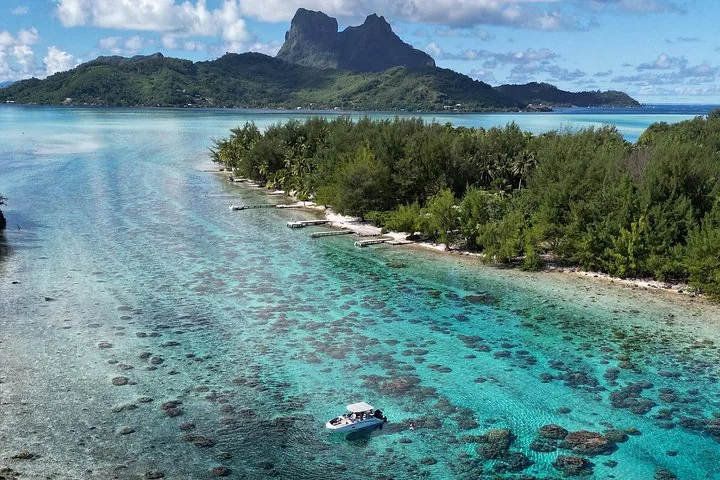
Reef Discovery Half-Day Snorkel Tour
- 5.0/5 (1,042 reviews)
- 3.5 hours
- Free cancellation
- Operated by Reef Discovery
Includes Pickup and drop-off at your accommodation · Guide and guided snorkeling in the water · Snorkeling equipment including …
You'll choose your date and complete the booking on Viator. Free cancellation up to 24 hours before departure.
Same trip, also on GetYourGuide
From $143 per person · ★ 5.0 from 8 GetYourGuide reviews
Each platform sets its own price and collects its own reviews, so compare both before you book on Viator.
Best months for each kind of trip
| Your priority | Best months to consider | Why |
|---|---|---|
| Best overall weather | June–September | Historically the driest part of the year |
| Best balance of weather and crowds | May, September, October | Good seasonal weather outside some peak holiday dates |
| Snorkeling and lagoon tours | May–October | Generally good weather, with wind and currents varying by site |
| Warmest swimming | December–March | Warmer water, although rain and humidity increase |
| Lower hotel prices | February–April, November | Possible off-peak offers, outside busy dates |
| Honeymoon or luxury resort | May, June, September, October | Good weather with time to enjoy the resort |
| Humpback whale watching | July–November | Whales are seasonally present in French Polynesia |
| Cultural festivals | July | Heiva celebrations and Polynesian cultural events |
| Fewer visitors | February–April, November | Often quieter than the main dry-season holiday period |
Our pick is September. It is one of the driest months in the airport’s long-term averages, and you get the lagoon before the wetter season sets in. If your dates are flexible, look at May or October as well.
Bora Bora is tropical, though, and no month guarantees unbroken sunshine. Even a dry-season day can bring strong wind or showers, so check the forecast for both before each boat day.
Other Experiences
Other experiences you might enjoy
More Bora Bora snorkeling tours, each with its own page and booking link.
Understanding Bora Bora’s two seasons
Bora Bora sits in the South Pacific, in French Polynesia’s Society Islands. Because it is south of the equator, its seasons are the reverse of those in North America and Europe.
The island doesn’t have four distinct seasons. The climate is usually divided into a drier, slightly cooler period and a warmer, wetter one.
Dry season: May to October
This is the classic time to visit Bora Bora. Temperatures stay warm, humidity is generally lower, and there is much less rain than in the wetter months.
June, July, August and September are historically the driest months, with average rainfall of about 62–93 mm (2.4–3.7 in) a month at the airport weather station. January, by comparison, averages about 272 mm (10.7 in).
The drier season suits anyone planning several days outdoors: snorkeling, sightseeing by boat, visiting Matira Beach, exploring the main island or relaxing at an overwater resort.
One thing to know before you book: dry doesn’t mean calm.
The southeast trade winds, known locally as the mara’amu when they blow especially strong or persistent, can pick up during the cooler months. They are a welcome break from the heat, but they can also make exposed parts of the lagoon choppy.
A boat tour may still run on those days, but your guide may pick sheltered snorkeling sites over exposed ones. That is why July or August doesn’t automatically mean the best snorkeling visibility.
Wet season: November to April
The wetter season brings higher temperatures, more humidity and more frequent rain. December and January are historically the wettest months, although rainfall varies a lot from year to year.
You might get a heavy tropical shower followed by sunshine, or a weather system that keeps conditions unsettled for longer. This is also when the island looks its greenest.
The lagoon stays warm enough for snorkeling, and resorts, restaurants and excursions generally keep operating all year.
The main drawbacks are less predictable weather, more humidity and a higher chance of having to move a boat trip. If your dates are flexible and you find a good hotel deal, a wet-season trip can still work well.
Bora Bora weather month by month
The table uses historical climate normals for Bora Bora Airport on Motu Mute, published by the Japan Meteorological Agency. The temperatures are monthly means, not daytime highs. August is the driest month at about 62 mm and January the wettest at about 272 mm.
| Month | Mean air temperature | Average rainfall | Overall assessment |
|---|---|---|---|
| January | 27.9°C / 82°F | 272 mm (10.7 in) | Very wet, humid |
| February | 28.1°C / 83°F | 220 mm (8.7 in) | Warm, wet |
| March | 28.3°C / 83°F | 188 mm (7.4 in) | Warm, gradually drier |
| April | 28.1°C / 83°F | 143 mm (5.6 in) | Transitional, often good value |
| May | 27.4°C / 81°F | 132 mm (5.2 in) | Drier season begins |
| June | 26.7°C / 80°F | 93 mm (3.7 in) | Generally excellent |
| July | 26.2°C / 79°F | 68 mm (2.7 in) | Dry, busy, sometimes windy |
| August | 26.0°C / 79°F | 62 mm (2.4 in) | Driest month, popular |
| September | 26.3°C / 79°F | 65 mm (2.6 in) | Excellent overall balance |
| October | 26.7°C / 80°F | 116 mm (4.6 in) | Good shoulder-season choice |
| November | 27.5°C / 82°F | 150 mm (5.9 in) | Warmer, wetter transition |
| December | 27.7°C / 82°F | 246 mm (9.7 in) | Wet, especially around holidays |
These averages are a useful guide to the seasonal pattern, but individual years can differ a lot, and they can’t predict the weather on your trip.
January: tropical heat and heavy rain
January is one of the wettest months in Bora Bora. Expect warm, humid weather and a greater chance of heavy showers. The lagoon is still beautiful between showers, but runoff, stirred-up sediment and rough water can cut visibility for a while.
If you travel in January, don’t fill every day with non-refundable outdoor activities. Choose a resort you’ll enjoy even when the weather isn’t ideal, and book excursions with reasonable cancellation or rescheduling terms.
Best for: Flexible travelers who find a good hotel offer.
Less suitable for: Anyone expecting clear skies throughout a short honeymoon.
February: warm water and possible deals
February is still well within the wetter season. The air is warm and the water is among the warmest of the year. Swimming and snorkeling are very much possible, but weather interruptions are still likely.
It can suit travelers whose schedules don’t allow a dry-season trip. Luxury hotels are sometimes cheaper than in the busiest periods, although Valentine’s Day and individual resort promotions can affect prices.
Best for: Couples on a budget and flexible travelers.
Booking tip: Keep your most important lagoon trip for the day with the best forecast instead of booking every activity before you arrive.
March: warm, humid and gradually drier
March is generally still hot and humid, but its average rainfall is lower than January’s or February’s. It is a reasonable month if you want to avoid the busiest travel period and don’t mind tropical weather.
The lagoon can be excellent on calm days, especially at sheltered snorkeling sites, though afternoon thunderstorms and heavy rain are still possible.
Best for: Travelers who want fewer visitors and possibly better hotel availability.
Our advice: Stay longer if the weather matters to you. Five or six nights give you more chances at good snorkeling days than a very short trip.
April: a good shoulder-season choice
April is the turn toward the drier part of the year. It can still be humid, but rain usually becomes less frequent as the month goes on.
The island is still lush from the wet season, and you may find a good balance between resort availability and comfortable weather. April works especially well if you’re combining Bora Bora with Tahiti or Moorea.
Best for: Couples, island-hopping trips and travelers looking for a middle ground between price and weather.
Potential drawback: More rain than in the heart of the dry season.
May: one of the best months to visit Bora Bora
May starts Bora Bora’s drier season. It stays warm, without the humidity of January or February, and there is usually plenty of good weather for boat trips, snorkeling and the beach.
May is one of our top recommendations if you want a classic Bora Bora trip but would prefer to avoid the busiest July–August period. It also suits a mixed itinerary of lagoon trips plus 4WD sightseeing or exploring the island.
Best for: First-time visitors, honeymooners, snorkeling tours and mixed-activity trips.
Why we like it: You have a good chance of fine weather, often before peak dry-season demand.
June: excellent weather for the lagoon
June is one of the driest months of the year, with average rainfall of about 93 mm (3.7 in). The weather is generally comfortable for long days outdoors: a morning snorkeling, an afternoon exploring the island and an evening dinner beside the lagoon, without the heavy humidity of the wetter months.
June suits travelers who want to book several activities instead of spending most of the time at the resort. The trade winds may be noticeable, so plan exposed boat trips around local conditions.
Best for: Active visitors, couples and families.
Booking advice: Reserve popular private charters and overwater bungalows in advance.
July: dry weather, festivals and more visitors
July is among the driest months in Bora Bora. It is also a popular vacation period, and hotel prices can reflect the higher demand.
One reason to choose July is the cultural calendar. Heiva celebrations take place across French Polynesia, with Polynesian dance, music and traditional competitions. Confirm the Bora Bora program for your dates.
July can be a good month for snorkeling and boating, though the trade winds can affect exposed parts of the lagoon.
Best for: Visitors who put dry weather and cultural events first.
Main trade-off: Greater demand for hotels and excursions.
August: the driest month, but not the calmest
August has the lowest average monthly rainfall in the dataset, about 62 mm (2.4 in). If avoiding rain is your main concern, that’s appealing.
August can also bring persistent trade winds, and the island is busy with international visitors during the Northern Hemisphere summer vacation.
That makes August excellent for the beach or exploring the island, while wind direction and strength can matter more than rainfall at particular snorkeling sites. On a lagoon-focused trip, ask your tour operator which spots are most sheltered in the current conditions.
Best for: Travelers who want the driest season and don’t mind booking ahead.
Main trade-off: A popular travel period and possible windy days.
September: our favorite overall month
September’s average rainfall is still very low, about 65 mm (2.6 in), nearly as dry as August. At the same time, the busiest Northern Hemisphere school vacation period is ending, which can make the island feel a little quieter.
The weather generally suits outdoor plans, including lagoon tours, snorkeling, boat sightseeing and resort stays.
September also falls within French Polynesia’s humpback whale season, although whale encounters are not guaranteed and are a separate wildlife activity from lagoon snorkeling.
Best for: Snorkeling trips, couples, luxury resorts, photographers and anyone wanting a balance of weather and crowds.
Our verdict: For a first Bora Bora trip, knowing nothing else about the traveler, we would choose September.
October: warm weather and a good shoulder-season balance
October comes at the end of the conventional dry season. Temperatures start to rise slightly, and rainfall generally increases compared with August or September.
It can still be a lovely time to visit. The lagoon stays warm, snorkeling tours run, and many travelers like the balance between tropical weather and fewer peak-season visitors. Humidity and rain may become more noticeable later in the month.
Best for: Couples, keen snorkelers and travelers booking late-season trips.
Our advice: Early October may be especially attractive, but conditions vary from year to year.
November: a quieter alternative with more weather risk
November is the turn into the wetter season. Humidity rises, rain becomes more frequent, and conditions can be less predictable.
November still has advantages. It falls outside the main dry-season rush, and some resorts may offer better rates or wider availability. The warm lagoon water makes swimming pleasant when the weather and sea allow.
If you visit in November, choose a hotel you’ll be happy in on a rainy afternoon and keep some flexibility in your plans.
Best for: Travelers looking for a quieter resort stay who don’t mind some rain.
Main trade-off: A greater chance of weather-related changes to boat trips.
December: festive trips, warm weather and rain
December brings hot, humid weather and a lot of rain. The island is still popular over Christmas and New Year, so December isn’t necessarily cheap despite falling in the wetter season. Resorts can be expensive around the holidays, and availability may be limited.
If you visit in December, book your hotel and transport early, and make sure your key lagoon trips have reasonable weather policies.
Best for: Holiday-season trips and travelers who don’t mind tropical rain.
Main trade-off: Heavy rainfall combined with possible holiday prices.
Best time for snorkeling in Bora Bora
Bora Bora has snorkeling all year. The lagoon is home to tropical fish, coral, stingrays and reef sharks, and guided trips run in both the wet and dry seasons. Choosing the month involves more than sunshine hours, though.
When is snorkeling visibility best?
The dry season, broadly May through October, is a sensible starting point because it usually brings less rain and fewer weather interruptions. Underwater visibility, though, depends heavily on local conditions.
A sheltered coral garden may have clear water on a breezy day when a more exposed site is uncomfortable, and calm spells in the wet season can bring excellent visibility. The main factors are:
- Wind: Strong wind creates surface chop and makes snorkeling less comfortable.
- Recent rain: Heavy rain can cloud the water in some areas.
- Tides and currents: Moving water affects both visibility and safety.
- Site location: Protected lagoon sites behave differently from reef passes and exposed outer-reef areas.
- Sediment: Sandy bottoms can turn cloudy when stirred up by waves, swimmers or boats.
For most travelers, September, May and June are the months to look at first, but no single month is best for every snorkeling site.
Are Bora Bora’s coral gardens accessible all year?
Generally, yes. Snorkeling trips visit suitable coral-garden areas year-round, weather permitting, although some spots may be off limits on a particular day because of wind, currents or waves.
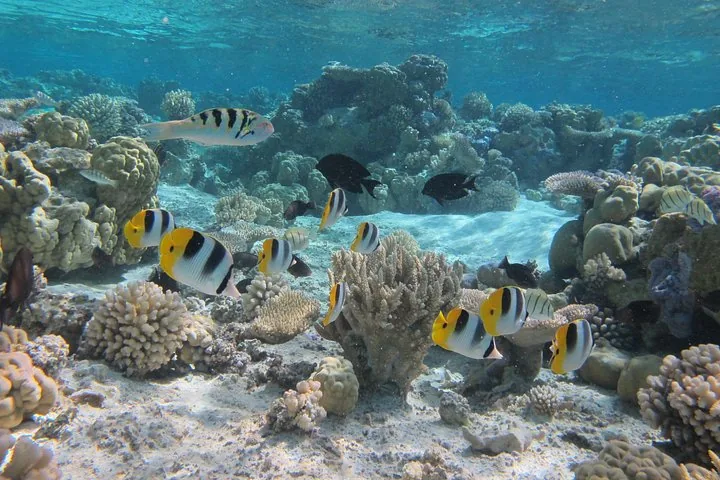
A good guide picks the stops for the conditions on the day instead of running the same itinerary in any weather. That is one reason to book a well-reviewed guided tour, especially if you don’t know the lagoon. The Coral Garden snorkeling page lists the tours that include a Coral Garden stop and how long they stay.
Best months for snorkeling with sharks and stingrays
Blacktip reef sharks and stingrays live in the lagoon year-round, so you don’t need a particular month to see them. A guided shark-and-ray trip works in January, June or October alike, as long as conditions are safe.
Wildlife encounters are never guaranteed, and responsible operators don’t force interactions or encourage visitors to touch the animals. The Eco Snorkel Cruise with Sharks and Stingrays spends about 100 minutes at a knee-deep sandbank where the sharks and rays gather, from $113 per person; the shark and stingray tours page compares it with the full-day and private options.
What about manta rays?
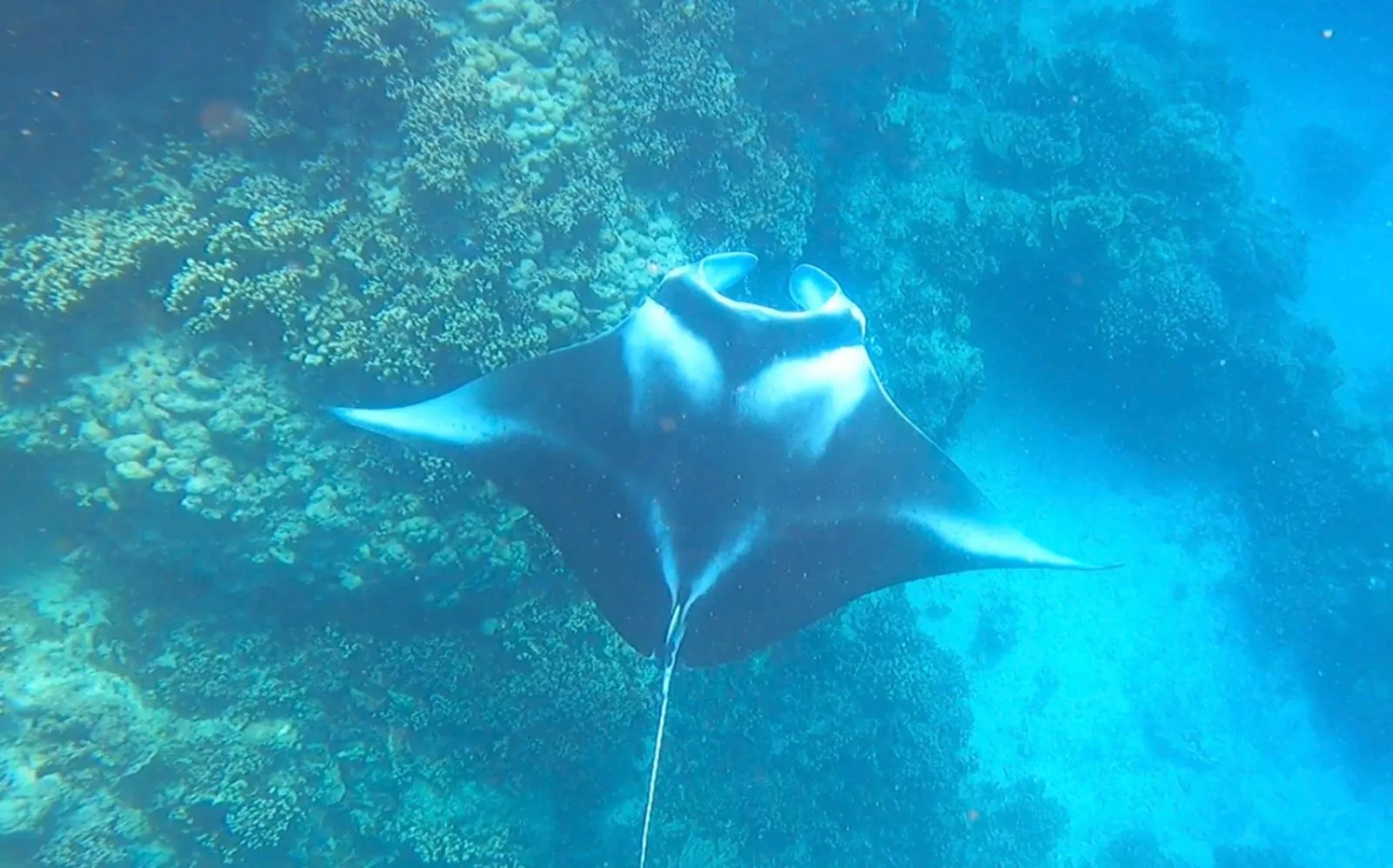
Reef manta rays use the lagoon’s cleaning stations year-round, but seeing one while snorkeling in Bora Bora is never guaranteed. Whether they turn up depends on feeding behavior, the animals’ own movements, where the trip goes and the conditions on the day.
If mantas are your priority, pick a tour whose itinerary names a manta stop and ask the operator about recent sightings, instead of relying on a claim about a particular month. Our manta ray snorkeling page lists the tours that include one.
Morning or afternoon snorkeling?
Morning can be a good choice because the wind sometimes picks up later in the day, but that isn’t a fixed rule. Tides, currents, local shelter and the actual forecast matter more.
Choose an experienced guide and ask which departure has the best conditions for the sites on the itinerary.
Our recommendation: book a well-reviewed snorkeling or lagoon trip early in your stay, so there is time to move it if the weather turns. Our best Bora Bora snorkeling tours page ranks seven of them with prices and trade-offs.
Best time for lagoon tours and boat cruises
Boat tours are one of the main reasons to visit Bora Bora, and they run in every season. A typical lagoon trip may include coral gardens, a shark-and-ray stop, scenic boat travel and a stop on a sandy motu.
The dry season gives you a better chance of uninterrupted time outdoors, but how comfortable the boat ride is depends on the wind and waves.
Half-day snorkeling tours
A good choice when you have limited time. Morning departures are often popular, leaving the afternoon free for the beach or the resort. The Half-Day Shared Boat Snorkel Tour from H2O Bora Bora runs 3.5 hours from $130 per person, rated 5.0/5 from 769 reviews, with the snorkel sites picked each day by the guide. The half-day snorkeling tours page compares the rest.
Full-day lagoon excursions
Best when you want to combine marine wildlife, snorkeling, motu scenery and lunch. They are especially appealing in the drier months, when a long weather interruption is generally less likely. The Full-Day Lagoon Tour with Snorkeling and Motu Lunch runs 6 hours from $174 per person and is rated 5.0/5 from 1,701 reviews.
Private boat tours
Private boats give you more flexibility. If the conditions rule out one snorkeling area, a good captain may be able to find a more sheltered spot. They also suit families and couples who want a slower pace. The Private Half-Day Snorkeling Tour by Boat costs $650 per boat for up to four people, rated 5.0/5 from 126 reviews.
Sunset cruises
A sunset cruise doesn’t need good underwater visibility, but wind, rain and cloud can affect the evening. The dry season generally has better conditions, although beautiful sunsets happen all year, and a partly cloudy sky can still bring beautiful colors.
Every lagoon and snorkel trip on this site is listed on the all tours page, with its length, stops and price.
When can you see humpback whales in Bora Bora?
Humpback whales migrate into French Polynesian waters each year, generally between July and November. They are most associated with the wider Society Islands in this period, and sightings are possible around Bora Bora.
Whale-watching conditions and the chances of an encounter differ between islands, and Moorea is especially well known for dedicated humpback trips. In Bora Bora, treat whale watching as an extra seasonal activity, not something every visitor will see on an ordinary lagoon snorkeling trip.
Whales travel and behave unpredictably, and local wildlife rules govern how boats and swimmers may approach them.
Don’t assume that a Bora Bora snorkeling tour includes whale encounters or that swimming with whales is allowed. Check the current regulations and the operator’s authorization.
If watching humpbacks is the main reason for your trip to French Polynesia, consider combining Bora Bora with Moorea during the whale season.
Best time to visit Bora Bora for lower prices
Accommodation is usually the biggest cost of a Bora Bora trip. The gap between a main-island guesthouse and a luxury overwater villa can be large, and the month you travel affects both availability and price. Our where to stay in Bora Bora guide gives rough nightly budgets for each type of room.
When are Bora Bora resorts most expensive?
July and August are popular travel months, and in-demand luxury properties can charge premium rates. Christmas and New Year can be expensive too, even though December falls in the wetter season. Special events, international holiday periods and each resort’s own occupancy also affect rates.
When might you find a better deal?
If your dates are flexible, compare February, March, April and November. You may find discounted room rates, added-value meal packages or longer-stay promotions. Not every wet-season date is cheaper, though.
To compare fairly, add up the whole cost of the trip:
- Accommodation, including taxes and resort fees
- International and domestic flights
- Airport-to-resort boat transfers
- Meals and drinks
- Snorkeling and lagoon trips
- Other local transport
A cheaper overwater bungalow isn’t good value if it comes with expensive transfers and a compulsory meal package.
Best month for a honeymoon
May, June, September and October suit couples who want generally good weather and time to enjoy the resort. If your honeymoon falls in January or February, Bora Bora can still be beautiful; choose a property with comfortable indoor spaces, a good restaurant and enough to do between showers. Our honeymoon snorkeling tours page covers the private trips couples book most.
How the weather affects different activities
| Activity | Recommended period | What matters most |
|---|---|---|
| Lagoon snorkeling | Year-round; dry season preferred | Wind, currents, visibility |
| Shark-and-ray tours | Year-round | Safe sea conditions, responsible guides |
| Coral gardens | Year-round | Site exposure, water clarity |
| Private boat charters | Generally May–October | Wind and wave forecasts |
| Sunset cruises | Generally May–October | Cloud cover and wind |
| Matira Beach | Year-round | Rain, local swimming conditions |
| 4WD island tours | May–October | Rain, muddy tracks |
| Hiking | Drier months | Trail conditions and heat |
| Humpback whale watching | July–November | Migration, local regulations |
| Luxury resort stays | Year-round | Your tolerance for rain, and price |
Our guide to the best things to do in Bora Bora covers each of these activities, with prices and what to check before booking.
Is the rainy season a bad time to visit Bora Bora?
Not necessarily. If Bora Bora is a once-in-a-lifetime trip and rain worries you, choose the dry season. If your dates are flexible, your budget is comfortable and you are happy to adapt your plans, the wetter months can be a good trip.
Bora Bora doesn’t lose its beauty in December or February. The lagoon stays turquoise, the reefs are still full of marine life, and the volcanic landscape looks especially lush after rain.
It comes down to how much uncertainty you are comfortable with. On a three-night trip planned for one important excursion, bad weather could cost you a large part of the stay. On a week-long visit, you have more chances to fit activities around good conditions.
Can it rain all day?
Yes. Tropical showers are often short, but persistent rain does happen. Don’t count on the idea that it only ever rains for an hour in the afternoon.
Are cyclones a concern?
French Polynesia’s tropical cyclone season runs from November through April. Cyclones are relatively uncommon around Bora Bora compared with some other tropical destinations, but the risk is not zero.
Tropical disturbances can also bring damaging wind, heavy rain, large swells and transport disruption without a cyclone making landfall. If you travel in this period, check the forecasts from Météo-France Polynésie française, follow local advice and consider travel insurance that covers weather disruption under its terms.
Best time to visit Bora Bora, Moorea and Tahiti
If you are visiting several islands in French Polynesia, the same broad dry and wet seasons apply to Bora Bora, Moorea and Tahiti. Local geography changes the detail, though. Tahiti and Moorea have large mountainous interiors, where cloud and rain can differ from the coast, and Bora Bora’s sheltered lagoon behaves differently from the open ocean.
For a multi-island trip, May through October is still the best general season, especially if you want to combine snorkeling, hiking and boat trips. September is a good month for traveling between Bora Bora and Moorea, especially if you want to add a humpback whale-watching trip.
Weather can delay inter-island flights and ferries, so don’t plan very tight connections.
How to plan a Bora Bora trip around the weather
A little flexibility makes a big difference, whichever month you choose.
Stay at least four nights
Four or five nights give you a better chance of good lagoon conditions than a rushed two-night visit. In the wetter season, consider adding a night or two.
Book your priority snorkeling trip early
Schedule the trip you’re most excited about near the start of your stay, so that if the weather cancels it you may still have time to rebook.
Choose tours with clear cancellation policies
Check whether the operator offers a refund or another departure when conditions are unsafe. Don’t assume rain alone qualifies for a refund. The tours on this site generally offer free cancellation up to 24 hours before departure; check the listing for your date.
Don’t schedule boat trips right before your flight
Leave a comfortable margin between a water activity and an inter-island departure.
Check both rain and wind
A sunny forecast doesn’t necessarily mean smooth water. Look at the wind forecast, wave conditions and local marine warnings, or ask your operator directly.
Pack for tropical weather
Bring lightweight clothing, a rain jacket, sun protection and a waterproof bag for boat trips. The tropical sun can be strong even when the forecast is cloudy.
Frequently asked questions
What is the best month to go to Bora Bora?
September is our pick, because it falls in the historically dry season and misses some of the busiest Northern Hemisphere summer vacation dates. May, June and October are also good choices.
When is Bora Bora’s rainy season?
The wetter season generally runs from November through April, with January and December historically among the wettest months.
What is the driest month in Bora Bora?
August has the lowest average rainfall in the historical Bora Bora airport records, about 62 mm (2.4 in). July and September are also dry.
Is September a good time to visit Bora Bora?
Yes. September combines generally low rainfall, warm weather and good conditions for snorkeling, lagoon tours and sightseeing.
Is Bora Bora worth visiting in November?
Yes, especially if you prefer a quieter atmosphere and can accept more frequent rain. November is a transition month, so the weather can be less predictable than in September.
Is Bora Bora good in December?
It can be, but December is historically one of the wettest months, and Christmas and New Year can bring higher hotel demand.
Can you snorkel in Bora Bora in January?
Yes. Snorkeling trips run all year, although heavy rain, wind, waves or poor visibility may mean a trip is changed or postponed.
When is the water warmest in Bora Bora?
The lagoon is warm all year, at roughly 25 to 30°C (77 to 86°F), and usually warmest in the Southern Hemisphere summer, roughly December through March.
Is July or August better for Bora Bora?
Both months are historically dry. August has slightly lower average rainfall, but both are popular travel periods, and the trade winds can affect lagoon conditions.
When is Bora Bora cheapest?
February, March, April and November are the months to compare for possibly lower hotel rates. Prices depend heavily on the resort, the holiday dates and current promotions.
Are Bora Bora snorkeling tours available all year?
Yes. Many lagoon and snorkeling operators run trips all year, subject to the weather, sea conditions and availability.
When is whale season in Bora Bora?
Humpback whales visit French Polynesian waters seasonally, generally between July and November. Sightings are not guaranteed, and wildlife regulations apply.
What is the best time of day to snorkel in Bora Bora?
Morning is often convenient and may have lighter winds, but conditions vary. Tides, currents and the snorkeling site itself can matter more than the time of day.
Final verdict: when should you visit Bora Bora?
For most first-time visitors, May through October is the safest choice for good weather. The months within it differ, though:
- September: low historical rainfall, good lagoon conditions and possibly fewer visitors than at the summer peak.
- May or June: generally good weather and a wide range of outdoor activities.
- July or August: some of the driest weather of the year, if you don’t mind more demand and the chance of stronger trade winds.
- October: a warmer shoulder-season trip, with rain becoming more likely as the month goes on.
- April or November: worth a look if hotel value and a quieter island matter more to you than the lowest chance of rain.
Whatever month you choose, don’t plan the whole trip around your overwater bungalow. The island’s best days are out on the lagoon: snorkeling over coral gardens, watching rays glide across the sand and seeing Mount Otemanu from the water.
Book a well-run snorkeling tour and leave some flexibility in your plans. Once your date is booked, check the forecast for wind as well as rain, because conditions on the lagoon can change from one day to the next.
Sources
- Japan Meteorological Agency — Bora Bora Motu Aero climate normals: the monthly temperature and rainfall averages in the table.
- Tahiti Tourisme — when to visit the islands of Tahiti: seasons, lagoon activities and the whale-watching period.
- Lonely Planet — best time to visit Bora Bora and Travel + Leisure — best time to visit Bora Bora: visitor-planning context.
- Météo-France Polynésie française and the French Polynesian government’s cyclone guidance: forecasts and official cyclone-season safety advice.
Tour prices, ratings and review counts are each platform’s figures as checked on 1 October 2026.
Get in the Water With the Rays
Free cancellation up to 24 hours before. Reef Discovery Half-Day Snorkel Tour from $135 per person.
Check Availability & Book