Bora Bora Coral Gardens: Best Snorkeling Spots and How to Visit
Bora Bora has several coral gardens, not one: the Aquarium in the south, Toopua in the west and Anau in the east. Where each one is, what lives there and how to reach it.
Bora Bora does not have just one coral garden. The lagoon has several reef areas where coral heads rise from the sand and tropical fish crowd around them: the Aquarium south of Motu Piti Uu, the reefs around Motu Toopua in the west and the coral near Anau on the east side. Most of them are easier and safer to reach by boat than from a beach.
You do not need to dive. You float at the surface with a mask and snorkel and look down at butterflyfish, parrotfish and anemonefish a few meters below, usually on a guided half-day trip that also stops for stingrays and reef sharks. Some sites are shallow and sheltered, while others sit beside deeper channels where the current can pick up, so a guide who knows the day’s conditions matters.
If you want one trip built around the reef, the Reef Discovery Half-Day Snorkel Tour costs from $135 per person for 3.5 hours and is rated 5.0 from 1,052 reviews. You can check dates for it just below.
Check Availability
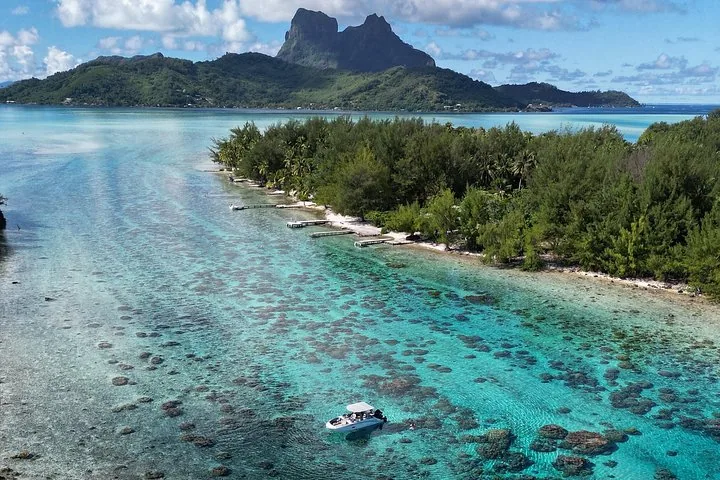
Reef Discovery Half-Day Snorkel Tour
- 5.0/5 (1,052 reviews)
- 3.5 hours
- Free cancellation
- Operated by Reef Discovery
Includes Pickup and drop-off at your accommodation · Guide and guided snorkeling in the water · Snorkeling equipment including …
You'll choose your date and complete the booking on Viator. Free cancellation up to 24 hours before departure.
Same trip, also on GetYourGuide
From $143 per person · ★ 5.0 from 8 GetYourGuide reviews
Each platform sets its own price and collects its own reviews, so compare both before you book on Viator.
What are the coral gardens in Bora Bora?
Bora Bora’s coral gardens are parts of the lagoon where living coral gives shelter and food to tropical fish. There is no entrance or ticket office: “coral garden” is a name for several natural snorkeling sites around the island.
The coral grows in many shapes, from rounded boulder-like colonies to branching structures and small heads rising from the sandy floor. The gaps between them work like small neighborhoods where fish feed, hide and defend their patch. A healthy coral garden is a working ecosystem, and the longer you watch, the more of it you notice.
The lagoon’s shape helps. An outer barrier reef surrounds most of the volcanic island and shelters the water inside, so snorkeling is usually easier here than in the open Pacific. Not every part of the lagoon is shallow or calm, though: coral gardens close to channels, reef edges and deeper water can have stronger currents.
Bora Bora coral gardens at a glance
| Question | Quick answer |
|---|---|
| Where are they? | Several places inside Bora Bora’s lagoon |
| Best-known site | The Aquarium, south of Motu Piti Uu |
| Other notable areas | Motu Toopua, Toopua Iti and Anau |
| How do you get there? | Usually on a guided boat trip |
| Can beginners visit? | Yes, at suitable sites on a calm day |
| What lives there? | Butterflyfish, parrotfish, surgeonfish, anemonefish, moray eels and other reef species |
| Can you see sharks or rays? | Sometimes; tours usually visit them at separate stops |
| Driest season | May to October |
| Typical snorkeling tour | About 3 to 4 hours for a half day |
| Do you need to scuba dive? | No, you see most coral gardens from the surface |
Air Tahiti Nui’s snorkeling guide names the same three areas: the Aquarium, the coral garden at Motu Toopua and the eastern reefs at Anau.
Other Experiences
Other experiences you might enjoy
More Bora Bora snorkeling tours, each with its own page and booking link.
The best coral gardens in Bora Bora
There are four areas to know about before you book. They do not offer the same thing: some are best for small reef fish at close range, others for deeper water and larger animals.
| Location | Best for | Access | Experience level |
|---|---|---|---|
| The Aquarium, near Motu Piti Uu | Tropical reef fish, first-time coral snorkeling | Boat | Beginner-friendly in calm conditions |
| Motu Toopua and Toopua Iti | Coral and reef variety | Boat | Some sites suit more confident swimmers |
| Anau | Coral plus a chance of manta rays | Guided boat | Depends on the exact site |
| Matira Beach | Casual snorkeling from shore | Beach | Beginners in calm conditions |
1. The Aquarium (Motu Piti Uu): Bora Bora’s natural aquarium
Best for: first-time snorkelers, underwater photography and tropical reef fish.
The best-known coral garden in Bora Bora is the area people call the Aquarium. Air Tahiti Nui places it south of Motu Piti Uu (spelled Pitiuu on some maps), in the southern lagoon.
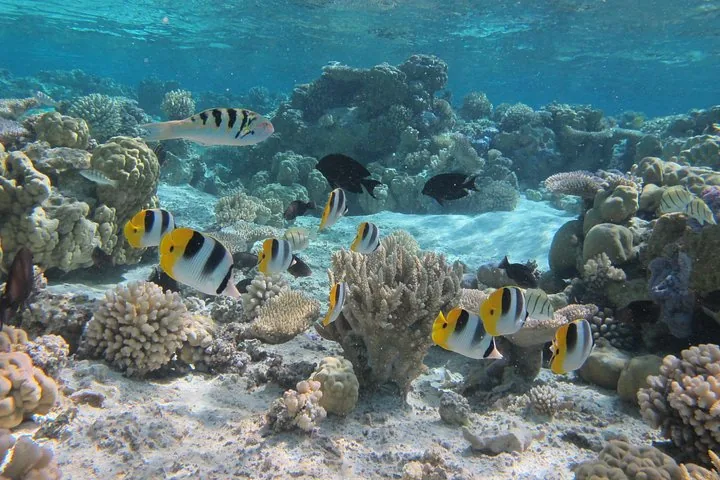
The name fits. On a good day the water is very clear, and a dense crowd of small reef fish swims around the coral outcrops. You might see butterflyfish, parrotfish, surgeonfish, damselfish and anemonefish. With sharks or mantas, much of the action can happen several meters below you; here you can enjoy the reef from the surface.
What makes it special?
The draw is how much life fits into a small area. Watch one coral head for a few minutes and you see different fish using it in different ways: some graze, others guard a territory, and the smallest dart into cracks whenever a shadow passes. Slow down here and you see more.
What to know before visiting
- You usually reach the Aquarium by boat.
- Visibility is often good, but weather and stirred-up sediment can change it.
- Popular routes can bring several boats to the same area at once.
- Whether it suits a beginner depends on the exact stop, the current and the depth.
- Boats pass nearby, so stay with your guide and do not swim off on your own.
If you take only one snorkeling tour in Bora Bora, pick an itinerary that names a coral-garden or Aquarium stop, not one that only lists sharks and stingrays.
2. Motu Toopua and Toopua Iti: coral gardens on the western side
Best for: reef enthusiasts, variety of marine life and snorkelers who want more than a shallow fish stop.
Motu Toopua sits on the western side of Bora Bora, across the lagoon from the main island. Its coral habitats include the snorkeling site called Toopua Iti.
What makes Toopua Iti interesting is the edge between the coral plateau and deep water. The local operator Tohora Bora Bora describes the site as about 6 m (20 ft) deep, on a plateau that drops quickly to around 30 m (100 ft). Its species list includes butterflyfish, surgeonfish, parrotfish, moray eels, anemonefish and barracuda. You will not see all of them on one visit: fish move around, and some are much harder to spot than others.
What to expect underwater
Coral heads rise from the seabed with open blue water around them. Fish move between the heads, and the deep water nearby gives a different sense of scale from the shallow southern sites. When there is a current, a guide may run a controlled drift along part of the reef, and only when conditions allow it.
Is it good for beginners?
It can be, but not every spot around Toopua is equally easy. With the depth and the drop-offs nearby, you need to be comfortable floating over water where you cannot stand. A life jacket or flotation aid makes it more relaxing, especially if you only snorkel now and then.
Ask about Toopua if you have snorkeled in the tropics before and want to spend your time on fish and coral, with the big animals as a side note.
3. Anau Coral Garden: the eastern lagoon
Best for: wildlife lovers and visitors hoping to see manta rays.
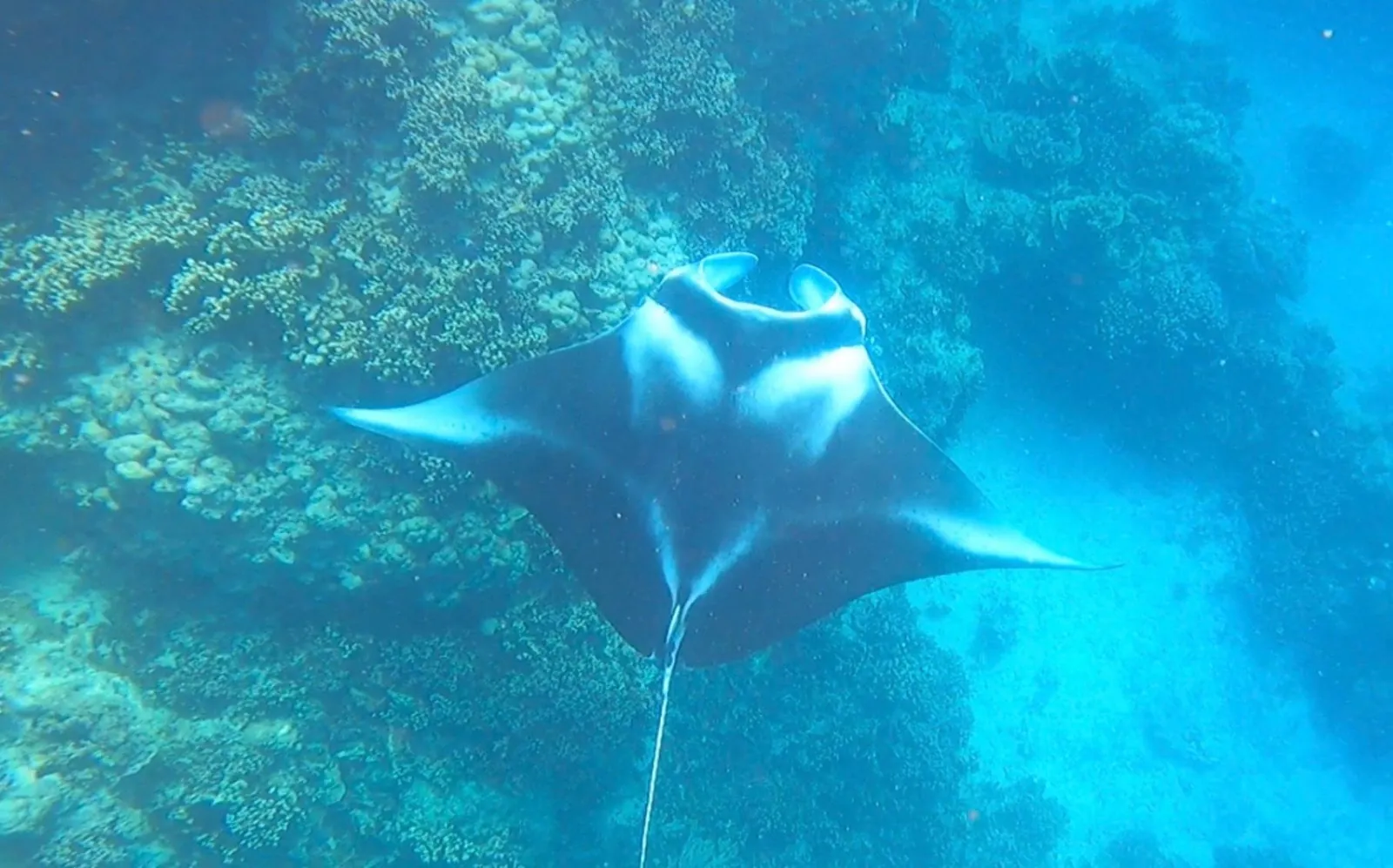
Anau lies at the eastern tip of the island, facing the lagoon and the outer reef. The waters around it hold coral habitats and deeper reef areas known for manta rays. A coral garden and a manta cleaning station are not necessarily the same snorkeling stop: mantas are large filter-feeding rays that visit particular reef sites where small fish pick parasites and dead skin off their bodies.
Air Tahiti Nui lists Anau among Bora Bora’s main coral-garden areas and points to the manta rays that frequent the drop-off below it.
Can you snorkel with manta rays here?
Sometimes. Mantas are never guaranteed, and a guide may pick another spot depending on what the animals are doing, the visibility or local rules. Manta areas can also be much deeper than an ordinary coral garden, so a manta may pass well below you without coming near the surface.
If mantas are your main reason for booking, choose a trip built around wildlife and ask how the operator approaches the animals without chasing or disturbing them. Our manta ray snorkeling page lists the tours that stop at the manta sites.
What should you prioritize?
For close-up views of reef fish, put a dedicated coral-garden stop first. For a chance at large rays, choose a guided itinerary that includes manta habitat when conditions allow. The best trips offer both.
4. Matira Beach: the easy option without a boat
Best for: independent travelers, casual swimming and days when you do not want to book a tour.
Matira Beach is one of the easiest places on Bora Bora to get into the lagoon. White sand runs out into shallow turquoise water close to shore. You may see reef fish around scattered coral and rocks, but not the dense coral you find at the boat-access sites. For an easy swim with the odd fish, Matira is lovely. For a proper look at reef life, book a coral-garden tour.
Safety: do not swim far out toward the channels or the motus because the water looks shallow from the beach. Lagoon currents and passing boats are real hazards, and distances on the water are longer than they look.
How to visit Bora Bora’s coral gardens
For most visitors, the easiest way to reach the coral gardens is a guided lagoon snorkeling tour. Many of the best reefs are separated from the main island by open lagoon, private resort islands and boat channels. A guide also knows which sites suit the day: wind direction, currents, water clarity and boat traffic all change the route.
You have three main options.
Option 1: Join a shared half-day snorkeling tour
Best for: most first-time visitors, couples and travelers who want good value.
Shared snorkeling tours usually last three to four hours and visit several sites. A typical route looks like this:
- Pickup from an agreed hotel dock or meeting point.
- A snorkeling stop among coral heads and reef fish.
- A stop at a site known for stingrays or reef sharks.
- Another reef or wildlife stop, depending on conditions.
- Return to your hotel or departure point.
Not every trip follows this order, and some spend more time cruising than snorkeling. If the reef is your priority, look for a listing that names a coral garden or Aquarium stop. Our half-day snorkeling tours page compares the shorter trips.
Option 2: Choose a full-day lagoon cruise with lunch
Best for: visitors who want a whole day on the lagoon.
Full-day trips usually combine snorkeling with sightseeing, wildlife stops and a Polynesian lunch on a motu, a small island inside the lagoon. Lunch can be a highlight on its own, with tropical fruit, grilled fish and local dishes served with a view of Mount Otemanu.
A longer day does not always mean more time in the water. A six-hour trip might include three fairly short snorkeling stops, with the rest of the day spent cruising, eating and on the beach. If underwater photography is your main interest, a half-day snorkeling tour can be the better value. Our guide to Bora Bora lagoon tours explains how the full-day formats differ.
Option 3: Book a private snorkeling boat
Best for: experienced snorkelers, families, photographers and couples who want flexibility.
On a private tour you can stay longer at one reef and shape the route around your group. You might ask to focus on coral gardens, visit quieter spots where that is allowed, or spend less time with the sharks and more with the small reef species. A private boat also helps mixed-ability groups, because the guide can adjust to each person’s confidence in the water.
Private does not mean you can go anywhere. The captain still picks sites according to navigation rules, local permissions, the weather and wildlife protection.
Recommended Bora Bora coral garden snorkeling tours
These are real trips listed on Viator or GetYourGuide. We chose them from their published itineraries, what they include and their traveler ratings; we have not taken every one ourselves. Prices are the starting prices on the listings in October 2026.
Best overall for snorkeling: Reef Discovery half day
The Reef Discovery Half-Day Snorkel Tour runs about 3.5 hours, costs from $135 per person and is rated 5.0 from 1,052 reviews. It is a small-group trip with the snorkeling at the center: reef stops plus time with other lagoon wildlife, and hotel or port pickup is offered. Snorkeling is the point of the day, not a short swim between scenic stops. Check the pickup, suitability and itinerary for your date. Our breakdown of the Reef Discovery tour covers the stops in detail.
Best full-day experience: Lagoon Service full day with lunch
The Full-Day Lagoon Tour with Snorkeling and Motu Lunch by Lagoon Service lasts about 6 hours, costs from $174 per person and is rated 5.0 from 1,722 reviews. It combines coral-garden snorkeling, sharks and rays and a Polynesian lunch, so you get the reef and the classic motu day in one booking. With several activities in the day, expect less continuous reef time than the length suggests.
Best private reef-focused outing: Reef Discovery private half day
The Reef Discovery Private Half-Day Lagoon Tour runs 2 to 4 hours depending on the option, costs from $737 per boat and is rated 5.0 from 135 reviews. With your own boat and guide you can put the reef stops first, set the pace and skip the pressure of keeping up with a group. A private tour costs much more than a shared one, so compare the total boat price and the passenger limit.
Best short private lagoon trip: Moana Adventure Tours
Moana Adventure Tours’ Bora Bora: Lagoon Boat Tour with Snorkeling is a private 3-hour motorboat trip for up to six people, from $697 per group and rated 4.8 from 670 reviews on GetYourGuide. It suits travelers who want a private trip on the lagoon without giving up a full day. It is not only a coral-garden tour, and the time at each stop depends on the day’s route.
Which tour should you choose?
| Your priority | Best option |
|---|---|
| Seeing coral and tropical fish | Reef Discovery shared half day, from $135 per person, 5.0 from 1,052 reviews |
| Snorkeling plus a traditional motu lunch | Lagoon Service full day, from $174 per person, 5.0 from 1,722 reviews |
| Flexible snorkeling with your own group | Reef Discovery private half day, from $737 per boat, 5.0 from 135 reviews |
| A short private lagoon trip | Moana lagoon boat tour, from $697 per group, 4.8 from 670 reviews |
| Photography and longer reef stops | Private Half-Day Snorkeling Tour by Boat, from $650 for up to 4, 5.0 from 126 reviews |
| Traveling with younger children | A guided tour with confirmed flotation support and age rules |
For most visitors a half-day snorkeling trip is the best start: you see different underwater habitats without spending much of the day on things you care less about. Choose a full day if the motu lunch and the scenic cruise matter to you as much as the reef.
Routes and inclusions can change. Before you pay, confirm the coral-garden stop, the swimming requirements and the pickup. For every tour that names the Coral Garden and how long it stays there, see our Coral Garden snorkeling comparison.
What marine life can you see in Bora Bora’s coral gardens?
On a coral garden there is always something to watch, even when no large animals turn up. Some of the most interesting species are small fish that spend their lives among the coral.
Butterflyfish
These are among the easiest tropical fish to recognize. Many have bright yellow, white and black markings, often with a dark stripe across the eye. You often see them working around coral heads for food or swimming in pairs.
Parrotfish
Parrotfish are fun to watch because of the way they feed. They scrape algae off the reef with strong, beak-like teeth, and some species bite off small amounts of coral as they go, which helps produce fine white sand. Watch closely and you can see the beak working against the reef.
Surgeonfish
Surgeonfish come in several colors and often graze around the coral. They do an important job by eating algae that would otherwise smother the reef.
Anemonefish
Anemonefish, also called clownfish, live with sea anemones. They move differently from most reef fish: they stay close to one anemone, dart out for a moment and then retreat into its tentacles. Look for them around anemones; you will not see them everywhere.
Moray eels
Moray eels sometimes poke their heads out of cracks in the reef. They open and close their mouths to move water over their gills, which looks more threatening than it is. Watch from a distance, and never reach into a hole or touch an eel.
Giant clams
Some coral areas have giant clams with strikingly patterned mantles in blue, green, brown or iridescent shades, depending on the species and the light. A clam may partly close when a shadow passes over it. Never touch or disturb one.
Stingrays and reef sharks
Bora Bora’s lagoon has stingrays and several shark species, including blacktip reef sharks. The busiest coral gardens are not always the best places to see them, and guided tours usually visit the shark and ray sites as a separate stop. Our shark and stingray tours page covers those stops.
Manta rays
Manta rays are a real possibility around the right habitat in Bora Bora, but you will not see them at every coral garden. For mantas, pick a wildlife-focused tour and treat any encounter as a bonus.
How healthy are Bora Bora’s coral reefs?
Set your expectations before you go. Photos of tropical coral gardens often show densely packed, very colorful coral. In reality, reef condition varies a lot from place to place and over time. Some areas have plenty of living coral; others mix healthy colonies with dead coral, algae-covered patches and sand.
Corals are animals that build the reef over many years. Water temperature, storms, sediment, pollution, disease and people all affect them. Unusually warm water can cause bleaching, when corals expel the algae that give them most of their energy. Bleached coral is not necessarily dead, but long stress can kill it.
Do not expect every reef to look untouched. A good guide explains what you are looking at, including the difference between living coral and old reef structures.
When is the best time to snorkel in Bora Bora’s coral gardens?
Snorkeling tours run all year in Bora Bora. The main difference between seasons is usually the weather, the wind and the visibility, not the water temperature.
Tahiti Tourisme describes May to October as the drier season, and November to April as warmer, more humid and rainier. Lagoon activities run year-round.
Coral-garden snorkeling by season
| Period | Typical conditions | Our view |
|---|---|---|
| May–June | Drier weather arriving, usually pleasant lagoon conditions | Excellent time to go |
| July–August | Dry season, but the trade winds can be noticeable | Good; watch the wind |
| September–October | Usually dry, with calm snorkeling days | Excellent |
| November | Turning wetter | Good when the weather holds |
| December–March | Warmer, wetter and more humid | Snorkeling runs, but the weather is less predictable |
| April | Turning drier | Often a good shoulder month |
Is morning or afternoon better?
Morning is often a good choice for the reef. Depending on the weather, the wind may be lighter, and popular spots can be quieter before the tour boats arrive. Mornings are not always calmer, though, because that depends on the forecast, the reef’s exposure and the currents. If you can choose a departure, ask the operator which time gives the best visibility at the sites they plan to visit.
What affects underwater visibility?
- Wind chop on the surface
- Recent heavy rain and runoff
- Sediment in the water
- Waves near channels and reef edges
- Depth and sunlight
- Local currents
Turquoise from above does not mean clear underwater. A sandy shallow can look brilliant blue from the boat and hold few fish, while a darker coral patch nearby holds far more life.
Our best time to visit Bora Bora guide covers the weather month by month.
Can beginners snorkel in Bora Bora’s coral gardens?
Yes. Several coral gardens suit beginners in calm conditions, especially with an experienced guide. You do not need a scuba qualification or any experience breathing through a snorkel.
Being able to swim confidently is still an important safety advantage, even when the tour provides flotation. Some reef sites are too deep to stand, and the current can change during a trip.
What a beginner-friendly tour should offer
Look for a guided trip with a well-fitted mask, snorkel, fins, a flotation aid and a briefing before anyone gets in. The guide should get in the water with you, not only watch from the boat. An easy boat ladder and help getting in and out also matter, especially for children and nervous swimmers.
What if you can’t swim?
Some operators can take non-swimmers into shallow water or offer flotation-assisted swims, but this varies a lot. Do not assume a regular snorkeling trip will work for you. Ask whether the operator accepts non-swimmers, offers help in the water and has a safe alternative if you would rather not get in. A life jacket alone never replaces supervision and swimming ability.
Are coral gardens safe for children?
Many families snorkel the lagoon together, but age and swimming rules differ by operator. A child who is happy in a pool may still find open water frightening, especially where the bottom is several meters down. For families, look for calm sites, a small group, flotation in the right sizes and a guide used to children. Watch for too much sun and tiredness on longer trips.
Snorkeling safety: what to know before getting in the water
The lagoon looks so calm that it is easy to forget you are swimming in a busy marine environment. Most snorkeling trips are straightforward when conditions are good and everyone follows the guide, but a few precautions matter.
Never stand on coral
Living coral is fragile, and the weight of a foot or fin can break it. Even pieces that look solid can be alive. If you need to fix your mask, signal your guide and move to a safe spot; do not stand on the reef.
Keep your fins away from the reef
Beginners often kick down instead of back and hit the coral behind them. Keep your body flat in the water and use slow, steady kicks.
Don’t touch fish, rays or other marine animals
Do not touch, chase or feed marine life. Watching the animals behave naturally is half the fun, and contact can stress or injure them. NOAA’s marine life viewing guidelines also tell snorkelers not to touch, kick or stand on coral.
Watch your distance from the boat
Boat traffic is a real risk around the popular lagoon sites. Stay inside the area your guide shows you and keep an eye out for other boats.
Protect yourself from the sun
UV on the water is strong, even on cloudy days. A long-sleeved UPF rash guard is one of the most useful things you can pack: it covers your shoulders and back while you float face-down, without reapplying sunscreen between swims.
Don’t assume every shallow area is safe
Shallow reefs can hide sharp coral, sea urchins and other hazards. Keep your hands and feet out of holes and from under coral ledges. Never snorkel alone, especially near channels and drop-offs.
What should you bring on a coral-garden snorkeling tour?
Most organized trips provide basic snorkeling gear, but check exactly what is included.
| Item | Why it’s useful |
|---|---|
| Swimsuit | Wear it before pickup |
| UPF rash guard | Excellent sun protection |
| Towel | Not every tour provides one |
| Reef-conscious sunscreen | For exposed skin; apply it well before you get in |
| Waterproof camera | For reef and marine-life photos |
| Reusable water bottle | You need water in the tropical heat |
| Dry bag | Keeps small valuables dry |
| Motion-sickness medication | If boats make you queasy |
| Prescription mask | Very useful if you normally wear glasses |
Are underwater cameras worth bringing?
Yes, if you already own one. The coral gardens are a good place to photograph small reef fish and underwater scenes, and a compact action camera is enough for most visitors.
A few simple habits help a lot. Keep the sun behind or above you, photograph fish from a respectful distance and do not stir up sand with your fins. Underwater photos look better when the camera is close to the subject, not pointed across several meters of water. Never chase an animal for a picture.
Can you visit Bora Bora’s coral gardens without a tour?
At some sites, but most visitors will find a guided boat trip the simplest option. Access is the problem: the best-known coral gardens are not all reachable from public beaches. Some lie near motus, resort properties, deep channels or busy boat routes.
Can you kayak to the coral gardens?
That depends on where you stay, which coral garden and the route. Some resorts lend kayaks or paddleboards for use in set areas, but that does not mean you can safely paddle across the lagoon to a distant reef. Wind, current and boats can turn a short-looking crossing into a dangerous one. Do not cross on your own without reliable local advice and, where needed, permission.
What about resorts with house reefs?
Some resorts have snorkeling around their beaches, overwater bungalows or marked marine areas. These are fun for casual snorkeling and handy if you like to slip into the water whenever conditions allow. A house reef is not always the same as a natural coral garden on a guided tour, though: some are modified or managed, and others have fairly sparse coral.
If snorkeling is a big reason for choosing your hotel, look into the real reef access, not the lagoon photos. Our guide to where to stay in Bora Bora compares the areas and resorts.
How much do Bora Bora coral-garden snorkeling tours cost?
Prices depend on the season, the operator, the length, the group size and whether lunch or transfers are included. These are the starting prices on the tours listed on this site in October 2026:
| Tour type | Starting prices on this site |
|---|---|
| Shared half-day snorkeling tour | $113 to $150 per person |
| Shared full-day lagoon tour with lunch | $145 to $195 per person ($282 for the adults-only outrigger cruise) |
| Private half-day snorkeling boat | $523 to $780 per boat |
| Private full-day charter with lunch | Roughly $900 to $2,000+ per boat (a planning range; none listed on this site) |
Premium charters can cost much more. What you pay also depends on how many people are in your party, where your hotel is and the exchange rate.
Is a private snorkeling tour worth the extra cost?
For a couple taking one trip, a shared tour is usually the cheaper choice. A private boat makes more sense for families and groups who split the price: the Private Half-Day Snorkeling Tour by Boat at $650 for up to four people works out at about $163 each when four share it, close to the price of a shared trip. It also makes sense if you want longer at certain reefs, have photography plans or want a quieter day. For most first-time visitors, pay the extra only if you need the flexibility. Our private snorkeling tours page compares the private boats.
What to know before booking a coral-garden tour
Not every Bora Bora snorkeling tour spends much time on coral. Some focus on reef fish, others on sharks and rays, and some add short snorkeling stops to a longer sightseeing cruise. Check these points before you book.
- Does the itinerary include a coral garden? Look for a coral garden, the Aquarium or a reef snorkeling stop by name. A trip sold as snorkeling with sharks and rays may visit very little coral.
- How many stops are there? Three stops are not always better than two. A tour with longer stops can be more enjoyable than one that keeps everyone climbing back into the boat.
- How much time is in the water? The advertised length includes transfers, boat time and any other activities. If the reef is your priority, ask roughly how long you snorkel.
- Is pickup included? Many operators collect guests from hotel docks or set landing points, but this varies by resort, especially on an outer motu.
- What happens if conditions are poor? A responsible captain may switch to a safer site, change the route or cancel. Check the weather policy and whether you get a refund or another date.
- Does the operator encourage responsible wildlife viewing? Choose tours that discourage touching, feeding or chasing animals and explain how to protect the coral.
- Can you take part comfortably? Check the swimming requirements, flotation, minimum ages, boat access and any medical restrictions. The cheapest tour is a poor choice if its activity level does not suit you.
Coral gardens vs shark-and-ray snorkeling: which is better?
In Bora Bora you often do not have to choose: many trips combine a coral garden with wildlife stops elsewhere in the lagoon. They are different experiences, though.
| Feature | Coral-garden snorkeling | Shark-and-ray encounters |
|---|---|---|
| Main attraction | Coral and reef fish | Larger marine animals |
| Typical setting | Coral reef habitats | Sandy shallows, open lagoon or deeper water |
| What you see | Usually many small fish | Depends on which animals turn up |
| Best for | Reef lovers, photographers and slow watching | Visitors keen on larger animals |
| For beginners | Depends on depth and current | Depends on the site and the encounter |
| Photography | Coral textures, colors and reef fish | Wider wildlife scenes |
| Pace | Slow exploring | Watching animals move through the water |
The coral garden is where you see Bora Bora’s underwater life in detail. A shark-and-ray stop gives you the thrill of larger animals in the wild. On a first visit, choose a tour with both, and enough time at the reef to enjoy it. Our guide to swimming with sharks in Bora Bora explains what that stop is like.
Frequently asked questions
Where are the coral gardens in Bora Bora?
There are several around the lagoon: the Aquarium south of Motu Piti Uu, the reefs around Motu Toopua in the west and the coral near Anau in the east. The name does not refer to one single place.
What is the best coral garden in Bora Bora?
The Aquarium in the southern lagoon is the best-known choice for tropical reef fish. Toopua is another good area, especially for reef variety near deeper water. The best spot on a given day depends on the conditions.
Do you need to book a tour to visit the coral gardens?
Not always, but a guided boat trip is the easiest option for most visitors. Many of the main sites are far from public beaches, and reaching them on your own can be difficult or unsafe.
Can you snorkel the coral gardens without scuba-diving experience?
Yes. You snorkel at or near the surface, so no scuba qualification is needed. You should be comfortable swimming and follow your guide’s safety instructions.
Are the coral gardens suitable for non-swimmers?
Not automatically. Some operators offer flotation-assisted swims, but depth, current and rules vary. Ask the operator directly whether non-swimmers can take part safely.
Can you see manta rays at the coral gardens?
Manta rays visit suitable lagoon and reef areas around Bora Bora, especially near known cleaning stations such as Anau. A coral-garden stop does not guarantee a manta.
Are there sharks in Bora Bora’s coral gardens?
Sharks live in the lagoon, including blacktip reef sharks. Tours usually visit separate wildlife sites when sharks are the focus.
Can you touch the coral?
No. Do not touch, stand on or kick living coral. Even brief contact can damage it.
How deep are Bora Bora’s coral gardens?
It varies a lot. Some coral sits just below the surface, while Toopua Iti has a coral plateau about 6 m (20 ft) deep that drops to around 30 m (100 ft) nearby. Ask your guide about the exact site.
How long do coral-garden snorkeling tours last?
Half-day trips usually last three to four hours, and full-day lagoon tours run about six to seven hours. Your actual time in the water is shorter.
Are Bora Bora coral gardens better than snorkeling from Matira Beach?
For dense coral and reef fish, a guided trip to an established coral garden is usually the stronger choice. Matira is handier for independent swimming and casual snorkeling.
Can you visit the coral gardens in November or December?
Yes. Snorkeling continues in the wetter season, although rain, wind and visibility can affect conditions and change a tour’s route.
Do you need special equipment?
A mask, snorkel and fins are usually enough, plus a flotation aid if you need one. Most organized tours provide the gear, but confirm what is included before you book.
Is snorkeling in Bora Bora’s coral gardens worth it?
Yes, especially if you are interested in marine life and not only in swimming in beautiful water. The coral gardens show you the underwater side of Bora Bora and the ecosystem that feeds the lagoon’s fish.
Final verdict: are Bora Bora’s coral gardens worth visiting?
Yes. The coral gardens are among the most rewarding things to do in Bora Bora, especially if you want to get into the lagoon and not only admire it from a beach or a bungalow deck. The best moments are often small: a parrotfish grazing on the reef, an anemonefish darting into its tentacles, a school of butterflyfish circling a coral head.
You do not need to be an expert snorkeler, but the right site and a responsible guide make a difference. For most visitors, a half-day snorkeling tour with at least one dedicated coral-garden stop is the best introduction, and it leaves the rest of the day free. With more time, a full-day lagoon cruise with a motu lunch is a memorable alternative. Check your dates early, because the small-group boats can fill up in busy months.
More Bora Bora snorkeling guides
- Best Bora Bora snorkeling tours: every type of snorkeling trip compared, from short shark trips to private boats.
- Coral Garden snorkeling: the tours that stop at the Coral Garden and how long they stay.
- Bora Bora lagoon tours: half-day, full-day, outrigger, private and sunset trips explained.
- Swimming with sharks in Bora Bora: what the shark stop is like and how safe it is.
- Manta ray snorkeling: where the mantas feed and which tours visit them.
Get in the Water With the Rays
Free cancellation up to 24 hours before. Reef Discovery Half-Day Snorkel Tour from $135 per person.
Check Availability & Book