Bora Bora, French Polynesia: The Complete Island Travel Guide
Where Bora Bora is, when to go, where to stay, how to get there and around, what a trip costs, and which lagoon and snorkeling tours to book first.
A volcanic mountain rises from the center of Bora Bora, and a lagoon wraps around it in bands of pale turquoise and deep blue. Small palm-covered islets sit along the outer reef, and wooden bungalows stand over water so clear you can often see fish swimming beneath the decks.
The island has much more to it than luxury resorts. Some of its best days are spent out on the lagoon, where you can snorkel over coral gardens, swim near blacktip reef sharks and stingrays, or spend an afternoon on a quiet stretch of white sand. Back on the main island there are villages, roadside food stalls, mountain views and a slower side of French Polynesia that many resort guests never see.
If you book one thing before you fly, make it a day on the water. The Full-Day Lagoon Tour with Snorkeling and Motu Lunch below has 1,701 reviews, more than any other tour on this site.
Check Availability
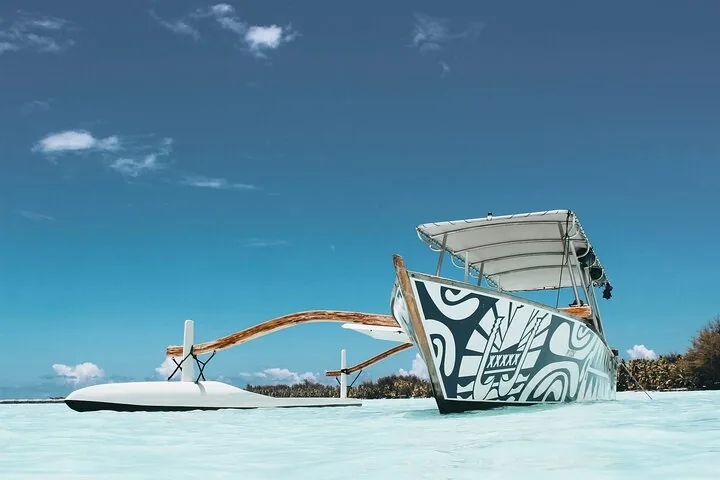
Full-Day Lagoon Tour with Snorkeling and Motu Lunch
- 5.0/5 (1,701 reviews)
- 6 hours
- Free cancellation
- Operated by Lagoon Service
Includes Lunch on a private motu · Soft drinks · Bottled water
You'll choose your date and complete the booking on Viator. Free cancellation up to 24 hours before departure.
Same trip, also on GetYourGuide
From $170 per person · ★ 4.8 from 123 GetYourGuide reviews
Each platform sets its own price and collects its own reviews, so compare both before you book on Viator.
Bora Bora at a glance
| Essential information | Details |
|---|---|
| Location | Society Islands, French Polynesia, South Pacific |
| Country/territory | French overseas collectivity |
| Main town | Vaitape |
| Nearest major international airport | Tahiti Faa’a International Airport (PPT) |
| Bora Bora airport | Bora Bora Airport (BOB), on Motu Mute |
| Flight from Tahiti | About 50 minutes nonstop |
| Best weather | Generally May to October |
| Best for | Snorkeling, lagoon cruises, marine wildlife, romantic trips, resorts |
| Recommended stay | 4–5 nights, or longer for a slow resort vacation |
| Currency | CFP franc (XPF) |
| Languages | French and Tahitian; English widely used in tourism |
| Time zone | UTC−10 |
| Best-known landmark | Mount Otemanu, about 727 m (2,385 ft) |
| Main public beach | Matira Beach |
Bora Bora is worth the trip for its lagoon alone. Even without an overwater bungalow, one good snorkeling tour and a few days on the main island can make it the most memorable stop on a French Polynesia itinerary.
Other Experiences
Other experiences you might enjoy
More Bora Bora snorkeling tours, each with its own page and booking link.
Where is Bora Bora?
Bora Bora is part of French Polynesia, a collection of islands in the South Pacific Ocean. It belongs to the Society Islands and lies about 260 km (160 miles) northwest of Tahiti.
French Polynesia is part of France politically, but Bora Bora is thousands of miles from Europe. Its closest well-known neighbors are Raiatea, Taha’a and Maupiti.
The island itself is small. A road of about 32 km (20 miles) circles the main island, so you can drive most of the coastline in a single day.
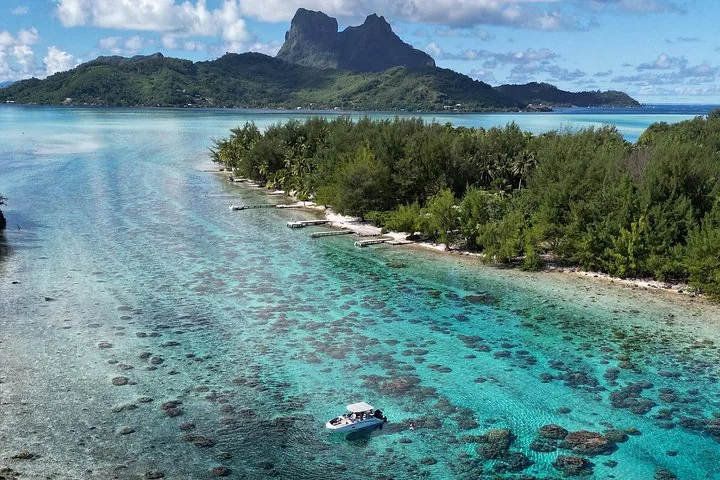
Its geography sets it apart. At its center are the remains of an ancient volcano, including Mount Otemanu and Mount Pahia. Around the main island lies a shallow lagoon, protected by a long coral reef, and along the reef sit small islets known locally as motu.
Many of Bora Bora’s famous luxury resorts are built on these motu instead of on the main island, which is why some hotels can only be reached by boat.
Is Bora Bora in Tahiti?
Not exactly. Tahiti and Bora Bora are separate islands, and both belong to French Polynesia. Tahiti is the main international gateway and home to the capital, Papeete. Bora Bora lies farther northwest and is reached by a domestic flight or an inter-island ferry.
When travel companies advertise vacations to “Tahiti and its islands,” Bora Bora is usually one of the islands included.
What makes Bora Bora special?
Plenty of tropical islands have beautiful beaches, warm water and palm trees. Bora Bora combines its lagoon with mountain scenery and marine life that is unusually easy to reach.
You don’t need to be a certified diver to see the underwater side of the island. Many of the best excursions involve snorkeling in fairly shallow lagoon water, although conditions vary by location.
On a typical guided lagoon tour, you might visit a coral garden, watch stingrays and blacktip reef sharks, and stop beside a sandy motu with Mount Otemanu rising behind it.
The lagoon looks just as striking from above. Its shades of blue show changes in depth, sandy bottoms, coral formations and channels.
The island is also small enough to feel intimate. You can snorkel in the morning, have lunch overlooking the lagoon, explore the villages in the afternoon and finish the day watching the sunset from the water.
That mix makes Bora Bora especially popular with honeymooners, and it suits families, wildlife lovers, photographers and anyone who loves being on the ocean just as well.
Snorkeling in Bora Bora: the one thing to plan before you arrive
If you plan one activity before you arrive, make it a snorkeling trip on the lagoon.
The water around the island holds a wide variety of marine life, including tropical reef fish, rays, reef sharks and coral. A guided excursion can reach several snorkeling areas in a single outing.
What can you see while snorkeling?
Marine life varies by site, season and conditions, but you are likely to see:
- Blacktip reef sharks: Sleek, generally wary sharks often seen in lagoon areas and on guided wildlife trips.
- Stingrays: Frequently seen over sandy bottoms, especially in shallow parts of the lagoon.
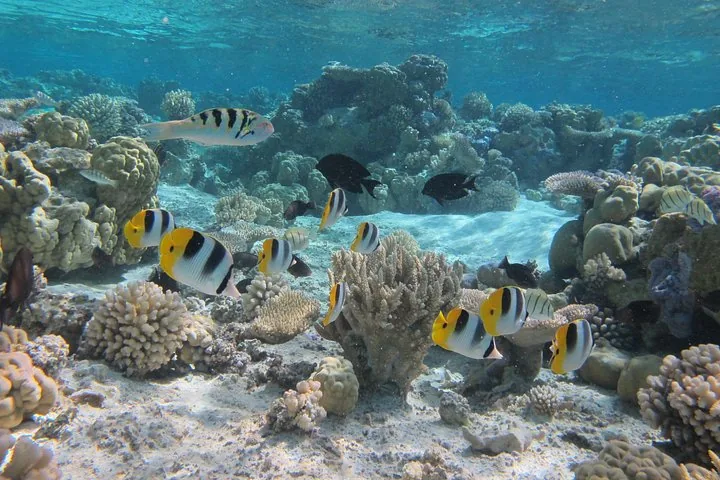
- Butterflyfish and angelfish: Colorful fish found around coral-rich areas.
- Parrotfish: Reef fish that graze on algae and help keep reefs healthy.
- Moorish idols: Distinctive black, white and yellow reef fish.
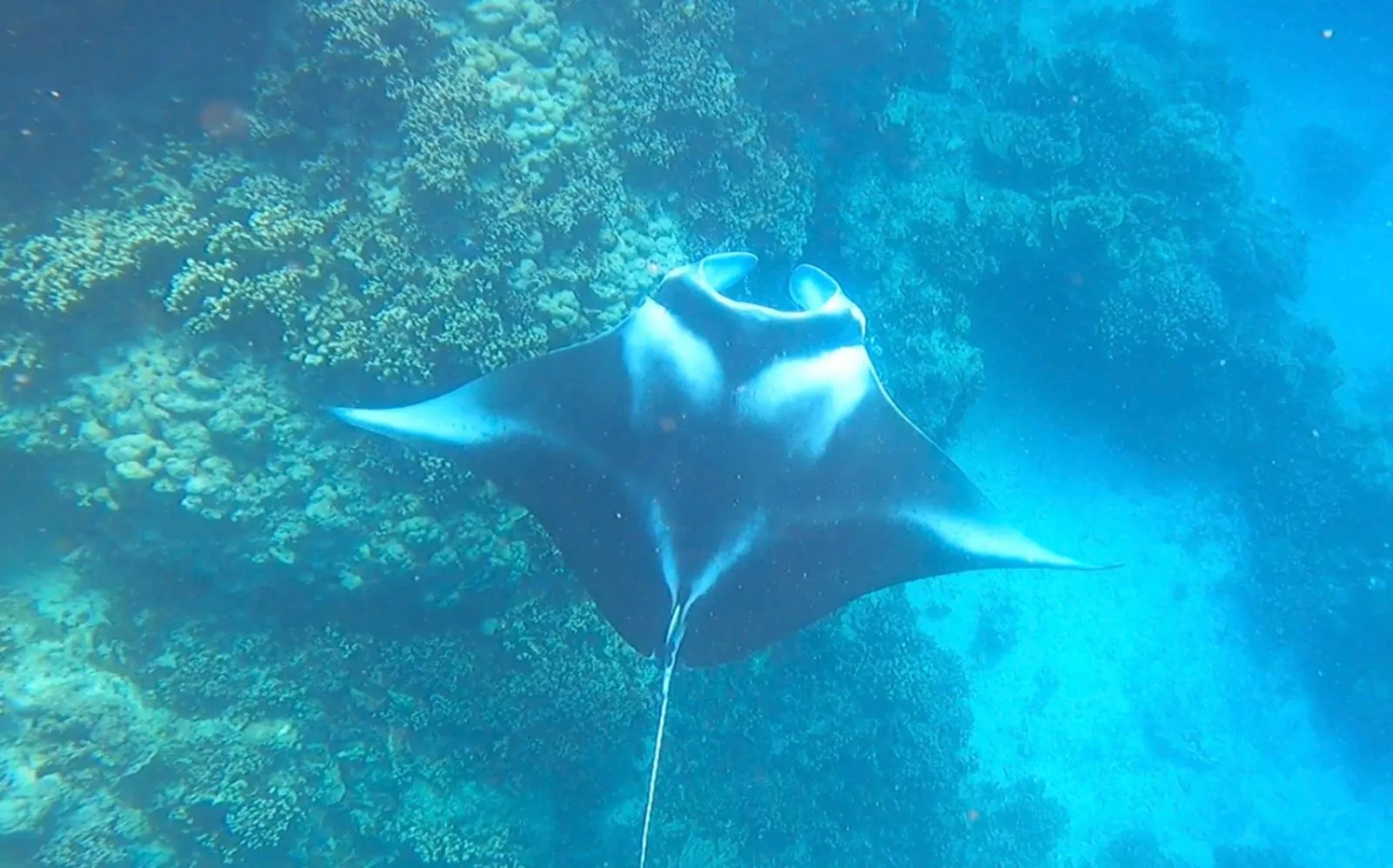
- Manta rays: Possible, but sightings depend on location and no tour can guarantee one. Our manta ray snorkeling page lists the tours that name a manta stop.
- Sea turtles: Occasional encounters are possible, although no ordinary snorkeling trip should promise one.
Some excursions concentrate on shallow-water wildlife encounters, while others visit coral-rich areas or go closer to the outer reef.
What kind of snorkeling tour should you choose?
| Tour type | Best for | Typical experience | Our pick |
|---|---|---|---|
| Shared half-day snorkeling tour | First-time visitors, couples, families | Several snorkeling stops, sharks, rays, coral gardens | Reef Discovery Half-Day Snorkel Tour, from $135 per person, 5.0/5 from 1,042 reviews |
| Full-day lagoon excursion | A whole day on the lagoon | Multiple stops, sightseeing, often a motu lunch | Full-Day Lagoon Tour with Snorkeling and Motu Lunch, from $174 per person, 5.0/5 from 1,701 reviews |
| Private snorkeling charter | Couples, families, small groups | Flexible itinerary, your own stops, private guide | Private Half-Day Snorkeling Tour by Boat, $650 per boat for up to 4, 5.0/5 from 126 reviews |
| Wildlife-focused snorkeling tour | Marine-life lovers | Long stops where particular species gather | Eco Snorkel Cruise with Sharks and Stingrays, from $113 per person, 4.8/5 from 598 reviews |
| Combination lagoon and motu tour | A slower day | Snorkeling plus beach time, food or cultural activities | Full-Day Snorkel Tour with Lunch on Motu Fanfan, from $145 per person, 4.9/5 from 177 reviews |
For most visitors, a guided half-day or full-day lagoon tour is the best introduction to Bora Bora’s underwater world. The best Bora Bora snorkeling tours page ranks seven picks with prices, ratings and trade-offs.
A private boat makes most sense if you are traveling with children, want more help in the water, or would prefer not to follow a large group’s schedule. Because it is priced per boat, the private snorkeling tours page works out the cost per person for two to five people.
Can you snorkel directly from the beach?
Yes, in some places, although Bora Bora’s best snorkeling sites are mostly out of reach from shore.
Some resorts have their own lagoons, protected marine areas or coral nearby. Others sit above mostly sandy bottoms, where you may see fish but little living coral.
Matira Beach can be pleasant for swimming and casual snorkeling when conditions are suitable, but it is not one of the island’s boat-access reef sites.
Our advice: even if your resort lends snorkeling gear, book at least one boat trip. You’ll reach parts of the lagoon that are otherwise hard to get to.
Swim near sharks and stingrays
One of the most memorable things to do in Bora Bora is watching blacktip reef sharks and stingrays in their natural setting.
Despite the dramatic photos, this is nothing like cage diving with large predatory sharks. Many trips visit sheltered parts of the lagoon where blacktip reef sharks and rays may be seen in shallow water. Some operators let guests stand on suitable sandy areas, while others focus on swimming and snorkeling.
Is swimming with sharks in Bora Bora safe?
Blacktip reef sharks are generally not aggressive toward people, and encounters are common on guided trips. Any encounter with wild animals still carries some risk.
Choose an experienced operator who explains safe distances, water conditions and how to behave around wildlife. Don’t touch, chase, grab or try to feed sharks or rays, and avoid operators that encourage handling animals for photos.
You should also be comfortable in the water and follow the guide’s instructions about currents and boat traffic.
Should you choose a shark-and-ray tour or a general snorkeling tour?
A general snorkeling tour is the better choice if you want a mix of coral gardens, reef fish and wildlife. A dedicated shark-and-ray trip makes sense if those encounters are your main reason for getting on the lagoon. The Eco Snorkel Cruise with Sharks and Stingrays spends about 100 of its 150 minutes on a knee-deep sandbank with the sharks and rays.
Many Bora Bora lagoon tours already include a shark-and-ray stop, so check itineraries carefully before paying for two similar trips. Our shark and stingray tours page compares the stops, the species and each operator’s feeding policy.
Discover Bora Bora’s coral gardens
Coral gardens are among the most attractive snorkeling spots in Bora Bora. These are areas where coral gives shelter and food to reef fish, and the best of them feel like natural aquariums, with fish moving between branching and rounded coral.
The term coral garden is used for several snorkeling areas in and around Bora Bora, so it doesn’t always mean one precisely defined place. Some spots can only be reached by boat, and whether they suit snorkeling on a given day depends on the weather, currents, coral condition and water depth.
What should you expect?
A good coral-garden stop lets you watch fish up close without disturbing the reef. Visibility can be excellent on calm days, but it changes with wind, rain, tides and sediment.
Bora Bora’s reefs are living ecosystems, and some areas have been affected by coral bleaching, storm damage and other pressures. Never stand on coral, and keep your fins clear of it.
The Coral Garden snorkeling page lists the tours whose itinerary includes a Coral Garden stop and how long each one stays there.
Take a lagoon cruise around the island
Snorkeling isn’t the only reason to get out on the water. A lagoon cruise is one of the best ways to see Bora Bora’s geography, especially the contrast between Mount Otemanu, the outer reef and the bright turquoise shallows.
Boats travel through different parts of the lagoon, passing resort motu, coral formations and viewpoints you can’t see from the main island. Depending on the tour, you might also stop to snorkel, swim or have lunch.
Popular lagoon trips
Traditional Polynesian outrigger tours: Often combine lagoon sightseeing with stories about local culture and time to swim. The Adults-Only Outrigger Canoe Snorkel Cruise with BBQ Lunch costs from $282 per person, rated 4.9/5 from 202 reviews, and caps the group at six couples.
Shared lagoon cruises: A practical choice if you want to see the island without hiring a private boat. The Full-Day Snorkel Cruise with Sharks, Rays and BBQ Lunch costs from $155 per person and is rated 4.8/5 from 722 reviews.
Private boat charters: Best for flexible itineraries, photo stops, couples and small groups. The Private Solar Boat Snorkel Experience costs $523 per boat for up to five people, rated 5.0/5 from 47 reviews.
Motu picnic trips: Usually include time on a small islet and may feature a Polynesian-style lunch, as on the Full-Day Snorkel Tour with Lunch on Motu Fanfan from $145 per person.
Sunset cruises: Appealing if you want the scenery without spending much time in the water.
If you have only one free day in Bora Bora, choose a trip that combines lagoon sightseeing, reef snorkeling and wildlife encounters. Every lagoon and snorkel trip on this site is listed on the all tours page, with its length, stops and price.
Relax on Matira Beach
Bora Bora is famous for its beaches, but much of the coastline is taken up by resorts, rocky shores or shallow lagoon flats, with few long public sandy beaches.
Matira Beach, near the southern tip of the main island, is the exception. It is Bora Bora’s best-known public beach, with soft white sand and wide views across the lagoon. Unlike the resort beaches, Matira is open to anyone without booking an expensive hotel.
The water is often shallow near shore, which makes it good for wading and easy swimming when conditions are safe.
What to know before visiting Matira Beach
- Access is generally free.
- Facilities are limited compared with a resort beach.
- Bring drinking water, sunscreen and anything else you’ll need for a comfortable visit.
- There are places to eat nearby, but opening times vary.
- Swimming conditions change with tides, wind and currents.
- Sunset is a particularly beautiful time to visit.
Matira Beach is a good place for a slow afternoon after a morning excursion. For coral snorkeling, though, we’d usually choose a guided lagoon trip instead.
Explore Mount Otemanu and the interior
Mount Otemanu dominates the island’s skyline. At about 727 m (2,385 ft) above sea level, it is the highest point on Bora Bora and one of the most recognizable volcanic peaks in the South Pacific. Its jagged cliffs are visible from almost every part of the lagoon.
The summit isn’t a normal hiking destination, but guided walks, hillside viewpoints and land-based excursions show you a different side of the island.
Ways to explore inland
Guided 4WD tours: One of the easiest ways to reach hillside viewpoints and learn about Bora Bora’s history.
ATV or quad-bike trips: A more adventurous way to visit selected tracks and viewpoints.
Guided hikes: For anyone interested in tropical plants, volcanic geology and local history. Choose a route that fits your fitness and the conditions.
Island road trip: A rented car or scooter makes it easy to stop at villages, beaches and coastal viewpoints.
Bora Bora’s mountains can be steep, slippery and densely overgrown. Don’t attempt unmarked summit routes on your own.
The island also served as an American military base during World War II, and some guided excursions visit surviving military sites and viewpoints from that period.
Polynesian culture beyond the resorts
It’s easy to spend a whole Bora Bora vacation surrounded by international luxury hotels without seeing much of everyday island life. Try not to.
Bora Bora has a living Polynesian culture, with traditions carried on through language, music, food, dance, crafts and family life. Vaitape, the main town, gives you a more practical introduction to local life than the private resort motu. Browse the small shops, try a local snack bar and spend some time away from the main tourist facilities.
Local foods to try
Poisson cru: Fresh raw fish, usually marinated in lime and mixed with coconut milk and vegetables. One of French Polynesia’s signature dishes.
Grilled fish: Tuna, mahi-mahi and other seafood are common on menus.
Ma’a Tahiti: Traditional Polynesian food, sometimes cooked in an earth oven for special meals or cultural occasions.
Tropical fruit: Depending on the season, look for pineapple, papaya, mango, coconut and other local produce.
A guided Polynesian cultural experience can be a good use of an evening too, especially when local hosts share their own traditions instead of putting on a generic resort show.
Where to stay in Bora Bora
Where you stay is one of the biggest decisions in planning a Bora Bora trip. The island is famous for expensive overwater villas, but you don’t need one to enjoy the lagoon. There are three main types of accommodation.
Luxury resorts on the motu
These are the iconic Bora Bora properties, often with overwater bungalows, private beaches, restaurants, pools and views toward Mount Otemanu. Well-known options include:
- Four Seasons Resort Bora Bora
- The St. Regis Bora Bora Resort
- The Westin Bora Bora Resort & Spa
Best for: Honeymoons, special occasions, privacy, and anyone who plans to spend much of the trip at the resort.
Trade-off: You often depend on resort boats to reach the main island, and transfers, meals and activities can add a lot to the cost.
Hotels and resorts on the main island
Staying on the main island makes it easier to reach shops, local restaurants, Matira Beach and road-based activities. Properties around Matira and the southern coast are especially convenient if you like some independence.
Maitai Polynesia Bora Bora and InterContinental Bora Bora Le Moana Resort are among the better-known options in this part of the island.
Best for: Couples, independent travelers and anyone who wants a resort without being cut off on a motu.
Guesthouses, pensions and vacation rentals
Locally run accommodation can cost much less than Bora Bora’s luxury resorts. You’ll usually give up private pools, long beaches and overwater villas, but you’ll be closer to local communities and often get a more personal stay.
Best for: Travelers on a budget, longer stays, and visitors who plan to spend most of their days exploring.
Which area should you choose?
| Area | Best for | Main consideration |
|---|---|---|
| Matira | Beaches, restaurants, easier independent travel | Limited choice of places to stay |
| Vaitape and nearby | Shops, practical transport, local life | Less of a secluded resort atmosphere |
| Eastern and northeastern motu | Luxury resorts, Mount Otemanu views | You depend on boat transfers |
| Other main-island locations | Guesthouses, quiet stays, flexibility | A car, scooter or arranged transport may help |
Our recommendation: if your budget allows, spend part of the trip in an overwater bungalow and the remaining nights in a main-island hotel or guesthouse. You’ll see both sides of Bora Bora without paying luxury resort prices for your whole stay. Our where to stay in Bora Bora guide compares ten hotels and resorts by area, snorkeling access and transfers.
When is the best time to visit Bora Bora?
Bora Bora is warm all year. The main seasonal difference is rainfall, with only small changes in temperature.
The drier season generally runs from May through October, while November through April tends to be warmer, wetter and more humid.
Bora Bora weather by season
| Period | Typical conditions | Best for |
|---|---|---|
| May–June | Generally drier, pleasant temperatures | Snorkeling, sightseeing, active trips |
| July–August | Drier season, sometimes breezy, a popular travel period | Outdoor activities and lagoon trips |
| September–October | Generally good weather, with the wetter season approaching | Snorkeling, couples, photography |
| November | Rising humidity and rainfall | Shoulder-season travel with flexible plans |
| December–March | Wetter, hotter, more humid | Travelers comfortable with tropical showers |
| April | Turning toward drier conditions | A possible shoulder-season choice |
What’s the best month for snorkeling?
May, June, September and October are good months to consider if you want generally good weather for lagoon trips.
Season alone doesn’t set the underwater visibility, though. Wind, recent rain, tides, currents and the location of your snorkeling site can make a bigger difference on any given day.
July and August usually bring pleasant dry-season weather, but also stronger trade winds, which can make exposed snorkeling sites choppier. In the wetter months, excellent snorkeling is still possible between showers.
When is Bora Bora cheapest?
Hotel prices often rise around popular holiday periods and high-demand travel dates. The wetter season and shoulder months may bring better accommodation deals, although not every resort will be cheaper.
If your dates are flexible, compare total trip costs instead of relying on broad seasonal claims. International flights, domestic flights, resort transfers and meal plans can change the overall price a lot.
Our best time to visit Bora Bora guide goes through the weather month by month, with rainfall, wind and crowds for each.
How to get to Bora Bora
For most international visitors, the journey starts at Tahiti Faa’a International Airport (PPT), near Papeete. From there you’ll usually continue to Bora Bora on a domestic flight.
Flying from Tahiti to Bora Bora
A nonstop flight takes about 50 minutes. Bora Bora Airport (BOB) sits on Motu Mute, a small island within the lagoon, not on the main island.
The arrival is one of the highlights of the trip: on a clear day the views over the reef, the motu and the volcanic island are extraordinary.
If seats aren’t assigned or your airline lets you choose, ask which side of the plane usually has the best view. Flight paths can change, so no side guarantees the classic lagoon panorama.
Getting from Bora Bora Airport to your hotel
No road connects Bora Bora Airport to the main island, so you cross part of the lagoon by boat.
Air Tahiti runs a boat shuttle between the airport and Vaitape for passengers on eligible Air Tahiti flights, and the transfer is included in the airfare. Some resorts arrange their own private boat transfers from the airport instead.
Confirm your hotel transfer before you arrive. Some luxury resort transfers cost extra, even when the room itself is prepaid.
Can you take a ferry to Bora Bora?
Yes. Inter-island passenger ferries, including the Apetahi Express network, run on some routes as an alternative to flying. Ferry journeys generally take several hours and depend more on sailing schedules and sea conditions.
For most visitors with limited vacation time, flying is the simplest option. If you’re visiting several islands on a flexible schedule, compare the ferry route and its cost with domestic flights.
Getting around Bora Bora
The main island is small, but public transport is limited, and where you stay affects how easily you can explore.
Car rental
Useful for visiting Matira Beach, restaurants, shops and viewpoints at your own pace. If you’re staying at a remote motu resort, you generally won’t need a car for your whole stay.
Scooter rental
A popular choice for independent travelers who are comfortable on a scooter. Consider road conditions, weather, insurance and local license requirements.
Bicycles and e-bikes
Good for short rides or an easy coastal outing, although heat, hills and traffic can make a full island loop more tiring than you might expect.
Taxis and transfers
Available, but more limited than in big tourist cities. Booking transfers ahead helps for early departures, evening restaurants or excursions that start away from your hotel.
Boats
Essential for reaching many resort motu, coral-garden sites and private lagoon spots. Some resorts run scheduled shuttle boats, while others charge separately.
Before booking a motu resort, check the boat schedule and transfer fees. A beautiful hotel can feel restrictive if every trip to the main island means an expensive or infrequent transfer.
How much does a Bora Bora vacation cost?
Bora Bora is one of the more expensive destinations in the South Pacific, but the cost varies enormously with where you stay and how you travel. An overwater villa with private transfers and resort dining can cost many times more than a main-island guesthouse with local restaurants.
Indicative daily budget for two people
These ranges are our planning allowances, not live quotes. They exclude international flights and can vary a lot with season, taxes, availability and hotel standard.
| Travel style | Approximate daily budget for two |
|---|---|
| Budget | $200–350 |
| Mid-range | $350–700 |
| Luxury | $900–2,000+ |
| High-end overwater villa | $1,500–3,000+ |
The estimates include accommodation, food and an allowance for local transport and activities, averaged across the stay. Luxury accommodation can go well beyond them.
Costs people often underestimate
Resort boat transfers: A direct airport transfer may not be included in the hotel rate.
Food and drinks: Eating only at luxury resorts gets expensive.
Excursions: Private lagoon tours cost much more than shared group trips. On this site, shared half-day snorkel trips start at $113 per person and private boats at $523 for up to five people.
Domestic flights: The flight from Tahiti to Bora Bora is on top of your international airfare.
Hotel taxes and service charges: Check the final booking price, not only the advertised nightly rate.
Limited transport: Taxis and boat transfers may cost more than you expect.
How to save money and still see the best of the island
Stay on the main island, eat at a mix of local restaurants and hotel venues, and choose one excellent snorkeling trip over several similar ones. You’ll see the same mountain and lagoon as the guests paying thousands of dollars for an overwater villa.
How many days do you need in Bora Bora?
Four or five nights is a good starting point for a first visit. That gives you time for a lagoon tour, a day exploring the main island, some beach or resort time, and a little slack if the weather changes your plans.
Two nights
Possible if Bora Bora is one stop on a longer French Polynesia itinerary, but your time will be tight. Make one lagoon trip the priority and keep the rest of the schedule light.
Three nights
Enough for a good introduction, especially if you’ve booked your main activities in advance.
Four to five nights
The best balance for many first-time visitors. You can enjoy the resort, snorkel, explore the island and leave time for whatever comes up.
Six or seven nights
Ideal for honeymooners, families, divers and anyone who prefers a slow vacation. A longer stay also makes sense if Bora Bora is your main destination and not one of several islands.
A four-day Bora Bora itinerary
Day 1: Arrive and see the lagoon
Fly into Bora Bora and transfer to your hotel. Settle in, enjoy the view, and spend the afternoon at Matira Beach or at your resort. If your schedule allows, book a sunset cruise for the first evening.
Day 2: A full day of snorkeling on the lagoon
Make this the main day of the trip. Choose a guided lagoon tour that includes coral gardens, reef fish, sharks and rays where conditions allow, and ideally a motu lunch, such as the Full-Day Lagoon Tour with Snorkeling and Motu Lunch. A full day lets you cover several areas without rushing; the full-day snorkeling tours page compares the options.
Day 3: Explore the main island
Rent a car, book a 4WD trip or join a guided inland tour. See Mount Otemanu from different angles, visit viewpoints, learn some local history and spend time in Vaitape. Finish with dinner overlooking the lagoon.
Day 4: An easy last morning
Enjoy one last swim, a kayak outing or a walk along the beach. If your flight leaves later in the day, pick a short activity near your hotel over a complicated excursion with uncertain transfer times.
If you have an extra day, leave it unplanned as a weather buffer or use it for a private snorkeling trip.
Bora Bora or Moorea: which island should you visit?
Bora Bora and Moorea are two of French Polynesia’s most popular islands, and they offer different trips. Bora Bora has the more iconic lagoon, with its ring of motu and views of Mount Otemanu. Moorea is easier to reach from Tahiti and has a wider choice of independent accommodation, road trips, hiking and land-based activities.
Quick comparison
| Feature | Bora Bora | Moorea |
|---|---|---|
| Famous for | Turquoise lagoon, overwater resorts | Mountain scenery, bays, lagoon |
| Overall cost | Generally higher | Usually more flexible |
| Snorkeling tours | Excellent | Excellent |
| Independent exploring | Possible, but more limited | Very convenient |
| Luxury overwater stays | Especially iconic | Available, with fewer choices |
| Access from Tahiti | Domestic flight or longer ferry | Short ferry crossing |
| Best for | Classic lagoon vacation, special occasions | Active exploring, varied budgets |
If your budget and schedule allow, visiting both islands is an excellent combination. Moorea is the more flexible introduction to French Polynesia, and Bora Bora is the classic lagoon trip.
Practical tips before you go
Money and payment
The currency is the CFP franc, also called the Pacific franc (XPF). Its exchange rate is fixed against the euro at about 119.33 XPF to €1.
Major hotels and established tour businesses generally accept cards, but some local cash is useful for smaller businesses.
Language
French and Tahitian are widely spoken, and English is common in resorts and tourism businesses. A couple of local words are appreciated:
- Ia ora na — Hello
- Māuruuru — Thank you
Entry requirements
French Polynesia has its own entry rules, separate from the European Schengen Area. Visa requirements depend on your nationality, passport type, residence status and transit route.
Check the official France-Visas website before booking, and make sure you meet any US transit requirements if your flight connects through the United States.
Health and safety
Bora Bora is generally a welcoming and easy destination, but take normal precautions. Protect yourself from the strong tropical sun, stay hydrated and use mosquito repellent when needed.
In the water, pay attention to currents, weather, boats and marine wildlife. Arrange travel insurance that covers medical treatment, evacuation and any adventure activities you plan before you leave.
Internet and mobile connections
Most larger hotels offer Wi-Fi, although the quality varies. Check your international roaming charges before you travel. A local SIM or compatible eSIM helps if you plan to explore on your own, but check coverage and that your phone supports it.
What to pack
- Lightweight, breathable clothes
- Swimwear and a rash guard
- Sun hat and sunglasses
- Suitable sunscreen and sun protection
- Water shoes, where appropriate
- Dry bag for boat trips
- Waterproof phone pouch or underwater camera
- Refillable water bottle
- Mosquito repellent
- Any prescription medicines you need
- Light waterproof jacket for tropical showers
Snorkeling gear is usually supplied on guided tours, but check the listing before you book. If you have a mask that fits you well, bring it.
Responsible snorkeling and reef protection
Bora Bora’s lagoon is beautiful, but it is not immune to damage. Coral reefs here face warming seas, sediment, pollution, physical damage and heavy tourism. You can help protect them with a few simple habits:
- Never stand on coral or break off pieces as souvenirs.
- Don’t touch marine animals, including rays, sharks and turtles.
- Don’t feed fish or sharks, and choose wildlife operators that let animals behave naturally instead of staging encounters.
- Keep fins and loose gear away from coral.
- Choose established operators that use moorings instead of anchoring on the reef.
- If you’re not a confident swimmer, wear a flotation vest and stay close to a qualified guide.
A good snorkeling trip leaves the animals and the reef exactly as you found them.
Is Bora Bora worth visiting?
Yes, especially if you love tropical scenery, snorkeling and warm-water activities, or want to see one of the world’s most distinctive lagoons.
It isn’t the best choice for every traveler. If you’re looking for nightlife, big cities, cheap restaurants or dozens of land-based attractions, other destinations will suit you better. Bora Bora is also expensive, especially once you add premium accommodation and transport.
You don’t have to stay in the most expensive resort or book every excursion. One good snorkeling trip, an afternoon at Matira Beach and a few days on the lagoon are enough to see why the island has its reputation.
Our main advice: don’t spend your whole Bora Bora vacation looking at the lagoon from your hotel room. Get out on the water, because that is where the island is at its best.
Frequently asked questions about Bora Bora
Where is Bora Bora located?
Bora Bora is in French Polynesia in the South Pacific Ocean, about 260 km (160 miles) northwest of Tahiti. It belongs to the Society Islands.
Is Bora Bora a country?
No. Bora Bora is an island within French Polynesia, an overseas collectivity of France.
What is Bora Bora famous for?
Bora Bora is best known for its turquoise lagoon, coral reef, Mount Otemanu, luxury overwater bungalows, snorkeling and romantic resort vacations.
What is the best month to visit Bora Bora?
May through October generally has drier weather. May, June, September and October suit visitors who want good weather while avoiding some of the busiest holiday periods.
Is Bora Bora good for snorkeling?
Yes. Bora Bora is one of French Polynesia’s best-known snorkeling destinations, with coral gardens, tropical fish, reef sharks and rays. Most of the best snorkeling areas are reached on guided boat trips.
Can you swim with sharks in Bora Bora?
Yes. Many guided lagoon tours include a stop where you can watch blacktip reef sharks while swimming or snorkeling. Encounters depend on the animals and the conditions, and you should follow the guide’s rules for keeping your distance.
Do you need to know how to swim to visit Bora Bora?
No. Bora Bora has boat sightseeing, beaches, scenic drives, cultural experiences, restaurants and resort activities. For snorkeling, though, you should be a reasonably good swimmer, and non-swimmers should choose suitable trips and ask about flotation vests.
Is Bora Bora expensive?
Generally, yes. Luxury accommodation, imported supplies, restaurant meals and inter-island transport can be costly. Main-island guesthouses, local restaurants and shared excursions help keep the cost down.
How many nights should you stay in Bora Bora?
Four or five nights is a good choice for a first visit. Three nights can work on a short island-hopping trip, and six or seven nights allow a slower vacation.
Can you visit Bora Bora without staying at a resort?
Yes. Independent hotels, guesthouses and vacation rentals are available on the main island, and you can still book snorkeling tours, visit Matira Beach and explore the lagoon.
Are there ferries from Tahiti to Bora Bora?
Yes. Inter-island passenger ferries run on some routes, although the journey takes much longer than the nonstop flight of about 50 minutes. Check current sailing schedules before planning around one.
Is Bora Bora better than the Maldives?
Both have remarkable lagoons and overwater accommodation, but the scenery is very different. Bora Bora has volcanic mountains, a main island to explore and its own Polynesian culture. The Maldives is an archipelago of low-lying coral islands known for resort islands, atolls and marine life.
Do you need to book Bora Bora snorkeling tours in advance?
Booking ahead is a good idea for popular tours, especially in busy travel periods, for private boats, or if you only have a few days on the island. Compare cancellation terms and check whether hotel pickup is included.
Final tips for planning your Bora Bora trip
On a first visit, make three decisions early: when to go, where to stay and which lagoon trip to book.
Choose your dates by the balance of weather, budget and crowds that suits you. Pick a place to stay that fits how you want to spend your time: a remote luxury motu if privacy matters most, or the main island if you prefer restaurants, independent exploring and easier transport.
Then reserve at least one good snorkeling or lagoon trip. The resorts are beautiful, but the lagoon is the main attraction, and seeing it from a boat, swimming over its reefs and watching the marine life in clear water is what makes the trip. Our best Bora Bora snorkeling tours page compares the shared coral-garden trips, shark-and-ray cruises and private boats side by side, so check current availability for your dates there.
Sources
- Tahiti Tourisme — Bora Bora: island geography, activities and accommodation.
- Air Tahiti — Bora Bora: flight times, the Motu Mute airport and the included Vaitape shuttle.
- Apetahi Express — ferry schedules: current inter-island ferry services.
- Tahiti Tourisme — currency: the XPF, cards and cash.
- France-Visas: official entry and visa rules, including French Polynesia’s separate provisions.
Tour prices, ratings and review counts are each platform’s figures as checked on 1 October 2026.
Get in the Water With the Rays
Free cancellation up to 24 hours before. Full-Day Lagoon Tour with Snorkeling and Motu Lunch from $174 per person.
Check Availability & Book