Bora Bora in October and November: Weather, Snorkeling and Lagoon Tours
October is the drier pick for a snorkeling trip and November the warmer, wetter and often cheaper one. Rainfall, water temperature, tour cancellations and which lagoon trips to book.
October and November are both good months for a Bora Bora snorkeling trip. October closes the drier season, so your boat days are more likely to stay dry. November opens the wetter season, with lagoon water around 28°C (82°F), quieter resorts and more chance of a package deal. Both months have the same reef sharks, stingrays and coral gardens you came for.
The difference is how predictable the weather is. In October you can usually count on sunny spells and fairly dry days. In November you will see more tropical downpours, often heavy and short, along with greener hillsides and a calmer feel at many resorts.
If snorkeling is the main reason for the trip, October has the edge for weather, and November is still a good month if you can move a tour by a day. Whichever you pick, book your main snorkel trip for early in your stay. The Reef Discovery Half-Day Snorkel Tour below runs 3.5 hours from $135 per person, picks up from hotels and chooses its snorkel stops on the day to suit the conditions.
Check Availability
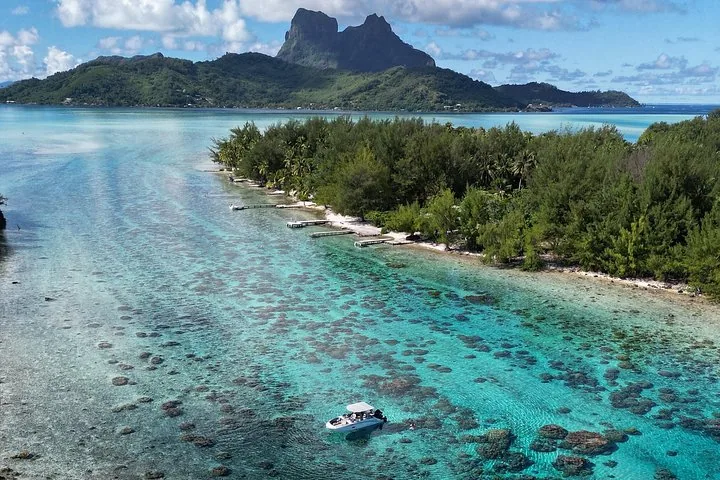
Reef Discovery Half-Day Snorkel Tour
- 5.0/5 (1,050+ reviews)
- 3.5 hours
- Free cancellation
- Operated by Reef Discovery
Includes Pickup and drop-off at your accommodation · Guide and guided snorkeling in the water · Snorkeling equipment including …
You'll choose your date and complete the booking on Viator. Free cancellation up to 24 hours before departure.
Same trip, also on GetYourGuide
From $143 per person · ★ 5.0 from 9 GetYourGuide reviews
Each platform sets its own price and collects its own reviews, so compare both before you book on Viator.
October vs November in Bora Bora at a glance
| October | November | |
|---|---|---|
| Season | End of the drier season | Start of the wetter season |
| Average daytime high | About 30°C / 86°F | About 31°C / 88°F |
| Average night low | About 23°C / 73°F | About 24°C / 75°F |
| Lagoon temperature | About 27°C / 81°F | About 28°C / 82°F |
| Average rainfall | About 116 mm (4.6 in), rising through the month | About 150 mm (5.9 in), with more frequent showers |
| Snorkeling | Usually very good | Often very good between rain spells |
| Underwater visibility | Often clearer in settled weather | Can drop near shore after heavy rain |
| Wind | Trade winds can still be noticeable | Often lighter, but squalls are possible |
| Crowds | Usually below the July and August peak | Often quieter, apart from holiday dates |
| Resort prices | Shoulder-season offers | More chance of off-peak offers |
| Boat tours | Running, subject to weather | Running, with more need for flexibility |
| Best for | Dependable outdoor plans, snorkeling | Warm water, quieter stays, flexible travelers |
Air and water temperatures are the averages Tahiti Tourisme publishes for the islands. Rainfall is the long-term average for Bora Bora Airport from the Japan Meteorological Agency, the same figures our best time to visit Bora Bora guide uses for all twelve months. None of this is a forecast; rain, visibility, hotel rates and tour schedules vary from year to year.
Our pick: October for a snorkeling holiday, and November if you don’t mind some rain and would like warmer water and a possible saving on the room.
Other Experiences
Other experiences you might enjoy
More Bora Bora snorkeling tours, each with its own page and booking link.
What is Bora Bora like in October?
October is one of the easier transition months. The island is moving from the drier austral winter toward the wetter summer, and most days still suit a morning on the water.
The air is warm without the heavier humidity of January or February. The lagoon is comfortable for long swims, and you can snorkel for an hour or more without getting cold.
The scenery is the same as in any month: Mount Otemanu above the island, shallow aquamarine water around the motu and white-sand beaches lined with palms.
Compared with July and August, October has fewer peak-season holidaymakers.
October weather in Bora Bora
Expect daytime highs around 30°C (86°F) and night lows around 23°C (73°F). The lagoon sits near 27°C (81°F).
Rain becomes more likely as the month goes on. The chance of a wet day roughly doubles between the start and the end of October.
The second half of October is still a good time to come. A trip in early October has somewhat better odds of dry weather than one around the start of November.
Is October good for snorkeling?
Yes. October is usually a very good month for snorkeling in Bora Bora.
Drier weather means less runoff, which helps visibility, especially at sites sheltered from wind and swell.
On a typical snorkel trip you might visit:
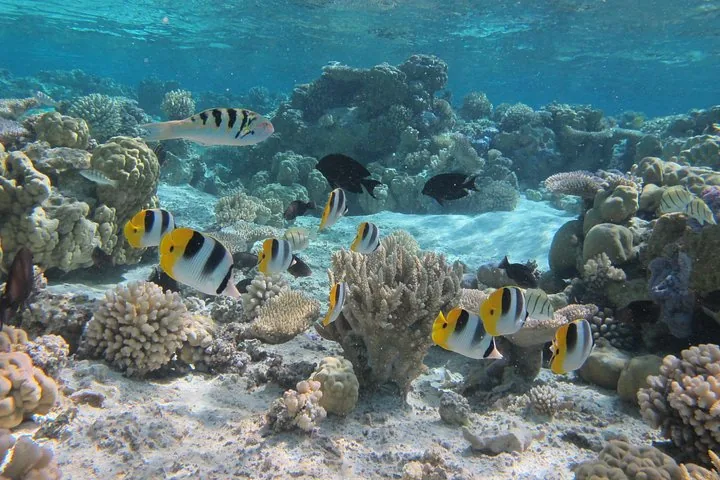
- Coral gardens with butterflyfish, parrotfish and other reef fish.
- Shallow sandy areas where stingrays gather.
- Lagoon spots where blacktip reef sharks are seen on most trips.
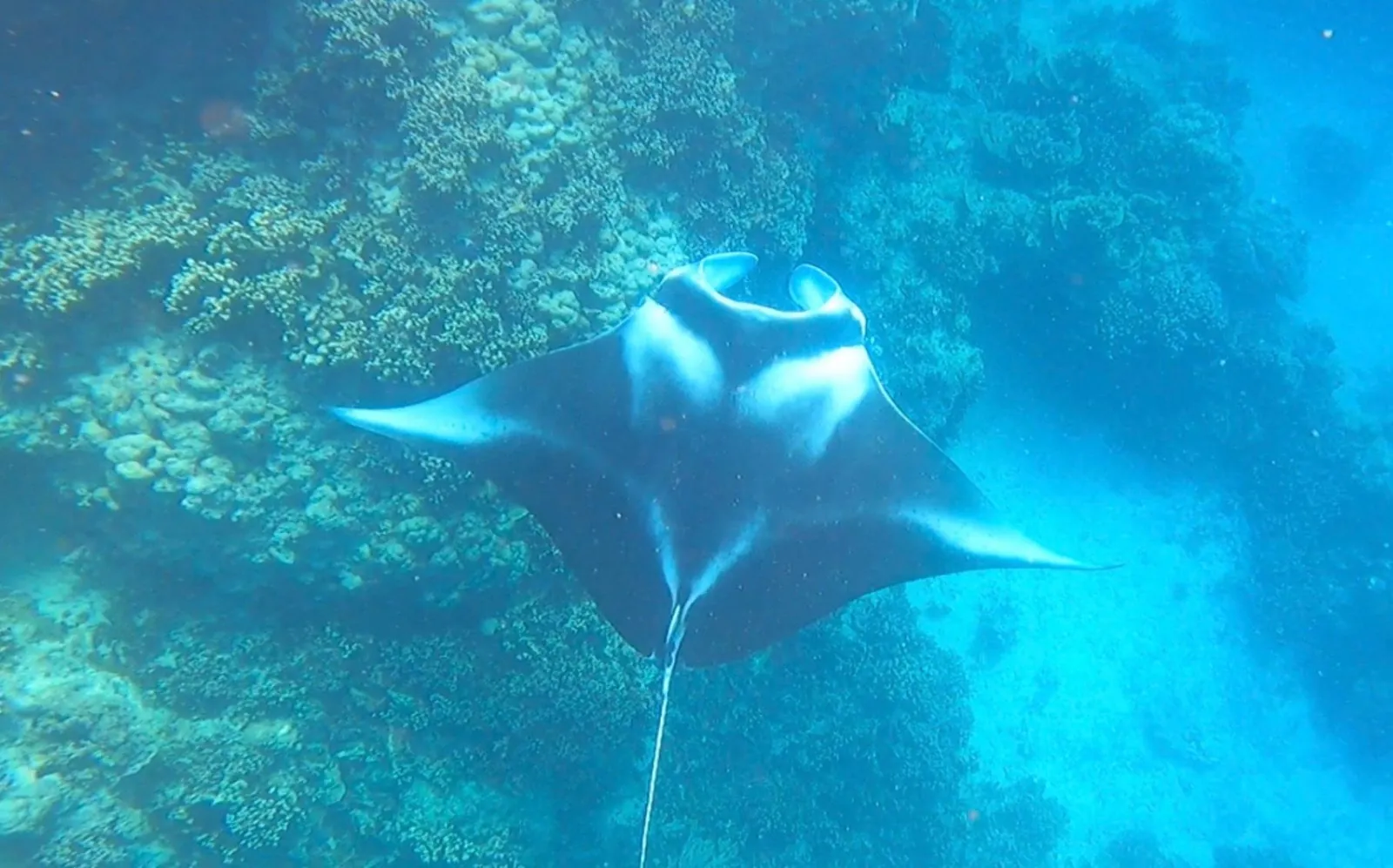
- Deeper or more sheltered spots where manta rays are sometimes seen.
No species is guaranteed. A good guide picks the day’s stops by the sea conditions and does not promise a fixed wildlife list.
Who should choose October?
October suits first-time visitors, couples planning a honeymoon with plenty of time outdoors, families who want several swimming days and anyone booking more than one lagoon trip.
If your stay is short and you want the best chance of doing everything you planned, October is the safer of the two months.
What is Bora Bora like in November?
November starts the wetter season, but the island does not change overnight.
The sea is still turquoise, the water is usually warmer than in July or August, and snorkel boats keep running when conditions allow.
The change you notice is in the weather.
You may wake to clear skies, spend a bright morning on the lagoon and then get a heavy shower in the afternoon. On other days cloud or rain can hang around for longer.
November is usually more humid and wetter than October, although some weeks turn out surprisingly sunny.
November weather in Bora Bora
Daytime highs reach around 31°C (88°F), with night lows around 24°C (75°F).
The lagoon is usually about 28°C (82°F), warm enough for long swims for most people.
November is part of the wet season, but it is not the wettest month. December averages about 246 mm and January about 272 mm, well above November’s 150 mm.
Plan for less certainty in November, not for rain every day.
Does it rain all day in Bora Bora in November?
Not usually.
Tropical rain often falls in short, heavy bursts followed by clearer spells. Longer wet periods do happen, especially when a weather system sits over the region.
Nobody can promise that a shower will clear within the hour.
For snorkeling, a short shower while you are already in the water makes little difference. Visibility, wind, swell and lightning matter more.
An experienced captain may change the route, move to a sheltered part of the lagoon or postpone the trip when conditions are poor.
Is November worth visiting?
Yes, if you plan for the weather.
November works well if you:
- Have at least four or five nights on the island.
- Are happy to change the order of your activities.
- Want to avoid the busiest dry-season holidays.
- Are comparing resort offers and looking for value.
- Care more about warm water than the lowest possible rainfall.
It suits you less if you expect unbroken sunshine, have only one free morning for snorkeling or are planning a weather-dependent celebration with no backup day.
October vs November rainfall: how much difference is there?
Rain is the biggest practical difference between the two months.
The long-term averages for Bora Bora Airport show rainfall nearly doubling from September to October, rising again in November and then jumping in December:
| Month | Average monthly rainfall |
|---|---|
| September | 65 mm (2.6 in) |
| October | 116 mm (4.6 in) |
| November | 150 mm (5.9 in) |
| December | 246 mm (9.7 in) |
These are station averages from the Japan Meteorological Agency, measured at the airport on Motu Mute. Rain on the main island’s slopes can be heavier, and single years differ a lot, but the seasonal pattern holds.
October and November are transition months. The heavy rain usually arrives in December and January.
What does this mean for your holiday?
A monthly total does not tell you how many sunny hours you will get.
The 116 mm October average could fall in a few heavy downpours between mostly fine days. In an unsettled year, it could come as repeated showers and long spells of cloud.
Think of a week in Bora Bora as a set of chances for time on the water, and keep the timetable loose.
When a clear, calm morning comes, use it for the lagoon.
Can you snorkel in Bora Bora in October and November?
Yes. Snorkeling runs all year in Bora Bora, including October and November.
The lagoon has several kinds of snorkel site, from sheltered coral gardens to deeper water where bigger animals pass.
Conditions differ from site to site. One spot can be calm and clear while another part of the lagoon has wind chop or murky water after rain.
That is why a guided boat trip helps during the change of season: the crew knows which side of the lagoon is clear that day.
How rain affects snorkeling visibility
Rain does not automatically spoil snorkeling.
Light rain usually has little effect underwater, especially when there is no heavy runoff and the sea stays calm.
Heavy rain can wash sediment off the mountainous main island into the water near the shore. With wind and waves on top, the suspended particles cut visibility.
Visibility near shorelines with runoff can therefore be poor while another sheltered spot in the lagoon stays clear.
Practical tip: if it rained hard overnight, ask your operator which spots have the best visibility that morning. The whole lagoon is rarely affected equally.
Is the water warm enough without a wetsuit?
For most visitors, yes.
Lagoon water around 27 to 28°C (81 to 82°F) is comfortable for snorkeling in ordinary swimwear.
A rash guard helps against the sun, and a thin thermal top helps if you feel the cold easily, especially on long snorkel sessions or windy boat rides.
Children and people who chill quickly may want the extra layer too.
Are sharks and rays still around?
Yes. Blacktip reef sharks, stingrays and reef fish live in the lagoon all year.
They do not leave in the wet season.
What you see still depends on the site, the sea conditions, the animals’ movements and the tour route.
Manta rays are less predictable. They visit certain areas, but no guide can promise one on a given day.
Choose a tour for the overall marine-life trip, and be wary of any listing that promises a specific animal. Our guide to swimming with sharks in Bora Bora explains what the shark stops are like.
The best lagoon trips to book in October and November
Pick a tour by snorkeling time, flexibility and how exposed it is to the weather, as well as by price.
1. Half-day lagoon snorkeling safari: the best all-round choice
Best for first-time visitors, couples, families and anyone who wants several snorkel sites without a whole day on the boat.
A half-day lagoon safari usually lasts three to four hours and visits several kinds of site.
You might start at a stingray spot, move on to a reef shark area and finish at a coral garden.
In October and November a shorter trip is easier to fit into a good weather window.
Look for snorkel gear included, an experienced local guide, a clear pickup arrangement and a fair weather-rescheduling policy.
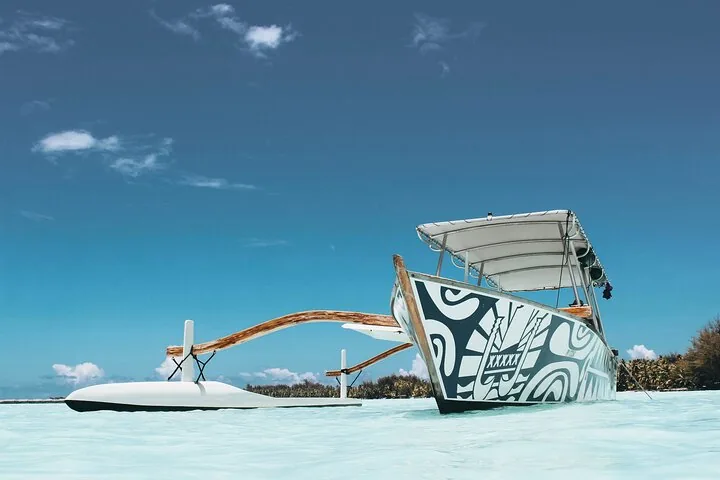
Our pick: the Bora Bora: Lagoon Tour and Snorkeling Experience on GetYourGuide, a 4-hour trip from $133 per person, rated 4.8 from over 100 reviews. Lagoon Service runs it on a motorized outrigger with stops for stingrays, sharks and coral-garden fish. The Reef Discovery half day above has far more reviews (5.0 from over 1,000) for a similar price, so compare the two on your dates. Check the current route, pickup point and cancellation terms before you book.
2. Shark and stingray snorkeling tour: the best wildlife trip
Best for travelers whose main goal is Bora Bora’s reef sharks and rays.
These trips usually combine shallow lagoon stops with deeper snorkel sites.
Blacktip reef sharks are a familiar sight in the lagoon, and stingrays gather over the sandy shallows.
Despite the dramatic photos, this is not cage diving or an open-ocean shark dive.
Some stops are shallow enough for confident swimmers to stand, while others mean swimming in deeper water.
Our pick: the Eco Snorkel Cruise with Sharks and Stingrays, 2.5 hours from $113 per person with hotel pickup, rated 4.8 from 600+ reviews. Its short length makes it easy to slot into a dry morning.
Our advice: choose an operator who explains how they handle wildlife. Don’t touch, chase or crowd the animals, and ask whether the trip involves feeding.
3. Coral garden snorkeling tour: the best for tropical fish
Best for beginners, underwater photographers and anyone more interested in the reef than in big animals.
Bora Bora has several snorkel areas called coral gardens, not one single site. Our Bora Bora coral gardens guide explains the main ones.
Guides choose the site by conditions, access and the marine life you want to see.
Expect colorful reef fish, coral heads and the occasional larger animal passing through.
In November a sheltered coral garden is often a better choice than a site open to the wind.
Calm, shallow water is not always safe to stand in. Coral is fragile and sharp, and some areas have currents.
Float above the reef and keep your fins off it.
Our pick: the Half-Day Eco Snorkeling Small-Group Tour, 3 hours from $133 per person, rated 5.0 from over 100 reviews, run by a local company with small groups.
4. Private snorkeling boat: the most flexible option
Best for families, couples celebrating an occasion and anyone who wants their own route.
A private boat makes most sense in October and November, when plans may need to change.
The guide can fit the route to the conditions, pick quieter snorkel spots and balance swimming against sightseeing.
Private boats still follow weather and safety limits. Paying for the whole boat does not mean it can go out in unsafe conditions.
Our pick: the Bora Bora: Lagoon Boat Tour with Snorkeling on GetYourGuide, a private 3-hour trip from $697 for a group of up to six, rated 4.8 from over 650 reviews, with coral gardens, sharks and rays. For four people or fewer, the Private Half-Day Snorkeling Tour by Boat costs from $650 per boat and is rated 5.0 from over 120 reviews.
Compare the total boat price, the number of passengers allowed, the gear included and the cancellation terms. Our guide to private boat tours in Bora Bora compares more of them.
5. Full-day lagoon cruise with motu lunch: the most complete day
Best for visitors who want a whole day on the lagoon.
A full-day trip usually combines several snorkel stops with a picnic or lunch on a motu, one of the small islets around the lagoon.
You get the underwater scenery and the mountain views in one day.
Book a full day when the forecast looks settled.
If the weather is uncertain, ask how much of the outing is sheltered, whether the lunch spot can move and what happens in heavy rain.
Our pick: the Full-Day Lagoon Tour with Snorkeling and Motu Lunch, 6 hours from $174 per person, rated 5.0 from 1,700+ reviews. On GetYourGuide, the Full-Day Lagoon Safari with Snorkeling and Motu Lunch costs from $171 per person and is rated 4.9 from over 850 reviews. Our Bora Bora lagoon tours guide compares more full days.
Should you book a morning or afternoon snorkel trip?
For October and November we usually favor morning departures, especially if visibility and comfort matter most to you.
Mornings are often calmer, before the afternoon sea breeze or showers build up, although that is not guaranteed.
A morning trip also leaves the afternoon free to rearrange other plans.
When a morning trip is the better choice
- You want several hours in the water.
- You are traveling with young children.
- You get seasick.
- You want the rest of the day free.
- The local forecast shows afternoon showers.
When an afternoon trip can still work
- Your operator reports better visibility at a particular site.
- The morning is windy but the forecast improves.
- You prefer a slow start.
- A private boat can fit your schedule.
The local forecast and the guide’s reading of the actual conditions matter most.
Don’t cancel a promising afternoon trip just because mornings are usually recommended.
Will Bora Bora lagoon tours be canceled because of rain?
Sometimes, but rain alone rarely cancels a trip.
Operators look at the whole picture, including:
- Wind strength and direction.
- Wave height and swell.
- Visibility above and below the surface.
- Thunderstorms or lightning.
- Passenger safety and whether the snorkel sites can be reached.
A passing shower is usually fine. Strong wind or lightning can stop a trip even when little rain is falling.
How to avoid losing your snorkeling day
Book your main snorkel trip near the start of your stay.
On a five-night stay, for example, book the main lagoon trip for your first or second full day.
If the operator cancels for unsafe weather, you still have days left to rebook.
Also check whether your booking offers:
- A full refund when the operator cancels for weather.
- Free rebooking when another departure is available.
- A separate deadline for cancelling yourself.
- Pickup from your resort or a named meeting point.
A weather cancellation by the operator and a cancellation by you are not always covered by the same terms.
If you arrive by cruise ship, book a trip that fits your port hours and confirm how the operator handles the return time.
Are October and November cheaper than peak season?
They can be, especially for the room.
Bora Bora’s busiest travel period usually falls in the drier months, especially June to August.
October and November sit outside that peak, although demand still varies by resort, school holidays, public holidays and events.
Where you might save
Resort rooms: November has more chances of lower seasonal rates or package offers, although luxury overwater bungalows can stay expensive.
Guesthouses and pensions: smaller places on the main island can make a cheaper base.
Flights: international flights to Tahiti and domestic flights to Bora Bora depend on schedules and dates, and November is not automatically cheaper.
Excursions: snorkel tours usually keep similar published prices all year, so don’t expect a saving just for traveling in November. Our Bora Bora trip cost guide breaks down a full budget.
Is it worth booking a luxury resort in November?
Possibly.
If you are choosing between a standard room in October and a good resort package in November, the November package may be the better deal overall.
Check what the package includes.
A resort that looks cheaper may still charge extra for the airport boat transfer, breakfast, meals and excursions.
Location matters too. Resorts on the outer motu depend on scheduled boat transfers, while a main-island stay makes it easier to explore and eat out on your own. Our guide to where to stay in Bora Bora compares the areas.
What else can you do in Bora Bora in October and November?
Snorkeling may be the highlight, but keep a few other plans ready in case the weather turns.
Spend time at Matira Beach
Matira Beach is Bora Bora’s best-known public beach, with pale sand and shallow turquoise water.
It is a good place for a swim, an easy beach day or watching the light change over the lagoon.
On days that are too rough for a long boat trip, it makes a good alternative when the beach itself is calm.
Take a 4WD island tour
A guided 4WD tour shows you the island from above, with mountain scenery, wartime viewpoints and stories about local history and culture. The Half Day 4X4 Island Safari runs 3.5 hours from $101 per person and is rated 4.9 from 650+ reviews.
Some routes climb steep tracks to high viewpoints, and access depends on the weather and the state of the tracks.
After heavy rain, some sections can be muddy or closed.
Explore Vaitape
Bora Bora’s main village is a good place for a few relaxed hours.
You will find shops, local businesses, places to eat and a look at everyday life away from the resorts.
It is a sensible plan for a day when you don’t want a long water activity.
Enjoy a Polynesian dinner or cultural show
Resorts and some other venues host Polynesian music, dance and dinners.
These are handy when the weather makes outdoor trips less appealing.
Schedules vary, so check what is on during your stay.
Book a sunset cruise
October and November can bring striking sunsets, with big clouds and changing colors over Mount Otemanu.
A sunset cruise depends on the weather that evening.
If you want sunset photos, book flexibly and don’t count on every evening being clear. The Luxury Catamaran Sunset Sail runs 2 hours from $250 per person and is rated 4.7 from 140+ reviews; our catamaran and sunset cruise guide compares the others.
Can you see whales in Bora Bora in October or November?
Humpback whales are in French Polynesian waters from about July to November, according to Tahiti Tourisme.
October falls inside that season, so sightings are still possible.
By November the season is ending, so it is a less dependable month for a whale-focused trip.
Whale watching is also a separate activity from lagoon snorkeling.
Whales are wild animals, and watching them comes with specific safety and protection rules. Licensed whale-watching operators may go outside the lagoon, where the sea can be much rougher.
If whales matter a lot to you, don’t build an October or November trip around a guaranteed sighting.
Moorea is also worth a look for a dedicated whale-watching trip during the season, subject to current rules and operator availability. Our Bora Bora vs Moorea for snorkeling guide compares the two islands.
Is October or November better for a Bora Bora honeymoon?
Both can be lovely, but they suit different expectations.
Choose October if you want:
- Better odds of dry weather.
- Several planned outdoor trips.
- Snorkeling and lagoon photography.
- More chance of clear views from the resort to the mountain.
- Pleasant weather in the shoulder season.
Choose November if you want:
- A warmer tropical feel.
- A chance of a good resort package.
- More flexibility with daily plans.
- A quieter, slower holiday.
- Time at the resort even when it rains.
For couples booking an expensive overwater bungalow for its views and private deck, October is usually the safer choice.
For couples who don’t mind a passing shower and want their accommodation budget to go further, November can make more sense.
What to pack for Bora Bora in October and November
Packing for these months is simple, but a few items help.
| Item | Why bring it |
|---|---|
| Light, breathable clothing | Warm, humid weather |
| Swimwear | Lagoon swimming and snorkeling |
| Rash guard | Protection from the strong tropical sun |
| Broad-spectrum water-resistant sunscreen | Sun protection in the water |
| Polarized sunglasses | Less glare off the lagoon |
| Wide-brimmed hat | Shade on boats and beaches |
| Waterproof phone pouch | Keeps your phone dry in a shower |
| Dry bag | Keeps belongings dry on boat trips |
| Light rain jacket | For tropical downpours |
| Comfortable sandals | Resort and village walking |
| Motion-sickness remedy | Useful if boats make you queasy |
| Reusable water bottle | Staying hydrated on excursions |
Most guided snorkel operators provide basic gear, but confirm it before the day.
If you wear prescription glasses, arrange a prescription mask before you travel.
You won’t need a full wetsuit for casual snorkeling in these months.
How many days should you spend in Bora Bora in October or November?
We recommend at least four nights, and five if snorkeling and the lagoon matter to you.
That gives you time for several different trips without depending on one perfect day.
A 5-day itinerary
Day 1: arrival and first lagoon views. Transfer to your hotel, settle in and have a slow swim or watch the sunset. Don’t book an expensive trip for arrival day, especially after a long international flight.
Day 2: main snorkel safari. Book a morning lagoon snorkel trip that covers coral gardens, rays and reef sharks. This is the trip we would put first. Spend the afternoon resting or exploring the nearest beach.
Day 3: explore the main island. Visit Vaitape, spend time at Matira Beach and consider a 4WD island tour. This day also works as a backup for the snorkel trip if the weather spoiled Day 2.
Day 4: private boat or full-day lagoon trip. If conditions are good, take a second boat trip: a private snorkel charter, a day with a motu lunch or a relaxed catamaran sail.
Day 5: free final day. Enjoy the resort, try another snorkel site or book a sunset cruise if you are staying another night. If you fly out that day, keep your plans clear of flight and transfer times.
What if you only have two or three days?
Book one well-chosen half-day snorkel trip and keep the rest of the schedule open.
Don’t book several weather-dependent activities back to back with no spare time.
Getting around Bora Bora in October and November
Bora Bora Airport sits on a motu, not on the main island.
Depending on where you stay, arrival means a resort boat transfer, or a shuttle boat followed by a road transfer.
Many luxury resorts run their own boat transfers, while main-island guests can take the airport shuttle boat to Vaitape and continue from there. Our guide on how to get to Bora Bora covers flights and transfers.
Confirm your transfer before you arrive, especially for a resort on an outer motu.
On the main island you can rent a car, scooter or bicycle, take a taxi or use transfers arranged by your hotel.
For snorkel trips, check whether the operator collects guests from your resort’s dock.
Not every tour picks up from every property.
Common mistakes in October and November
Assuming November means constant rain
November is wetter on average, but sunny days are common. Judge the month by its overall pattern, not by the idea that it rains every day.
Booking your only snorkel trip for the last day
A cancellation could leave you with no second chance. Book your priority trip early.
Choosing a tour only for the animals it advertises
Sightings depend on nature. Pick a well-run trip with several snorkel stops and careful guides.
Ignoring the wind forecast
Wind and swell often matter more than light rain for comfort and visibility.
Expecting a coral reef under every overwater bungalow
Some bungalows sit over a sandy lagoon floor with little coral. You may still need a boat trip for the best marine life.
Assuming a cheaper room means a cheaper holiday
Add up boat transfers, meals, ground transport and activities before you compare hotels.
Treating the whole lagoon as equally safe
The lagoon has currents, boat traffic and changing depths. Stay out of the passes and away from unfamiliar spots without local advice.
October or November: which month should you choose?
If you are choosing between these months for a snorkeling holiday, we would choose October.
At the end of the drier season it has a good balance of weather, water temperature and time outdoors.
Early October is the strongest choice if you want to avoid the rain that builds later in the season.
November still deserves a look.
The water is warm, lagoon tours keep running, and the calmer feel suits travelers who can stay flexible and want a possible saving on accommodation.
You are choosing between a drier month and a wetter one, and both are good months to snorkel.
Our recommendation: choose October if dependable weather matters most. Choose November if you are ready for some rain, plan to stay several days and find a room deal that makes the trade worthwhile.
Whichever month you pick, make time for at least one guided lagoon snorkel trip. Floating over a coral garden with reef fish around you, and watching rays and sharks in the shallows, is the best way to see why people travel this far for Bora Bora.
Frequently asked questions
Is October a good month to visit Bora Bora?
Yes. October is the end of Bora Bora’s drier season and usually has good conditions for snorkeling, lagoon cruises and beach days. Rain becomes more likely toward the end of the month.
Is November a bad time to visit Bora Bora?
No. November starts the wet season, but the lagoon stays warm and snorkel trips run when conditions are safe. Expect more frequent rain and more changeable weather than in October.
Does it rain every day in Bora Bora in November?
No. November mixes sunny days, passing showers and some longer wet spells. Long-term averages show the overall pattern but cannot predict the weather on your dates.
Is snorkeling good in Bora Bora in November?
Yes, often. The lagoon is usually around 28°C (82°F) and the marine life is there all year. Heavy rain, runoff, strong wind or swell can cut visibility or limit trips for a day or two.
Can you swim with sharks in October and November?
Yes. Shark and ray snorkel tours run in both months, subject to conditions. Blacktip reef sharks live around Bora Bora all year, but no single encounter can be guaranteed.
Is October or November better for Bora Bora?
October is usually better if you care most about dry weather and outdoor plans. November suits those who want warm water, quieter resorts and possible off-peak offers.
Is Bora Bora cheaper in November?
It can be, mainly for the room, but there is no guarantee. Resort rates depend on the property, room type, booking date and offers. Tour prices stay much the same through the year.
Do Bora Bora boat tours run in the rainy season?
Yes. Lagoon tours, snorkel trips and private boats run all year, although single departures can be delayed, changed or canceled for unsafe weather.
Is October a good time to see whales in Bora Bora?
Yes, it can be. Humpback whales are in French Polynesia from about July to November, so October is still inside the season. November is less dependable as the season ends. Whale watching is regulated, so book with a licensed operator.
Is early November better than late November?
Rain tends to build as the wet season develops, so early November usually has slightly better odds than late November. That is an average, not a promise for your dates.
What is the best time of day for snorkeling in Bora Bora?
Morning is a good default because the water is often calmer, although the best time depends on wind, rain, tides and the site. Follow your guide’s advice.
Do you need a wetsuit for Bora Bora in November?
Most snorkelers don’t. The lagoon is warm enough for ordinary swimwear, although a rash guard or thin thermal top adds comfort and sun protection.
How long should I stay in Bora Bora in October or November?
Four to five nights is a good minimum if you want to snorkel, see the island and leave room for weather changes.
Is October or November better for underwater photography?
October usually has the edge, because drier weather means less runoff clouding the water near shore. You can still get excellent photos in November when conditions settle.
Can I snorkel directly from a Bora Bora resort?
Sometimes. Snorkeling varies a lot between resorts, and even between parts of the same resort. Ask about reef access, currents and marine life before you book, and don’t assume every overwater bungalow has coral beneath it.
Plan your Bora Bora lagoon trip
October and November can both give you the Bora Bora you pictured: warm water, the mountain above the lagoon and plenty of marine life below the surface.
Choose the right trip and leave a little room in the schedule for the weather.
Compare Bora Bora snorkeling tours, from coral-garden safaris and shark and ray trips to half-day cruises and private boats, before you decide which one to book.
For more ideas, see our guides to the best snorkeling spots in Bora Bora, the Bora Bora coral gardens and private boat tours in Bora Bora.
Get in the Water With the Rays
Free cancellation up to 24 hours before. Reef Discovery Half-Day Snorkel Tour from $135 per person.
Check Availability & Book