Bora Bora Snorkeling for Beginners: Safety, Equipment and What to Expect
First time snorkeling in Bora Bora? Where to practice, what gear you need, the safety rules, options for weak swimmers and non-swimmers, and the half-day tours that suit beginners best.
You don’t need to be an experienced snorkeler to enjoy Bora Bora’s lagoon. You need a calm site, a mask that fits, basic swimming and a guide who knows you are new. Start in sheltered water, get used to breathing through the snorkel, and take it at your own pace. Beginner-friendly does not mean safe for non-swimmers, though: the lagoon has deep patches, boat traffic and currents near the reef passes, so the site and the operator matter more than the prettiest photo.
For a first time in the water, we suggest the Half-Day Eco Snorkeling Small-Group Tour: three hours, $133 per person, eight guests at most, with stops for stingrays, blacktip reef sharks and the Coral Garden. It is rated 5.0 from over 100+ reviews on Viator. You can check dates for it just below.
Check Availability
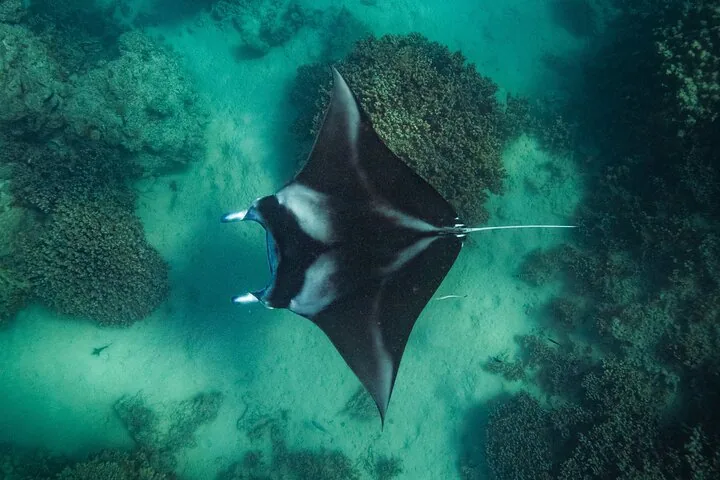
Half-Day Eco Snorkeling Small-Group Tour
- 5.0/5 (110+ reviews)
- 3 hours
- Free cancellation
- Operated by BORA BORA ACTIVITIES CENTER
Includes Hotel pickup and drop-off · Snorkel equipment · Local guide speaking English and French
You'll choose your date and complete the booking on Viator. Free cancellation up to 24 hours before departure.
Can beginners snorkel in Bora Bora?
Yes. Bora Bora is a good place to try snorkeling for the first time, as long as you pick a sheltered site, can swim and book a guide who adjusts to your level. The lagoon holds butterflyfish, parrotfish, rays, reef sharks and coral gardens, and you can see them from the surface with a mask and snorkel. No scuba gear or diving qualification is needed.
Not every part of the lagoon suits beginners. Some coral gardens have currents, deeper water or fragile coral close to the surface, and the reef passes that open to the ocean are not protected swimming pools.
| Question | Quick answer |
|---|---|
| Can beginners snorkel in Bora Bora? | Yes, many guided lagoon tours take first-timers. |
| Do you need to know how to swim? | Basic swimming and confidence in the water are strongly recommended. |
| Is snorkeling equipment included? | Often, but check each tour listing. |
| Can you wear a life jacket? | Yes, many operators provide flotation. |
| Are there shallow snorkeling areas? | Yes, although depth and conditions vary by site and by day. |
| Will you see sharks and rays? | Possibly, depending on your tour, but sightings are not guaranteed. |
| Is snorkeling suitable for children? | Often, with enough swimming ability, supervision and child-sized gear. |
| Do you need to book a tour? | No, but a guided trip makes the first time much easier. |
| Do you need scuba certification? | No. Snorkeling happens at the surface. |
Operators differ most in how much help they give beginners. Some give a short briefing on the boat. Others get in the water with you, hand out flotation buoys and change the stops to suit the conditions. If you have never put your face underwater while breathing through a tube, that support makes a big difference.
Other Experiences
Other experiences you might enjoy
More Bora Bora snorkeling tours, each with its own page and booking link.
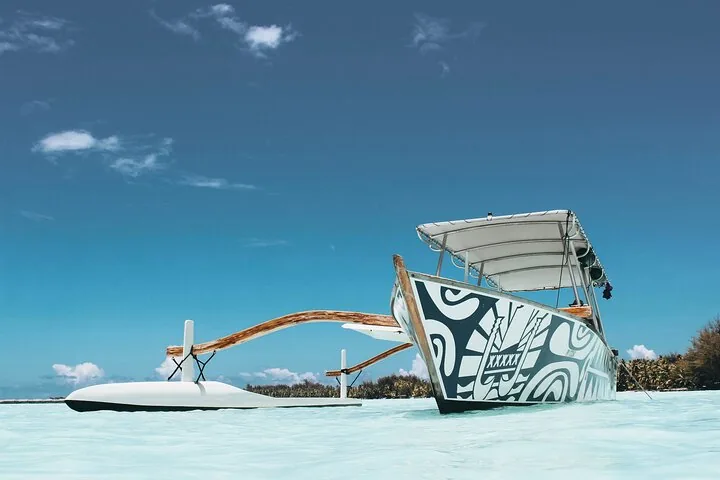
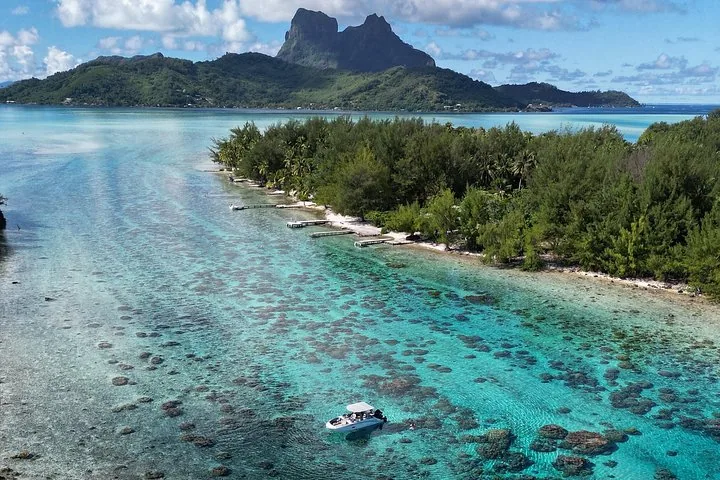
What snorkeling feels like the first time
You float at the surface, looking down through a mask and breathing through a snorkel tube. Your face is underwater, but the top of the snorkel stays above the surface, so you breathe normally through your mouth. Unlike scuba diving, there is no air tank and no training in diving techniques. You watch fish, coral and other marine life without diving down.
The first few minutes
The first minute can feel strange. Your nose is inside the mask, so you breathe only through your mouth. You can hear your own breathing, and everything underwater looks closer and larger than it is.
Some people relax straight away. Others need several minutes. A patient guide should let you:
- Start somewhere sheltered, with room to practice safely.
- Put your face in the water for a few seconds.
- Practice slow, comfortable breathing.
- Lift your head whenever you want a break.
- Build confidence before you move away from the boat or the shallows.
You should never feel pushed to leave the boat or swim farther than you are comfortable with.
Do you have to dive underwater?
No. Recreational snorkeling happens at the surface, and you can see the fish and coral below without holding your breath. Staying at the surface is the safer choice for beginners, because breath-hold diving adds risks and needs skills beyond basic snorkeling.
Divers Alert Network warns against hyperventilating before a breath-hold dive: it can suppress the normal urge to breathe and lead to a blackout underwater. On your first Bora Bora snorkel, there is no need to go below the surface at all.
Beginner-friendly snorkeling spots in Bora Bora
Some stops are good for getting used to your gear; others suit confident swimmers. Our guide to the best snorkeling spots in Bora Bora covers each area in more depth.
1. Matira Beach: for your first practice
Matira is Bora Bora’s best-known public beach, with a sandy entry and fairly sheltered water. It is a sensible place to get used to your mask and snorkel before a boat trip. The underwater scenery is modest compared with the boat-access reefs. Check the conditions and keep away from channels and boat traffic.
2. Southern lagoon coral gardens: for a guided introduction
Many guided trips stop at reef sites in the southern lagoon, where you can watch colorful fish from the surface. Depth and current differ between sites, so ask whether your tour uses shallow, low-current spots. Do not assume every coral garden is easy.
3. Shallow sandy stops: for building confidence
Some tours combine reef snorkeling with stops over sand, where you may be able to stand, float or watch rays. These stops feel less daunting than swimming straight over coral, but the guide must confirm where it is safe to stand and whether there is a current.
4. Resort lagoons and marked snorkel areas: for convenience
Some Bora Bora resorts have marked snorkel zones or coral-restoration areas. They are handy places to practice, especially if the resort lends equipment and gives instruction. Access, depth and supervision vary a lot between resorts.
Where beginners should be careful
Teavanui Pass, strong-current channels and exposed outer-reef sites are not places for inexperienced snorkelers to explore on their own. Even shallow sites can have currents that change with the swell. The safest spot is the one where the depth, the water movement, the way in and out and the supervision suit your ability on that day, and that is not always the shallowest one.
Bora Bora snorkeling tours for beginners
For most first-time snorkelers, a guided half day is the best start. It reaches reef sites you cannot get to from shore, without committing you to a whole day on the water. These listings differ in group size, in-water help and how much of the trip is spent with sharks and rays.
Beginner tours compared
| Tour | Best for | Duration | What stands out | Our pick on Viator or GetYourGuide |
|---|---|---|---|---|
| Half-Day Eco Snorkeling Small-Group Tour | Nervous beginners and families | 3 hours | Eight guests at most, short morning, fruit and juice on board | Half-Day Eco Snorkeling Small-Group Tour, $133, 5.0 from over 100+ reviews |
| Bora Bora Lagoon Tour and Snorkeling Experience | First-time snorkelers | 4 hours | Shallow-water stops, help from the guide, life vest listed | Lagoon Tour and Snorkeling Experience, $133, 4.8 from over 100+ reviews |
| Half-Day Small-Group Cruise with Snorkeling | A classic reef and wildlife half day | 4 hours | Coral, reef fish, sharks and rays, with gear, towels and pickup | Half-Day Small-Group Snorkel Cruise, $135, 5.0 from over 200+ reviews |
| Private Lagoon Snorkeling Experience | Families and mixed abilities | 3.5 hours | Your own boat, stops you choose, a guide who swims with you | Private Lagoon Snorkeling Experience, $609 per boat for up to 4, 4.9 from over 170+ reviews |
These are not interchangeable for non-swimmers. Check each operator’s swimming requirements, flotation and in-water support before you book.
1. Half-Day Eco Snorkeling Small-Group Tour: for nervous beginners
The eco small-group tour takes eight guests at most for three hours, with stops for stingrays, blacktip reef sharks and the Coral Garden. Hotel pickup, snorkel equipment, a guide speaking English and French, water, local juice, fresh fruit and coconut cake are included, for $133 per person.
Why choose it: a small group gives the guide time for you, and three hours is enough for a first try without tiring you out. Our tour breakdown has the stops and the recent reviews.
Check before booking: ask which flotation is on board and whether you can stay on the boat at the shark stop if you prefer reef fish for your first time.
2. Bora Bora Lagoon Tour and Snorkeling Experience: a well-rounded start
The Lagoon Tour and Snorkeling Experience on GetYourGuide describes shallow-water snorkeling with help from the guide. The listing includes snorkeling equipment, a life vest, several snorkel stops, drinks, towels and hotel pickup and drop-off, for $133 per person, rated 4.8 from over 100+ reviews.
Why choose it: you want a simple introduction without arranging your own mask, fins or transfers.
Check before booking: confirm that every stop suits your swimming and whether you can wear flotation throughout.
3. Half-Day Small-Group Snorkel Cruise: the classic Bora Bora half day
Lagoon Service’s four-hour small-group cruise loops the lagoon with snorkel stops for coral, reef fish, blacktip sharks and stingrays, from $135 per person and rated 5.0 from over 200+ reviews. Snorkeling equipment, towels, soft drinks, water and pickup from your accommodation are included.
Some listings describe guided time with stingrays. If animal welfare matters to you, ask whether the operator feeds or handles wildlife before you book.
Why choose it: you want a standard lagoon snorkel trip with transport and gear included.
Check before booking: whether the trip includes instruction, what flotation is on board and how much time you spend in deeper water.
4. Private Lagoon Snorkeling Experience: for children or mixed confidence levels
A private boat makes sense when one person in your group is a keen swimmer and another is nervous about putting their face in the water. On the Private Lagoon Snorkeling Experience, your captain stops where you choose and a Tahitian guide swims with you, for $609 per boat for up to four, rated 4.9 from over 170+ reviews. Snorkeling equipment, towels, soft drinks and pickup at your resort or the Vaitape pier are included.
Why choose it: you set the pace and can swap a reef stop for a sandy one, without feeling you are holding up a larger group.
Check before booking: the minimum age, child-sized masks and vests, and the conditions under which nervous swimmers can join. Our private snorkeling tours page compares the other private boats.
Which tour should you choose?
If you can swim but have never used a snorkel, book a guided half day that lists a briefing, a life jacket and shallow stops, such as the eco small-group tour or the GetYourGuide lagoon tour. If you are nervous, the small group of eight on the eco tour helps. For a family with children of different ages, the private boat costs more ($609 for up to four against $133 to $135 each on the shared trips), and in return you can shorten a stop or swap reef for sand.
If you cannot swim, do not rely on a phrase such as “suitable for all levels.” Ask the operator directly whether non-swimmers can join and what that involves.
Can you snorkel in Bora Bora if you can’t swim?
Snorkeling is not a safe substitute for learning to swim. A flotation device supports you in the water, but it does not replace water confidence, supervision or the ability to react when something goes wrong.
Some Bora Bora operators advertise help for weak swimmers and non-swimmers, and what that means varies. One company may let non-swimmers stay on the boat and watch the wildlife. Another may offer shallow-water time with a guide at your side. A third may ask everyone entering the water to show basic swimming ability.
If you cannot swim, look at these options instead:
- A guided lagoon cruise where you stay on board.
- A shallow sandy stop where the guide confirms you can stand or wade.
- A private trip with a plan for non-swimmers agreed in advance.
- A supervised underwater helmet walk, if you meet its medical and participation rules.
Aqua Safari’s Helmet Diving Underwater Walk is the helmet option: a 30-minute walk on the lagoon floor at about 3 m (6 ft) in a coral garden, with a helmet that keeps your head dry and a scuba instructor beside you. The listing says no swimming, diving or snorkeling experience is needed. It costs $148 per person and is rated 4.9 from over 480+ reviews on Viator. It is a different activity from snorkeling, with its own safety rules.
A life jacket is not permission to enter deep or moving water without the skills and professional support to match.
Is snorkeling in Bora Bora safe?
Bora Bora’s lagoon can offer manageable conditions, but every open-water activity carries real risk. Australia’s Smartraveller advice for French Polynesia notes that beaches are generally unpatrolled, that currents can occur even inside lagoons, and that swimmers should avoid navigation channels and ask for local advice.
For beginners, the main risks are moving water, fatigue, breathing trouble, panic, poor supervision and boats, not the animals.
Snorkeling safety rules for beginners
- Never snorkel alone. Use a buddy system, with each of you watching the other, not just swimming in the same area.
- Tell the guide you’re a beginner. Ask for instruction before you get in.
- Wear flotation if you need it. Check that it fits and suits the activity.
- Stay inside the snorkel area. Keep away from navigation channels, boat routes and reef passes.
- Don’t chase marine animals. Keep your distance and let wildlife move on its own.
- Keep hands and feet off the coral. Coral can cut you, and contact damages the reef.
- Stop when you’re tired. Go back to the boat or a safe exit; don’t push on.
- Avoid breath-hold diving and hyperventilation. Surface snorkeling doesn’t need them, and they add risk.
- Stay out when conditions feel wrong. Wind, currents and visibility can change during a trip.
- Get out at once if you feel unwell. Unusual breathlessness, chest discomfort, dizziness or weakness need prompt attention.
Divers Alert Network lists drowning, inhaling water, sudden medical events and strong water movement among the main snorkeling hazards.
What if water gets into your snorkel?
Lift your head above the surface, take out the mouthpiece and breathe normally. You don’t need to learn to blow a flooded snorkel clear with your face underwater on day one; that can come later, with instruction.
If you breathe in water, stop snorkeling and go back to a safe place. Persistent coughing, trouble breathing or chest discomfort after inhaling water needs urgent medical assessment.
What if your mask fills with water?
A little water in the mask is normal. Lift your face out, loosen or remove the mask, empty it, adjust the fit and try again when you are ready. A guide can teach you to clear a mask underwater, but you do not need that skill for a surface swim.
What if you panic?
Take your face out of the water and breathe slowly. If you are wearing flotation, roll onto your back when it is safe, signal your buddy or guide and ask for help back to the boat. Don’t carry on until you feel comfortable; ending a stop early is always fine.
Medical considerations
Snorkeling is exercise, and it puts extra load on the heart and lungs. If you have a significant heart or lung condition, a history of fainting, low exercise tolerance or another condition that could affect your safety in water, ask a doctor before you book. If you feel unusually breathless, tight in the chest, confused or weak in the water, stop at once and get medical help.
Snorkeling equipment beginners need
You don’t need expensive gear for a first trip, especially on a guided tour. Fit and condition matter more than brand.
| Equipment | Do you need it? | Beginner advice |
|---|---|---|
| Snorkeling mask | Essential | Choose a comfortable mask that seals well on your face. |
| Snorkel | Essential | A standard snorkel with a comfortable mouthpiece is a good start. |
| Fins | Helpful | They cut the effort of swimming; make sure they fit and don’t cause cramp. |
| Flotation vest or life jacket | Recommended where needed | Ask for flotation if you’re not a confident swimmer. |
| Rash guard or UPF swim shirt | Recommended | Protects your back and shoulders while you float at the surface. |
| Water shoes | Optional | Handy for sandy or rocky entries, never for standing on reefs. |
| Underwater camera | Optional | Fun, but learn the basics before you start filming. |
| Personal mask | Optional | Useful if you need prescription lenses or rental masks leak on you. |
Equipment mistakes to avoid
Not checking the mask fit. A mask that leaks all the time spoils the swim. Ask the guide to adjust it before you go into deeper water.
Oversized fins. Fins that slip off or cramp your feet cause more trouble than they solve.
Treating all flotation as the same. A snorkel vest and a fitted life jacket are designed for different uses. Ask the operator which one suits your ability.
An unfamiliar full-face mask. Full-face snorkel masks have raised safety questions, and Divers Alert Network has studied their design and effects on breathing. For a first-timer, a standard mask and separate snorkel, fitted and shown by a guide, is the safer choice.
What if you wear glasses?
Ordinary glasses don’t fit under a snorkel mask, because the arms break the seal. Use a prescription mask or contact lenses, and keep in mind the infection risk when lenses meet seawater. Ask the operator in advance whether prescription masks are available; if not, bring your own.
How to snorkel for the first time, step by step
A few minutes of practice before the coral garden make the whole trip more enjoyable.
Step 1: Practice breathing through the snorkel
Start in shallow water where you can stand, with a guide or capable swimmer nearby. Put the snorkel in your mouth and breathe slowly through it with your face above the water. Once you are relaxed, lower your face briefly into the water, keeping the top of the snorkel above the surface.
Step 2: Get comfortable floating
If you are using a flotation device, ask a guide to show you how it works. Practice lying relaxed and flat in the water, with slow movements. You don’t need to swim fast to enjoy snorkeling.
Step 3: Learn to use your fins
Kick gently from your hips, with your knees fairly loose. Frantic kicking tires you out and can stir up sand or hit coral.
Step 4: Look down and breathe normally
Take a few calm breaths while you watch the bottom below you. Try not to hold your breath without noticing; the aim is a steady, comfortable rhythm.
Step 5: Stay close to your guide
For the first few minutes in open lagoon water, stay close enough to signal or talk easily. Don’t follow a fish or a ray away from the group.
Step 6: Take breaks
Go back to the boat or a resting spot whenever you need to. A few good minutes in the water beat a long session that leaves you exhausted.
What marine life can beginners see in Bora Bora?
Tropical reef fish. Butterflyfish, parrotfish, surgeonfish and other colorful reef species are the easiest animals to watch, and you can enjoy them without going near larger wildlife.
Blacktip reef sharks. Some lagoon tours stop where these small reef sharks patrol the sand. They usually show little interest in snorkelers, but they are wild animals, so give them space.
Stingrays. Rays are one of Bora Bora’s signature lagoon sights. Watch them glide over the sand without grabbing, feeding or touching them.
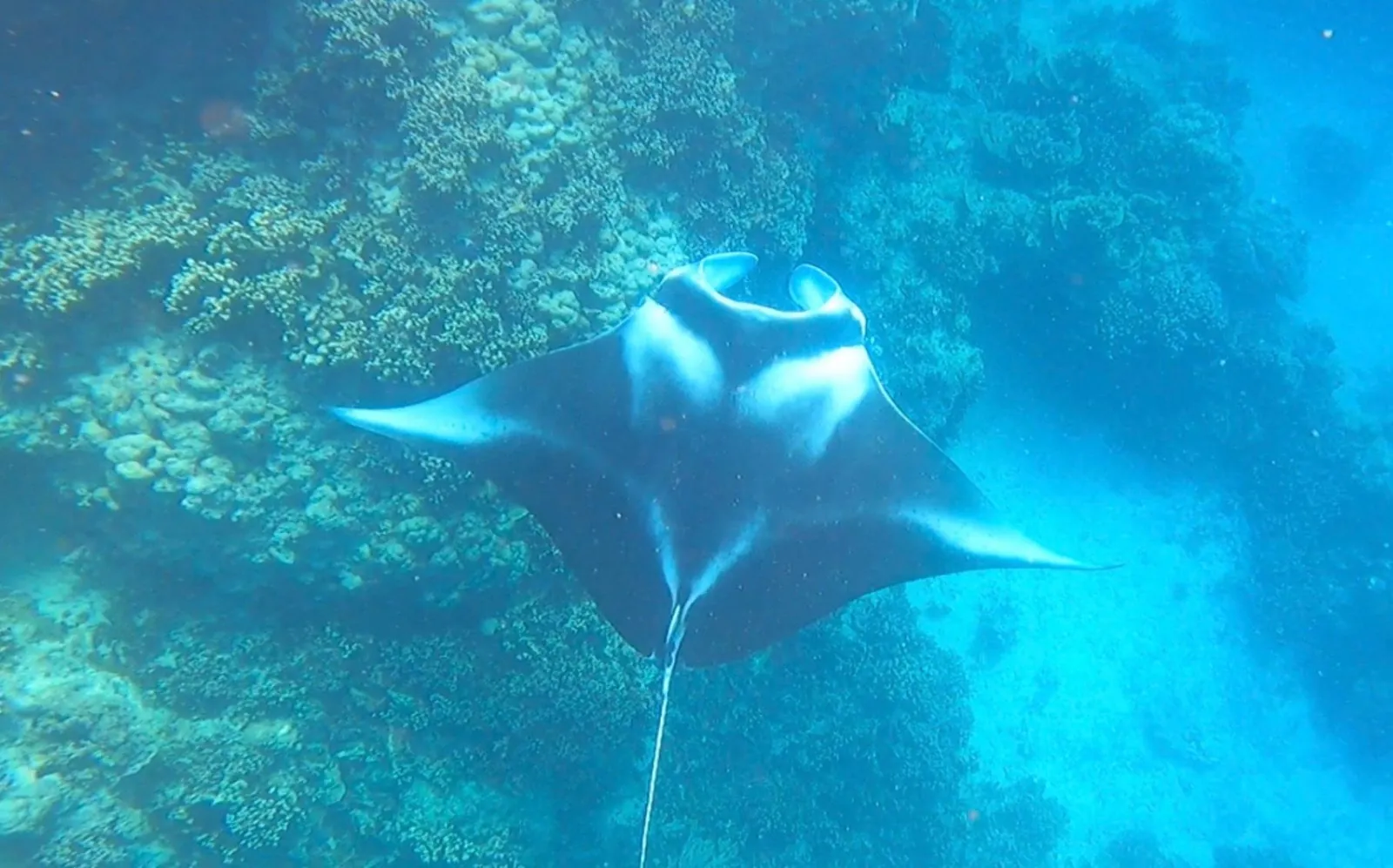
Manta rays. Mantas visit a few sites, but they are much less predictable than reef fish. Don’t book a general beginner tour expecting one. Our manta ray snorkeling guide covers where and when they appear.
Sea turtles. Turtles turn up on some lagoon and reef trips. Watch quietly, leave them a clear path to the surface and never follow them.
Should beginners choose a shark-and-ray tour?
If you swim confidently and are only new to snorkeling, a well-run shark-and-ray trip can be an exciting first outing. If you are nervous in the water, start with reef fish and coral gardens, and decide on an animal-encounter trip once you have tried the gear. Our guides to swimming with sharks in Bora Bora and shark and stingray tours cover those trips.
Are reef sharks and stingrays dangerous?
On a professionally guided tour the risk of serious injury is low, but no encounter with wild animals is risk-free. Blacktip reef sharks generally avoid people, although feeding or close contact can change how they behave.
Stingrays can injure people with the spine on their tail, mostly when someone steps on one or holds it. Give rays space, don’t touch them and follow the guide’s directions on sandy bottoms.
Ask whether the operator feeds the animals to attract them. French Polynesia’s tourism service describes attracting sharks, rays and fish with food as dangerous and illegal, and feeding changes the animals’ natural behavior. Choose a trip that watches wildlife in its own setting, without handling or feeding it. For a beginner, staying calm and respectful matters more than getting close for a photo.
How to protect Bora Bora’s coral reefs
Coral looks like rock, but each colony is made of living animals, and one careless kick or an attempt to stand on the reef can damage it. NOAA’s reef guidance asks snorkelers to avoid contact, keep fins clear of coral and avoid stirring up sediment.
- Stay flat above coral, never standing on it.
- Keep your fins away from the reef.
- Never grab coral for balance.
- Don’t chase, touch or feed marine wildlife.
- Wear a rash guard and use mineral sunscreen on exposed skin.
- Leave shells, coral pieces and other natural objects where you find them.
- Choose operators that discourage feeding and handle their boats carefully.
If you need to rest, signal the guide or go back to the boat or a sandy patch the guide has confirmed. Our Bora Bora coral gardens guide describes the main reefs.
Best time of year for beginner snorkeling in Bora Bora
You can snorkel in Bora Bora all year, but beginners should watch the wind, rain and water conditions. The drier season usually runs from May to October; November to April is warmer, wetter and more humid. The dry season is not always better for snorkeling: the southeast trade winds can make the lagoon choppy in parts of the drier months.
| Period | Typical conditions | What beginners should know |
|---|---|---|
| May–June | Usually drier, with pleasant temperatures | Good months to consider; check wind and current |
| July–August | Dry but often breezier | Choose sheltered lagoon stops over exposed reef |
| September–October | Usually good weather with variable winds | Good for lagoon trips, depending on the day |
| November | Turning wetter | Good spells between showers, but more variable |
| December–March | Warmer, wetter and more humid | Leave room for heavy rain, squalls and poor visibility |
| April | Turning drier | A reasonable choice for a first snorkel trip |
The water stays warm all year, usually about 26–29°C (79–84°F). For a beginner, the conditions on the day matter more than the month: a calm, slightly cloudy morning can suit you better than a bright but windy afternoon.
Morning or afternoon?
Morning is often a good choice, because some days start calmer, though not all of them. A morning half day also leaves the rest of your day free. For a first snorkel, we would book a morning tour with a briefing and flexible stops. Our guide to the best time to visit Bora Bora has the month-by-month weather.
Half-day or full-day snorkeling for beginners?
| Half-day trip | Full-day trip | |
|---|---|---|
| Typical length | About 3–4 hours | About 6–7 hours |
| Best for | First-time snorkelers, families, nervous swimmers | Confident swimmers who enjoy long boat days |
| Number of stops | Often 2–4 | Several, plus sightseeing or a motu stop |
| Lunch | Usually not included | Often included |
| Physical demands | Easier to manage | More time in the sun and on the water |
| Cost | Lower | Higher |
For a complete beginner, we would start with a half day. Three hours gives you time to enjoy the lagoon without spending a whole day getting used to the gear and moving between sites. A full day makes more sense once you know you like snorkeling, or if you want the motu lunch and the scenic cruise too; our half-day snorkeling tours and full-day snorkeling tours pages compare both. For a family with very different swimming abilities, a private half day can work better than a shared full day.
How much do beginner snorkeling tours cost in Bora Bora?
Prices depend on group size, length, boat and what is included. These ranges come from the Viator and GetYourGuide listings on this site in November 2026.
| Experience | Price |
|---|---|
| Shore snorkeling on your own | Free, apart from gear |
| Shared half-day snorkel trip | About $110 to $150 per person |
| Shared full-day lagoon tour with lunch | About $145 to $195 per person |
| Private half-day snorkel boat | About $520 to $780 per boat |
| Private full-day lagoon charter | About $1,050 to $1,400 per boat |
Luxury boats, extra services and busy dates cost more. As a beginner, don’t just book the cheapest trip: compare the supervision, group size, gear and time in the water. A small-group tour with real instruction can be better value than a crowded boat with little help, even at a slightly higher price.
What is usually included?
Many guided trips include basic snorkel gear, a captain or guide and some kind of pickup. Water, soft drinks, fruit, towels and flotation are common too, but not universal: some tours ask you to request gear in advance, and pickups from some resorts or motus need special arrangements. Read the current inclusions and pickup notes before you book.
What to bring on your first snorkeling tour
You probably won’t need your own snorkel gear, but a few things make the trip more comfortable.
- Swimsuit, worn before pickup
- Long-sleeved UPF rash guard
- Reef-safe sunscreen for exposed skin
- Sunglasses with a strap
- Hat for the boat ride
- Towel, unless the tour supplies one
- Drinking water, if not included
- Dry bag for your phone and valuables
- Waterproof camera, if you want photos
- Any personal medication
- Seasickness tablets, if you need them and your doctor agrees
A rash guard helps most. When you snorkel, your back and shoulders sit in direct sun for a long time, and it is easy to burn without noticing. Leave unnecessary valuables at the hotel.
Snorkeling with children in Bora Bora
Bora Bora is a lovely place for children who are comfortable in the water to try snorkeling. Choose the tour on the child’s real ability, not on age alone: a child who swims well in a pool may still be unsettled by open water, marine animals, a moving boat or a mask.
What to ask about a family-friendly tour
- The minimum age and any swimming requirement
- Properly fitted child-sized flotation
- Smaller masks and fins
- How many adults and guides watch the children in the water
- Whether children can stay on board at deeper stops
- A sheltered place to practice first
- Shade and drinking water
- How easy it is to climb back onto the boat
Parents should stay close to their children in the water, even with a guide present. A tour described as family-friendly does not always mean one-to-one supervision. For toddlers, children who cannot swim or those who dislike putting their face in the water, a scenic lagoon cruise or a shallow-water outing suits them better.
Can older adults try snorkeling in Bora Bora?
Yes, if their fitness, swimming and health allow it. Age alone is not the deciding factor. The questions that matter are whether you can swim comfortably, get in and out of the water safely, manage the effort and climb back onto a moving boat.
Boat ladders are harder than they look. The Private Half-Day Snorkeling Tour by Boat listing, for example, states that it is not suitable for travelers who cannot manage a boat ladder in and out of the water. If you have limited mobility, tell the operator before you book. A comfortable boat trip with a few shallow-water stops may suit you better than a snorkel-focused day with many entries and exits.
What to ask before booking a beginner tour
A good listing tells you more than which animals you might see. Before you pay, ask:
- Does the trip suit someone who has never snorkeled?
- Is basic swimming required?
- Will a guide give instruction before you get in?
- Do guides get in the water with guests?
- Are fitted flotation devices available?
- Can you skip a stop and stay on the boat?
- Are the sites chosen to suit the day’s conditions?
- How many people are in the group?
- Is pickup available from your hotel or resort dock?
- What happens if the weather or sea makes snorkeling unsafe?
Pick a tour that keeps you comfortable and well supervised at the right sites, not one that promises every famous spot.
Frequently asked questions
Is Bora Bora snorkeling suitable for complete beginners?
Yes. Many guided trips take guests who have never snorkeled, especially those who can swim. Look for instruction before you get in, sheltered stops, suitable flotation and guides in the water.
Do I need to know how to swim to snorkel in Bora Bora?
Swimming ability is strongly recommended. Some operators offer supervised options for non-swimmers, but confirm them directly. A life jacket alone does not make snorkeling safe for someone without water skills.
Is snorkeling in Bora Bora scary?
It can feel strange for the first few minutes, especially breathing through a snorkel. Many people relax after a short practice. Start in sheltered water with a patient guide, and don’t feel you have to carry on if you are anxious.
How deep is the water when snorkeling in Bora Bora?
It varies a lot. Some sandy areas are shallow enough to wade, while coral gardens and other sites can be several meters deep or more. Never assume you can stand at a tour stop.
Can you see fish without swimming far?
Yes. Colorful tropical fish live on fairly shallow reefs, and a guide can choose a site where you see them without a long swim.
Are there sharks in Bora Bora’s lagoon?
Yes. Reef sharks, including blacktip reef sharks, live in the lagoon. Some guided tours stop to see them, but you can also choose trips that focus on coral gardens and fish.
Do you need your own snorkeling gear?
Usually not on a guided tour, but check the listing. Many operators include masks, snorkels and fins, and some ask you to request gear in advance.
Can you snorkel directly from an overwater bungalow?
At some resorts, yes, where swimming is allowed. Depth, the bottom, boat traffic and the quality of the snorkeling vary, and a ladder into the water does not mean the spot suits a beginner.
Are snorkeling tours canceled when it rains?
Not always. Light tropical rain does not stop snorkeling, but strong wind, lightning, heavy squalls or rough seas can lead to changes or cancellations. Follow the operator’s safety decisions.
Can you snorkel in Bora Bora without booking a tour?
Yes. You can snorkel on your own at suitable spots around Matira Beach and at some resorts. A guided tour reaches more reefs and gives you help with the gear and the conditions.
Is snorkeling better in Bora Bora or Moorea for beginners?
Both islands have beginner-friendly snorkeling. Bora Bora stands out for its scenic lagoon trips and resort snorkeling, while Moorea has a different mix of shore and boat-access sites. Choose on where you are staying, how well you swim and the tours available. Our guide to Bora Bora or Moorea for snorkeling compares both.
What should I do if I don’t enjoy snorkeling?
You don’t have to stay in the water. Go back to the boat, enjoy the scenery and watch the others. If you are unsure, pick a tour with good views, so the day is still enjoyable if you skip some swims.
Start simple, then explore
You don’t need to be an expert to enjoy Bora Bora underwater. For a first time, a short swim over a coral garden, watching butterflyfish move through the coral with Mount Otemanu behind the lagoon, is enough. Save the deeper sites and the long snorkel safaris for another day.
Choose a guide who knows the lagoon, practice with your gear, stay within your swimming ability and take your time. Check your dates early, because the small-group boats have few seats.
More Bora Bora snorkeling guides
- Best Bora Bora snorkeling tours: every type of snorkeling trip compared, from short shark trips to private boats.
- Best snorkeling spots in Bora Bora: seven areas compared, with shore and boat access.
- Swimming with sharks in Bora Bora: which sharks you meet and how safe it is.
- Bora Bora coral gardens: where the Aquarium, Toopua and Anau are and what lives there.
- Private boat tours in Bora Bora: half-day, full-day, sunset and outrigger charters compared.
- Catamaran tours and sunset cruises: the sails, the sunset trips and which include snorkeling.
- Best time to visit Bora Bora: the weather and lagoon conditions month by month.
Get in the Water With the Rays
Free cancellation up to 24 hours before. Half-Day Eco Snorkeling Small-Group Tour from $133 per person.
Check Availability & Book