Swimming with Sharks in Bora Bora: What to Expect and Best Tours
You can snorkel with wild blacktip reef sharks in Bora Bora on a guided lagoon tour from $113. Which sharks you will see, how safe it is and five tours compared.
Yes, you can swim with sharks in Bora Bora, and you do not need a cage or a scuba certificate to do it. Guided snorkeling tours stop in the lagoon where wild blacktip reef sharks patrol the sand and the reef edges, usually on the same trip as stingrays and a coral garden. Most of these trips last two to four hours, and you should be able to swim.
Blacktip reef sharks usually avoid people who leave them alone, but they are wild predators, so you watch them from a respectful distance. Feeding or deliberately attracting sharks is illegal in French Polynesia, and a good guide explains the rules before anyone gets in the water.
If you want the shark encounter in one short morning, the Eco Snorkel Cruise with Sharks and Stingrays costs from $113 per person for 2.5 hours, is rated 4.8 from 598 reviews, and its listing states that the animals are not fed. You can check dates for it just below.
Check Availability
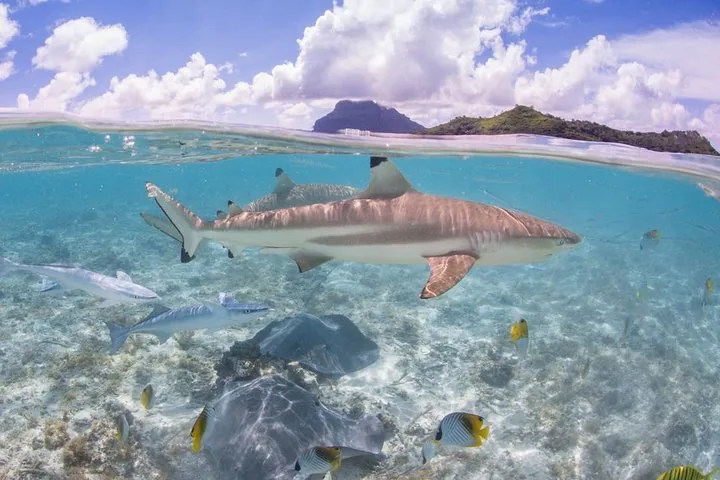
Eco Snorkel Cruise with Sharks and Stingrays
- 4.8/5 (598 reviews)
- 2.5 hours
- Free cancellation
- Operated by Moana Adventure Tours
Includes Local guide (English or French) · Bottled water · Mask and snorkel equipment
You'll choose your date and complete the booking on Viator. Free cancellation up to 24 hours before departure.
Same trip, also on GetYourGuide
From $108 per person · ★ 4.7 from 190 GetYourGuide reviews
Each platform sets its own price and collects its own reviews, so compare both before you book on Viator.
Is it safe to swim with sharks in Bora Bora?
Swimming with sharks in Bora Bora is a well-run guided activity, but it is not risk-free. Most snorkeling tours focus on blacktip reef sharks, which generally keep away from people who do not disturb them.
These sharks are far smaller than the large predators in shark documentaries. Adults are usually under about 1.6 m (5.2 ft), and the largest recorded reach about 1.8 m (5.9 ft), according to the Florida Museum of Natural History. You will often see them patrolling reef edges and the sandy parts of the lagoon.
Watching wild sharks is one thing and trying to interact with them is another. Stay calm, keep your distance and let the sharks move freely. Never feed, touch, chase or corner one.
French Polynesia’s Tourism Service calls it dangerous and illegal to attract fish, sharks, rays or any other animal with food, gestures or noise, because it draws in predators and changes the animals’ natural behavior. A reputable guide covers these precautions in the briefing on the boat.
Are there shark attacks in Bora Bora?
Bites are rare on Bora Bora snorkeling trips, and most visitors watch reef sharks without incident. It would still be wrong to call the experience completely safe or to say that sharks never bite people.
Wild sharks can behave unpredictably, especially when they feel threatened or cornered, or when they have learned to link people with food. In August 2025 the Tourism Service warned that serious accidents linked to feeding marine animals had injured both residents and visitors in recent years.
So choose a guided tour that does not feed the animals, follow the guide’s instructions, and stay out of the water when the guide says conditions are not right. If you are comfortable swimming and happy to watch without touching, a shark snorkel can be one of the best mornings of your trip.
Other Experiences
Other experiences you might enjoy
More Bora Bora snorkeling tours, each with its own page and booking link.
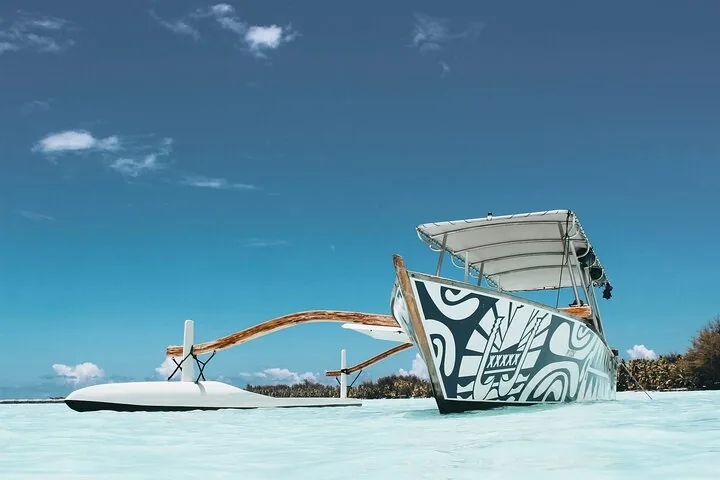
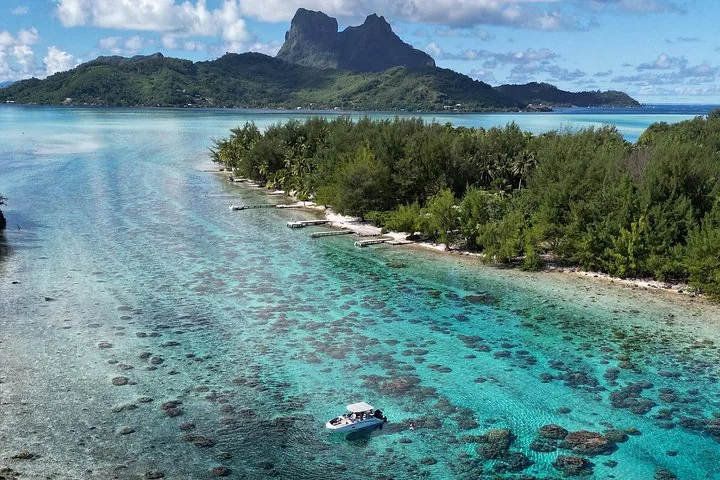
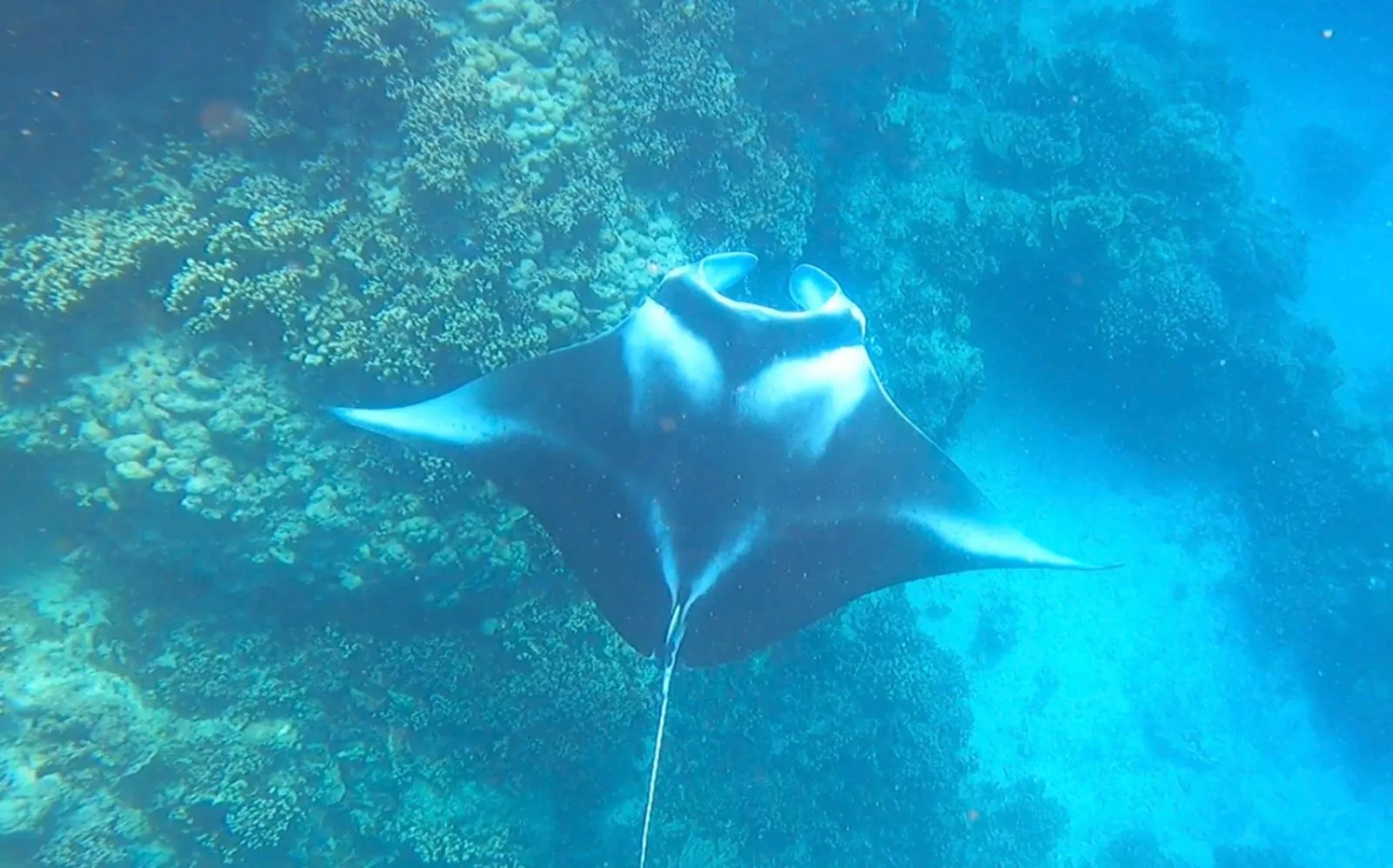
What kinds of sharks can you see in Bora Bora?
Several shark species live around Bora Bora, but they are not all equally likely to turn up on a snorkeling tour.
1. Blacktip reef sharks: the usual lagoon encounter
Scientific name: Carcharhinus melanopterus.
Blacktip reef sharks are the sharks you meet on almost every Bora Bora snorkeling tour. They have streamlined grey bodies, pale bellies and dark tips on their fins, most obvious on the dorsal fin.
You will often find them in shallow reef areas or cruising over sand. Their modest size, easy-to-recognize markings and habit of staying in the lagoon make them good animals to watch from the surface.
What to expect: one shark passing through or several cruising nearby. The sharks choose their own direction, so an encounter can last a few seconds or much longer.
The tour to look for: a guided lagoon trip that visits reef-shark habitat and does not feed the animals.
2. Lemon sharks: larger sharks in deeper water
Scientific name: Negaprion acutidens.
The sicklefin lemon shark is a much larger species found in French Polynesian waters. Adults can grow to about 3 m (10 ft) and have a heavier body than a blacktip, with broad fins and a yellowish-brown color.
Around Bora Bora, lemon sharks are mostly seen by divers in deeper water near Teavanui Pass and on the outer reef. A guest occasionally reports one from a snorkel boat, but do not book an ordinary snorkeling trip expecting one.
What to expect: a larger shark in deeper water, with sightings that depend heavily on the site and the conditions.
The trip to look for: a guided dive with a qualified local dive center, not a shallow shark-and-ray stop.
3. Whitetip reef sharks: more likely on the reef
Scientific name: Triaenodon obesus.
Whitetip reef sharks are another reef species of the tropical Pacific. They have white tips on their fins, a slender body and a habit of resting in reef caves and under ledges during the day.
Divers see them more often than snorkelers, because they keep to crevices and reef structure, while most introductory snorkel stops are over shallow sand.
What to expect: fewer sightings than blacktips on a standard lagoon tour.
The trip to look for: reef snorkeling or diving where the conditions and the operator’s experience suit it.
Which sharks are you most likely to see?
| Shark species | Typical habitat | Chance on a standard snorkel tour |
|---|---|---|
| Blacktip reef shark | Shallow reefs, lagoon edges and sandy areas | Likely |
| Sicklefin lemon shark | Deeper water near the pass and the outer reef | Possible, not expected |
| Whitetip reef shark | Reef structures and sheltered crevices | Less common |
These are general habitat patterns, and none of these sightings is guaranteed.
If blacktip reef sharks are your goal, you do not need a deep-water expedition. A well-guided lagoon tour gives you a good chance of seeing them.
What is it actually like to swim with sharks?
Many first-time visitors are surprised by how ordinary the sharks look in their own world. They do not circle snorkelers dramatically. Usually they are just moving through the water, following the reef or crossing the sand.
A typical shark snorkeling trip runs in five stages.
Step 1: Boat pickup and safety briefing
Most tours start at your resort dock or an agreed meeting point. The guide runs through the plan, hands out snorkel gear and explains how to get in and out of the water.
This is the moment to say if you are nervous, have never snorkeled or would rather watch from the boat.
Step 2: Travel to a suitable snorkeling area
Bora Bora’s lagoon has several kinds of habitat, including coral heads, sandbanks, channels and areas near the barrier reef. The captain picks a stop to suit the conditions and the tour’s plan.
You may spot a shark from the boat before you get in, but sightings depend entirely on the animals.
Step 3: Entering the water
Depending on the boat and the site, you step down a ladder, enter from a platform or slide carefully into the water. Some stops have a sandy bottom you can see through clear shallow water. Others are too deep to stand.
If you feel uneasy, stay next to your guide or stay on the boat.
Step 4: Observing the sharks
This is the part most visitors remember. With your face in the water you can watch the way the sharks swim and see how they fit into the reef around them. Small fish often swim alongside them, and rays may glide across the sand below.
The sharks may pass close by, swim off or disappear into deeper water. Do not follow them; let the encounter happen on their terms.
Step 5: Other snorkeling stops
Most Bora Bora shark trips include more than one kind of habitat. After the sharks you might visit a coral garden full of reef fish or a sandy area where stingrays gather.
Full-day trips often add lunch on a motu (a small islet), a coconut demonstration and a scenic loop of the island, so you get wildlife and some of French Polynesia’s best scenery on one boat.
Best Bora Bora shark snorkeling tours compared
You do not need a tour sold only as a “shark swim”. Many of Bora Bora’s best shark encounters happen on general guided snorkeling trips and lagoon safaris. These five are the place to start.
| Tour | Duration | Price | Rating | Best for |
|---|---|---|---|---|
| Reef Discovery Half-Day Snorkel Tour | 3.5 hours | $135 per person | 5.0 from 1,042 reviews | Best all-round snorkeling trip |
| Eco Snorkel Cruise with Sharks and Stingrays | 2.5 hours | $113 per person | 4.8 from 598 reviews | Short shark-and-ray outing |
| Full-Day Snorkel Cruise with Sharks, Rays and BBQ Lunch | 6 hours | $155 per person | 4.8 from 722 reviews | A whole day with lunch |
| Reef Discovery Private Half-Day Lagoon Tour | 2 to 4 hours | $737 per boat for two | 5.0 from 135 reviews | Couples and private groups |
| Full-Day Lagoon Tour with Snorkeling and Motu Lunch | 6 hours | $174 per person | 5.0 from 1,701 reviews | Snorkeling plus a Polynesian lunch |
We chose these from their published itineraries, snorkeling focus, inclusions and traveler reviews; we have not taken each one ourselves. Prices and ratings are the figures the listings show and can change.
A shark stop on the itinerary does not guarantee a sighting, and a listing may not reflect the operator’s current practice. Before you book, ask the operator to confirm that it does not feed or deliberately attract sharks or rays.
1. Reef Discovery Half-Day Snorkel Tour: best overall
Duration: 3.5 hours. Shared small group, sold on Viator.
For most travelers this is the best place to start. The Reef Discovery half day is a guided snorkel around the lagoon, and recent guests describe three stops: a manta ray cleaning station, a large coral garden and a shallow area with blacktip reef sharks and stingrays. The trip covers several habitats, so sharks are one stop among several.
The listing includes pickup and drop-off, fins and snorkel gear, a beach towel, soda and water, and a guide who swims with the group. Bookings are capped at 8 travelers. It costs from $135 per person and is rated 5.0 from 1,042 reviews.
Why choose it: small-group guiding, several snorkel sites and a half-day schedule that leaves your afternoon free.
Before you book: the listing asks for at least a moderate level of fitness. Ask how the guides run the shark stop and whether pickup covers your hotel. Our Reef Discovery tour breakdown has the details.
2. Eco Snorkel Cruise with Sharks and Stingrays: best short trip
Duration: 2.5 hours. Shared snorkel cruise, sold on Viator and GetYourGuide.
The Moana Adventure Tours eco cruise suits visitors who want the shark encounter without giving up most of the day. About 100 of its 150 minutes are spent at a shallow sandbank where blacktip reef sharks and stingrays gather, and you can stand, walk and swim among them. The last 30 minutes are at the Coral Garden.
The listing includes a local guide, water, mask and snorkel, and pickup from your hotel, pension or rental. It costs from $113 per person on Viator, or from $108 on GetYourGuide as the Eco Shark and Snorkeling Safari (rated 4.7 from 190 reviews). Children aged 4 to 11 pay the child rate.
Why choose it: a short morning with a long shark and ray stop, and a listing that states the sharks and rays are not fed.
Before you book: fins are not listed and the operator recommends bringing your own mask. You get only about half an hour at the coral. See our Eco Snorkel Cruise breakdown.
3. Full-Day Snorkel Cruise with Sharks, Rays and BBQ Lunch: best for a complete day
Duration: 6 hours. Shared full-day cruise, sold on Viator.
The Vavau full-day cruise makes the shark snorkel one part of a longer day on the lagoon. Guests usually report four snorkel stops, including the sandbank with blacktip reef sharks and stingrays and a coral garden, then a BBQ and salad bar lunch on a small island with a beachside Polynesian performance.
It costs from $155 per person, is rated 4.8 from 722 reviews, and includes a guide, snorkel gear and hotel or port pickup. The listing says it suits all fitness levels.
Why choose it: wildlife, lagoon scenery, local food and a long day on the water in one booking.
Before you book: not every stop involves sharks, and the weather can change the route. Some hotels need a short ferry crossing before pickup, and private-island guests should contact the operator first.
4. Reef Discovery Private Half-Day Lagoon Tour: best private trip
Duration: 2 to 4 hours (3.5 hours in the morning, 2 or 3 hours in the afternoon). Private boat, sold on Viator.
For couples, families and anyone who wants the boat to themselves, the Reef Discovery private tour lets your guide plan the stops around what you want to see after talking through the options. The listing describes four snorkel stops aimed at manta rays, eagle rays and a coral garden, with sharks and stingrays in the shallows.
It includes snorkel gear, towels, snacks, drinks and hotel or port pickup. The price starts at $737 per boat, and that base price covers two travelers. It is rated 5.0 from 135 reviews.
Why choose it: privacy and a flexible plan, which helps when someone in your group is nervous about sharks.
Before you book: a private guide can adjust the trip, but wildlife and access still depend on the conditions and the rules. Compare it with the other boats on our private snorkeling tours page.
5. Full-Day Lagoon Tour with Snorkeling and Motu Lunch: best for lagoon variety
Duration: 6 hours. Shared full-day trip, sold on Viator and GetYourGuide.
The Lagoon Service full day combines snorkeling, sightseeing around the island and lunch on a private motu. Guests most often describe three snorkel areas, including a shallow, sandy stop where stingrays and blacktip sharks gather, and the coral garden.
It has 1,701 reviews, the most of any tour on this site, is rated 5.0 and costs from $174 per person. Towels and soft drinks are included, and bookings are capped at 10.
Why choose it: several snorkeling habitats and a full lagoon day with a long lunch.
Before you book: the listing gives no stop-by-stop timing, and a full day on a shared boat takes a big block of a short holiday. Ask about the current route and how the guides handle the shark stop.
Which tour should you choose?
For a first trip to Bora Bora, start with the Reef Discovery half day: a small group and a snorkel-first plan give you guided wildlife and plenty of time in the water for $135. Pick the Eco Snorkel Cruise at $113 if you mainly want the sharks and rays and have only a morning.
If you want lunch and sightseeing too, compare the two full days, at $155 for Vavau and $174 for Lagoon Service. For families or anyone nervous about sharks, the Reef Discovery private boat costs more ($737 for two), so talk through everyone’s swimming ability before you book. Every shark and ray trip on the site is compared on our shark and stingray tours page.
Where can you swim with sharks in Bora Bora?
Bora Bora’s lagoon is ringed by a barrier reef, with a pass connecting it to the open Pacific. Different shark species use different parts of this system.
Sheltered lagoon habitats
Blacktip reef sharks patrol shallow sandy areas and the edges of coral heads inside the lagoon. The pale sand and clear water make them easy to see from the surface.
Not every shallow area is safe for swimming, though, and visibility changes with the weather.
Best for: guided blacktip reef shark watching, where it is permitted and the conditions are right.
Barrier reef areas
The barrier reef separates the sheltered lagoon from the open ocean. Its coral, reef slopes and nearby water hold a wider range of marine life.
Conditions around the barrier reef vary a lot, with stronger currents, more depth and more wave exposure in places.
Best for: confident snorkelers with a qualified local guide.
Ocean-side reef habitats
Some trips go outside the lagoon to sites exposed to the open Pacific. You get deeper water there and species you rarely see in the shallow lagoon.
The ocean side is never the same as a calm lagoon stop, so treat it as open water.
Best for: strong swimmers who are comfortable in open water, if the operator agrees and the conditions suit.
Can you find sharks while snorkeling from a resort?
You can sometimes see reef sharks near resort reefs, but sightings vary and are not guaranteed. Some overwater resorts have lagoons or coral restoration areas where you can watch fish and other marine life.
Never go looking for sharks by swimming into boat channels, deeper water or reef areas you do not know. If your resort has a marine biologist or snorkel guide, ask where it is safe to swim. For a first shark encounter, a guided boat trip is usually the easier choice; our Coral Garden snorkeling page covers the reef stops most tours use.
Shark snorkeling vs shark diving in Bora Bora
You do not need scuba gear to see reef sharks, but snorkeling and diving are different experiences.
| Shark snorkeling | Shark scuba diving | |
|---|---|---|
| Certification | Not required | Usually required for certified dives |
| Where you are | At or near the surface | Underwater at the dive site |
| Known for | Lagoon reef sharks and rays | Deeper reefs, the pass and larger species |
| Skill level | Confidence in the water | Training and dive experience |
| Equipment | Mask, snorkel, fins, flotation if needed | Scuba equipment |
| Best for | First-time visitors and casual snorkelers | Qualified divers after deeper encounters |
If you have never dived, choose a snorkeling trip, unless you specifically want an introductory dive supervised by a qualified instructor. A shark snorkel can be spectacular without going below the surface.
Can children swim with sharks in Bora Bora?
Some shark snorkeling trips take children, but it depends on the operator, the child’s swimming and the conditions at each stop. The Eco Snorkel Cruise has a child rate from age 4, and the Vavau full day prices children from age 3.
A shallow-looking lagoon can still have currents or sudden deeper sections, and an excited child can get frightened at the sight of a shark underwater. For families, look for a small group, patient guides, properly sized flotation and the option to stay on the boat.
Before booking, ask:
- What is the minimum age?
- Must children be able to swim on their own?
- Does the guide get in the water?
- Are life jackets or snorkel vests available in children’s sizes?
- Can a child skip the shark stop without holding up the tour?
A responsible operator can answer all of these. If your children are nervous, watching blacktip reef sharks from the boat is still a good day out.
Can non-swimmers join shark snorkeling tours?
Some operators take weak swimmers or non-swimmers, but a shark snorkel is not automatically suitable for someone who cannot swim.
A flotation vest keeps you at the surface. It does not replace swimming skills or remove the risks from currents, waves and sudden changes in depth.
If you cannot swim, tell the operator before you pay. Ask whether a guide can help you in the water and whether you can stay on the boat at any stop. A scenic lagoon cruise with no swimming may suit you better.
How to behave when swimming near sharks
The best shark encounters are calm, passive and guided.
Before you get in: listen to the safety briefing, check that your mask and fins fit, find the boat’s ladder and tell your guide if you feel unsure.
While snorkeling: move slowly and predictably, keep your hands close to your body, avoid splashing and keep an eye on where you are.
When you see a shark: stay calm and watch without swimming toward it. Do not follow, touch, block or corner it.
If a shark comes close: give it space and follow your guide. Do not reach toward it, and leave the water calmly if the guide asks.
If conditions change: return to the boat or the meeting spot when told. A stronger current or poorer visibility is a reason to end a stop, sharks or no sharks.
Five things you should never do
- Feed sharks or try to attract them with food, sound or gestures.
- Touch their fins, tails or bodies.
- Chase them for photos.
- Block their way out or surround them.
- Get in the water against your guide’s advice.
These rules protect you and the animals you came to see.
Are shark-feeding tours allowed in Bora Bora?
No. Deliberately feeding or attracting wild sharks and rays is against French Polynesia’s rules.
This matters because older tour names, advertising photos and some visitor reviews still describe “shark feeding” or show guides handling animals. French Polynesia’s whole marine area has also been a shark sanctuary since 2006: killing sharks is illegal and trade in shark products is banned.
On 29 August 2025 the French Polynesia Tourism Service published a warning about shark feeding. It said attracting animals with food, gestures or noise is dangerous and illegal, that serious accidents linked to feeding have injured residents and visitors, and that harming protected species can bring fines of up to 17,800,000 XPF and up to two years in prison. Tahiti Tourisme’s wildlife regulations cover the same ground.
When you compare tours, separate two very different activities:
- Responsible shark watching: visiting the right habitat and watching sharks behave naturally, without attracting or disturbing them.
- Shark feeding or manipulation: using food, noise, gestures or anything else to draw animals toward visitors.
Choose the first. If a listing mentions feeding, ask the operator what it does today, and if the answer is vague or still involves attracting animals, book another tour. Among the tours on this site, Moana’s Eco Snorkel Cruise and H2O’s private boat state that they do not feed the animals.
Best time to swim with sharks in Bora Bora
Blacktip reef sharks live in the lagoon all year, so there is no short shark season. What changes is the weather, the sea and the visibility. Our best time to visit Bora Bora guide has the month-by-month detail.
May to October: generally drier
These months usually bring less rain and are popular for lagoon trips. Sunshine makes the lagoon colors especially vivid, but the trade winds sometimes make the water choppy.
November to April: wetter and warmer
The wet season is warmer and more humid, with a higher chance of heavy rain and thunderstorms. There are still excellent snorkeling days, but operators may change the route or postpone a trip when conditions turn.
Morning or afternoon: which is better?
Morning tours can be a good choice because the wind is sometimes lighter early in the day, although that is not guaranteed. Afternoon trips can be just as good.
Check the forecast and ask the operator which departure is likely to be calmer, since the time of day alone does not make a trip calmer. Sharks keep no timetable, and no departure time guarantees a sighting.
How much does swimming with sharks in Bora Bora cost?
The shark snorkel is almost always part of a wider lagoon tour, not a separate ticket. These are the prices the tours on this site show:
| Tour type | Price on this site’s tours |
|---|---|
| Short shared shark-and-ray tour | $108 to $113 per person (Eco Snorkel Cruise, 2.5 hours) |
| Guided half-day snorkeling tour | $130 to $150 per person (H2O, Eco Small-Group, Reef Discovery, Rohivai) |
| Full-day lagoon tour with lunch | $145 to $195 per person (Manu, Vavau, Rohivai, Lagoon Service) |
| Private half-day boat | $523 to $780 per boat (Parataito solar boat, La Plage, H2O, Reef Discovery) |
Prices change with the date, the operator and what is included. A private boat is priced per boat, usually for up to four people, so it gets better value as your group grows: the La Plage Tours private lagoon trip at $609 works out at about $152 each for four.
Look past the headline price. A slightly dearer small-group trip can be the better buy if it includes a guide who swims with you, several habitats and resort pickup.
What should you bring?
Most guided snorkeling tours supply a mask, snorkel and fins, but check the listing: the Eco Snorkel Cruise lists a mask and snorkel only.
Bring swimwear, a towel, a rash guard, drinking water if it is not supplied, and sun protection. A comfortable, well-fitting mask makes a big difference, especially if you are nervous about putting your face in the water. If you wear glasses, consider a prescription snorkel mask.
For underwater photos, use a wrist strap or float, and never swim closer to a shark to get a better shot. Leave loose jewelry and valuables at your hotel.
How to choose a responsible shark snorkeling operator
When you compare tours, look hard at how each operator treats the wildlife. A good operator explains the risks of interacting with wild animals, follows the local rules and does not feed or attract sharks. It is also clear about swimming requirements, weather changes and how the guide watches over the group.
Reviews show whether guides are patient, informative and careful. Not every behavior a reviewer praises is acceptable, though: a review that praises a guide for drawing sharks in with food or gestures is a reason to ask questions.
You do not need a staged close encounter. Seeing reef sharks behave naturally is remarkable enough.
Frequently asked questions
Can you really swim with sharks in Bora Bora?
Yes. Guided snorkeling tours stop where wild blacktip reef sharks live in the lagoon and on the reef. Encounters depend on the animals and are never guaranteed.
What sharks do you swim with in Bora Bora?
Blacktip reef sharks are the sharks you meet on lagoon snorkeling tours. Sicklefin lemon sharks and whitetip reef sharks also live around Bora Bora, but they are mostly seen by divers in deeper water, not on standard beginner trips.
Are Bora Bora sharks friendly?
Sharks are not tame or reliably friendly. Blacktip reef sharks usually keep away from people who leave them alone, but they are wild predators. Watching without touching, feeding or chasing them is the safe approach.
Do you need a cage to swim with sharks in Bora Bora?
No. Bora Bora shark snorkeling tours watch reef sharks in open water without a cage. You should be comfortable snorkeling and follow your guide’s safety instructions.
How close do sharks come to snorkelers?
It varies. A shark may pass close by, stay farther away or leave altogether. At the shallow sandbank stops they often move around snorkelers in knee- to waist-deep water. Never swim toward or attract a shark to get closer.
Are shark sightings guaranteed?
No. Even tours that advertise shark encounters depend on wild animals, the weather, visibility and access to the right sites.
Can beginners snorkel with sharks?
Yes, on beginner-friendly guided tours. Your swimming, your comfort in open water and the operator’s rules all matter, so choose a guided tour with a clear safety briefing and suitable flotation.
Are there great white sharks in Bora Bora?
Great white sharks are not part of Bora Bora’s tropical lagoon or its snorkeling tours. The shark you meet on a standard snorkel tour is the blacktip reef shark.
Can you swim with sharks and stingrays on the same tour?
Yes. Most Bora Bora lagoon tours combine a blacktip reef shark area with stingrays and a coral garden. On many trips the sharks and rays share one sandbank stop, and the coral is a separate stop.
Is shark feeding legal in Bora Bora?
No. French Polynesia’s Tourism Service describes attracting fish, sharks, rays or other animals with food, gestures or noise as dangerous and illegal. Choose a tour that watches the wildlife without feeding it.
Is snorkeling with sharks better in Bora Bora or Moorea?
Both islands have good lagoon snorkeling and reef sharks. Bora Bora pairs the wildlife with dramatic mountain scenery and its resort stays, while Moorea often has a wider range of easy-to-reach activities and cheaper places to stay. Neither island guarantees more shark sightings, so choose on your itinerary and budget.
Final verdict: Is swimming with sharks in Bora Bora worth it?
Yes, if you are comfortable in the water and happy to watch marine life without touching it. Seeing a reef shark where it belongs, gliding over the sand and around the coral before it vanishes into the blue, is one of the highlights of a Bora Bora trip. You do not need a cage, a dive certificate or a staged encounter.
For most first-time visitors, a guided half-day lagoon trip is the best choice: you see blacktip reef sharks and also get rays, coral gardens and the scenery. Choose a full-day cruise with lunch if you want a slower day, and a private boat if privacy matters more to your group than price.
Whichever you pick, choose an operator that lets you watch the sharks without disturbing them, and check your dates early, because small-group boats can fill up in busy months.
More Bora Bora snorkeling guides
- Best Bora Bora snorkeling tours: every type of snorkeling trip compared, from short shark trips to private boats.
- Shark and stingray tours: the stops, the species and each operator’s feeding policy.
- Coral Garden snorkeling: the tours that stop at the Coral Garden and how long they stay.
- Manta ray snorkeling: where the mantas feed and which tours visit them.
- Things to do in Bora Bora: twenty experiences on the lagoon and the island.
Get in the Water With the Rays
Free cancellation up to 24 hours before. Eco Snorkel Cruise with Sharks and Stingrays from $113 per person.
Check Availability & Book