Best Things to Do in Bora Bora: 20 Experiences on the Lagoon and Island
A guided lagoon snorkeling tour is the one thing to book first in Bora Bora. Then Matira Beach, a motu lunch, 4WD viewpoints and 16 more ideas, with prices.
Bora Bora is far more than a view from the deck of an overwater bungalow. Under the lagoon there are tropical fish, coral gardens, blacktip reef sharks and rays. On the surface you can explore by traditional outrigger canoe, cross the lagoon on a jet ski or find a quiet beach for an afternoon of swimming and watching the clouds. And away from the water there is another Bora Bora: steep, jungle-covered mountains, remains of the American military base from World War II, local restaurants and a living Polynesian culture.
The lagoon itself is a patchwork of turquoise, aquamarine and deep cobalt, broken by palm-covered islets and the jagged volcanic outline of Mount Otemanu. The hard part is choosing, because some trips cost several hundred dollars and you may have only three or four days on the island.
If you do just one organized activity in Bora Bora, make it a guided multi-stop lagoon snorkeling tour. It shows you the scenery and the marine life in one morning. The Reef Discovery Half-Day Snorkel Tour below picks its snorkel spots on the day, includes fins, towels and hotel pickup, and can be cancelled free up to 24 hours before.
Check Availability
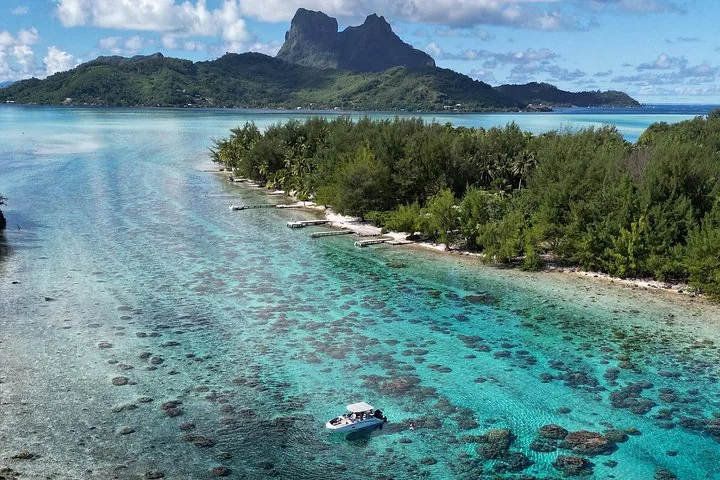
Reef Discovery Half-Day Snorkel Tour
- 5.0/5 (1,042 reviews)
- 3.5 hours
- Free cancellation
- Operated by Reef Discovery
Includes Pickup and drop-off at your accommodation · Guide and guided snorkeling in the water · Snorkeling equipment including …
You'll choose your date and complete the booking on Viator. Free cancellation up to 24 hours before departure.
Same trip, also on GetYourGuide
From $143 per person · ★ 5.0 from 8 GetYourGuide reviews
Each platform sets its own price and collects its own reviews, so compare both before you book on Viator.
What are the best things to do in Bora Bora?
For most first-time visitors, the five standout experiences are lagoon snorkeling, swimming near sharks and rays with a responsible guide, relaxing at Matira Beach, a boat trip around Mount Otemanu, and a motu picnic or sunset cruise. Tahiti Tourisme, the official tourism board, also highlights scuba diving, jet skiing, hiking, 4WD island tours, paddleboarding and cultural experiences.
All 20 activities at a glance
| # | Experience | Typical time | Price per adult | Best for |
|---|---|---|---|---|
| 1 | Multi-stop lagoon snorkeling tour | 3–4 hrs | From $130 | First-timers |
| 2 | Swim near blacktip reef sharks | 2–4 hrs | From $113 | Wildlife lovers |
| 3 | Encounter stingrays | 2–4 hrs | From $113 | Families, beginners |
| 4 | Explore the Coral Gardens | 2–4 hrs | From $113 | Snorkelers |
| 5 | Full-day lagoon cruise and motu lunch | 5–7 hrs | $145–195 | Couples, families |
| 6 | Relax at Matira Beach | 2–4 hrs | Free | Everyone |
| 7 | Guided jet ski tour | 1.5–3 hrs | About $130–300 | Adventure lovers |
| 8 | Private lagoon boat charter | 2–6 hrs | $523–780 per boat | Couples, groups |
| 9 | Sunset catamaran or boat cruise | 1.5–2.5 hrs | About $100–220 | Couples |
| 10 | Scuba dive with marine life | 2–4 hrs | About $130–250 | Divers |
| 11 | Look for manta rays | 2–4 hrs | From $130 | Wildlife enthusiasts |
| 12 | Explore the island by 4WD | 3–4 hrs | About $70–130 | Sightseeing |
| 13 | Discover WWII historic sites | 2–4 hrs | Free to about $130 | History enthusiasts |
| 14 | Hike Bora Bora’s mountains | 2–6 hrs | About $80–180 guided | Active travelers |
| 15 | Paddleboard or kayak on the lagoon | 1–2 hrs | Free to about $70 | Relaxed exploration |
| 16 | Take a helicopter sightseeing flight | 15–30 min | About $250–500+ | A splurge |
| 17 | Try a Polynesian motu picnic | 3–7 hrs | From $145 | Culture, food |
| 18 | Explore Vaitape and local food | 2–3 hrs | About $15–60 | Independent travelers |
| 19 | Learn about Polynesian culture | 1–3 hrs | About $40–150 | Cultural experiences |
| 20 | Try whale watching in season | 2–4 hrs | About $100–220 | Seasonal wildlife |
The snorkeling, lagoon and private-boat prices are the starting prices of the tours on this site, checked on 1 October 2026. The figures marked “about” are rough planning budgets for activities this site does not sell, so check current prices for your dates. Durations are typical ranges, not fixed schedules. Wildlife sightings, especially manta rays and whales, are never guaranteed, and several of the snorkeling experiences come together on one trip, so you may not need to book them separately.
Other Experiences
Other experiences you might enjoy
More Bora Bora snorkeling tours, each with its own page and booking link.
The 20 best things to do in Bora Bora
1. Take a multi-stop Bora Bora lagoon snorkeling tour
If you’re deciding where to spend your excursion budget, start here. A multi-stop lagoon tour takes you beyond the beaches and resort pontoons to the places where Bora Bora’s underwater world comes alive.
A typical itinerary includes a coral garden full of tropical fish, a shallow stingray stop and a chance to watch blacktip reef sharks. Some operators add other sites, depending on the weather, water conditions and marine life. Between stops you cross scenery that would justify a boat trip even without the snorkeling: bright turquoise shallows, deep blue channels and views of Mount Otemanu.
The Reef Discovery Half-Day Snorkel Tour costs from $135 per person, is rated 5.0/5 from 1,042 reviews and spends 3.5 hours at spots the guide chooses on the day, including a manta ray cleaning station and a coral garden with the guide in the water beside you. Read our breakdown of the Reef Discovery tour for its stops and what is included. The Half-Day Small-Group Snorkel Cruise, from $135 per person and rated 5.0/5 from 202 reviews, loops the whole lagoon in four hours, with three snorkel sites in most guest reports.
Before booking, check how many real snorkeling stops a tour includes. Some combine time in the water with sightseeing or shallow-water encounters, which isn’t the same as spending several hours snorkeling. Also confirm whether the price includes a mask, snorkel, fins, flotation aids and hotel pickup.
It is the best single paid activity for most visitors, especially on a short stay. Our best Bora Bora snorkeling tours page compares the main options.
Typical time: 3–4 hours. Best for: first-time visitors, couples, and families with confident swimmers.
2. Swim near blacktip reef sharks in the lagoon
Watching a shark glide beneath you in water so clear you can follow every movement is something you don’t forget. Blacktip reef sharks are a familiar sight in Bora Bora’s lagoon, and guided shark-viewing trips are among the island’s best-known wildlife experiences.
These are fairly small reef sharks, usually under about 1.6 m (5.2 ft), not the large open-ocean predators people sometimes imagine. On some tours you watch them from the boat; on others, competent swimmers can get in the water following the guide’s instructions.
Are they dangerous? Blacktip reef sharks are not generally considered highly dangerous to people, but they are still wild predators, and bites are possible, especially around feeding or careless behavior. Choose an operator that keeps you at a respectful distance and does not encourage chasing, touching or cornering the animals. Avoid feeding-based encounters, because feeding changes the animals’ natural behavior and increases the risk.
The Eco Snorkel Cruise with Sharks and Stingrays spends about 100 of its 150 minutes on a knee-deep sandbank where the sharks and rays gather, and the listing states that the animals are not fed. It costs from $113 per person and is rated 4.8/5 from 598 reviews. Our shark and stingray tours page compares the stops, the species and each operator’s feeding policy.
Typical time: usually part of a 2–4-hour snorkeling tour. Best for: wildlife enthusiasts and confident swimmers.
3. Watch stingrays glide through the shallow water
Of all Bora Bora’s marine encounters, this may be the one that surprises visitors most. In certain sandy parts of the lagoon, stingrays glide through remarkably shallow water, their broad bodies moving over the seabed like wings. You may see them from a boat or while snorkeling, and some trips include time standing in the shallows to watch them.
Because you stay close to the surface in fairly shallow water, it can be reassuring for less experienced swimmers, although shallow water does not remove every risk. Don’t step on the rays, touch them, grab their tails or block their path. The large stingrays here are pink whiprays with a venomous tail spine, so shuffle your feet on the sand and let the animals move away freely.
The stingray stop is usually part of a combined shark-and-ray trip, so you don’t need to book it separately. The Half-Day Eco Snorkeling Small-Group Tour includes a sandbar stop with stingrays and blacktip reef sharks before the Coral Garden, caps the group at eight guests and costs from $133 per person, rated 5.0/5 from 99 reviews.
Best for: families, wildlife enthusiasts and anyone who wants lagoon animals that are easy to watch.
4. Snorkel Bora Bora’s Coral Gardens
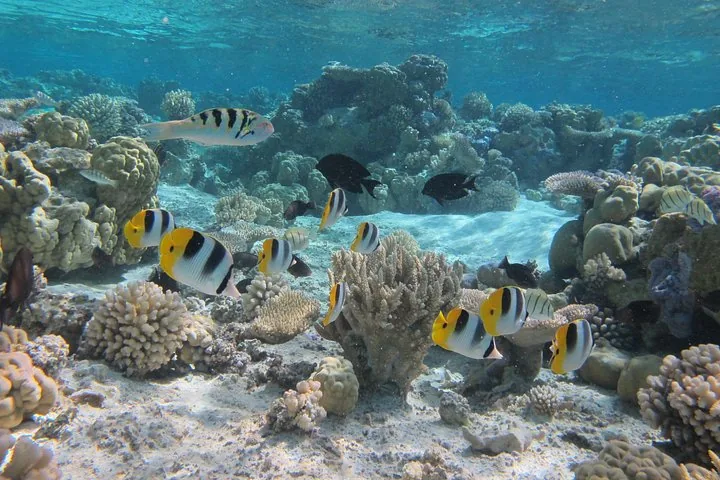
If the sharks and rays bring the excitement, the coral gardens bring the color. These reefs have branching, boulder and other coral forms, with tropical fish sheltering, feeding and moving among them. Depending on the site and the conditions, you might spot butterflyfish, parrotfish, damselfish and many other reef species.
One detail to know: Bora Bora doesn’t have one officially defined Coral Garden. Different operators use the name for different reef areas, including sites around the southern lagoon and the motu. Before booking, ask which site you’ll visit, whether it suits your swimming ability and how much snorkeling time is included. Expect coral formations, reef fish, some shallow sections and conditions that change with the wind and currents.
For anyone who enjoys snorkeling, this is essential, and we’d choose a tour with a proper coral-garden stop over one focused only on shallow-water wildlife. On the Full-Day Snorkel Tour with Lunch on Motu Fanfan you spend about an hour at the Coral Garden. Our Coral Garden snorkeling page lists every tour that stops there and how long each one stays.
Best for: snorkeling enthusiasts, photographers and travelers interested in reef ecology.
5. Spend a full day on the lagoon, with lunch on a motu
We’d choose a full-day lagoon trip for a complete Bora Bora day without organizing several separate activities. These tours usually combine snorkeling, marine-life stops, sightseeing around the lagoon and a relaxed lunch on a motu, one of the small islands along the barrier reef. Some motu are home to luxury hotels; others have little more than beaches, coconut palms and simple picnic facilities.
Lunch might be grilled fish, chicken, fruit, rice, coconut dishes and traditional preparations, depending on the operator. The setting is often what makes the meal memorable: warm shallow water, palms moving in the breeze and Mount Otemanu across the lagoon.
The Full-Day Lagoon Tour with Snorkeling and Motu Lunch has 1,701 reviews, more than any other tour on this site, rated 5.0/5, and costs from $174 per person for six hours with lunch on a private motu. For less, the Full-Day Snorkel Tour with Lunch on Motu Fanfan costs from $145 per person for seven hours, rated 4.9/5 from 177 reviews. On GetYourGuide, the Full-Day Lagoon Safari with Snorkeling and Motu Lunch costs from $171 per person, rated 4.9/5 from 807 reviews, and adds a manta ray stop.
Is a full day better than a half day? Choose the full day if you want a relaxed pace and a mix of experiences. Choose a half-day tour if snorkeling is your priority and you’d like the afternoon free. Either way, check whether lunch, drinking water, transfers and snorkeling gear are included, whether dietary needs can be met, and how long the trip spends in the water. Our full-day snorkeling tours page compares the options.
Typical time: 5–7 hours. Best for: first-time visitors, families, couples, and anyone with a free day.
6. Spend an afternoon at Matira Beach
You don’t have to spend hundreds of dollars to enjoy Bora Bora at its best. Matira Beach, the island’s best-known public beach, curves around the southern tip of the main island. The sand is soft, the lagoon is an almost unbelievable shade of blue, and the atmosphere is far more relaxed than at the big private motu resorts.
The fairly shallow water is good for a leisurely swim when conditions allow, and in the late afternoon the light makes it one of the loveliest places on the island to linger. Swim, relax on the sand, walk along the shore or have a casual meal nearby.
Is Matira good for snorkeling? You may spot fish in some areas, but much of the bottom near shore is sandy. If snorkeling is your main goal, a guided reef trip gives you more variety.
If you’re staying on the main island, don’t miss it, and give it a few hours instead of a quick photo stop.
Cost: free public beach access. Best for: everyone, especially travelers on a budget.
7. Explore Bora Bora on a guided jet ski tour
Snorkeling shows you the lagoon from underneath; a jet ski shows you a completely different side of it. Guided jet ski trips follow routes around the main island and across designated parts of the lagoon, with mountain views, brightly colored water and photo stops. Some combine faster stretches with stops to admire the scenery or hear about local traditions.
It suits travelers who want something more energetic than a sightseeing cruise. Check if the price is per jet ski or per person, whether two people can share a machine, the minimum driver age and any security deposit.
Go with a guide instead of treating the lagoon as an open playground. There are navigation channels, shallow areas, coral and other boats to consider.
It is a fun splurge, but if you have to choose between the two, snorkel first.
Typical time: 1.5–3 hours. Best for: couples, adventure travelers and confident riders.
8. Charter a private boat for your own lagoon trip
A private boat changes the pace of the day. Instead of following a shared itinerary, you can spend your time on what matters to you: longer in the coral gardens, an unhurried sightseeing cruise or a quiet motu stop. It suits couples celebrating something special, families with mixed swimming abilities and photographers who want more flexibility.
Shared trips are usually better value for one or two people, while a private charter makes more sense when the cost is split across a family or small group. Private doesn’t mean unlimited choice, though: routes still depend on the weather, marine conditions, permitted access and the operator’s schedule.
The Private Half-Day Snorkeling Tour by Boat costs $650 for the boat for up to four people, rated 5.0/5 from 126 reviews, with four or five snorkel spots in 3.5 hours. The Private Solar Boat Snorkel Experience costs $523 for up to five on a quiet solar-powered catamaran, rated 5.0/5 from 47 reviews. Our private snorkeling tours page works out the cost per person for two to five people.
Check the maximum number of passengers, what refreshments are included, any fuel charges, the snorkeling stops, the departure point and the cancellation terms.
Typical time: 2–6 hours, with some full-day options. Best for: honeymoons, families and small groups.
9. Watch the sunset from a lagoon cruise
As the sun drops over the Pacific, the lagoon turns from bright midday blues to softer gold, pink and purple. A sunset cruise is one of the most romantic ways to see it, especially if your hotel doesn’t face the sunset.
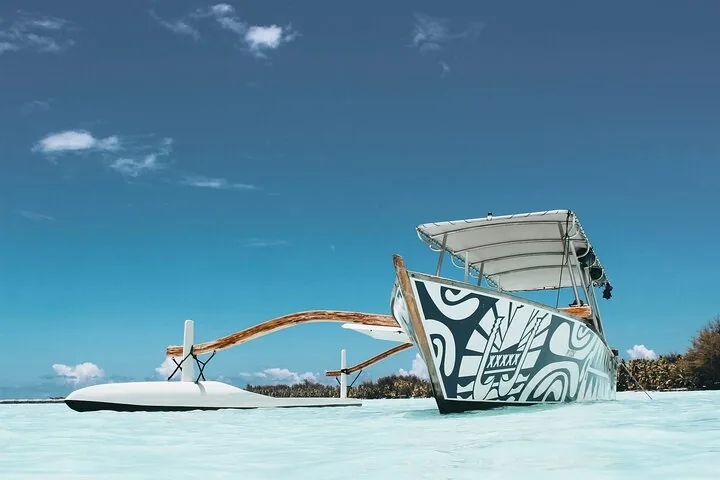
Depending on the trip, you may sail on a catamaran, a motorboat or a traditional-style Polynesian boat. Some cruises include a drink or light snacks; others are only for sightseeing.
Is it worth it? Yes, if you want an atmospheric evening for two more than a wildlife or snorkeling trip. Just don’t book one expecting time to snorkel, because many evening cruises have no swimming stops at all. It makes a lovely second or third excursion after you’ve seen the lagoon by day.
This site doesn’t list a sunset cruise. If you’d like a catamaran during the day instead, the Luxury Catamaran Sail with Snorkeling and Floating Bar spends four hours on a 46 ft catamaran with one coral snorkel stop and drinks in the shallows, from $312 per person, rated 4.9/5 from 164 reviews.
Typical time: 1.5–2.5 hours. Best for: couples, honeymooners and photographers.
10. Go scuba diving in Bora Bora
Snorkeling shows you plenty of marine life, but scuba diving opens up deeper water and different views. Bora Bora’s dive operators visit lagoon sites and, when conditions allow, sites beyond the barrier reef, where divers may see reef sharks, rays, tropical fish and a range of coral habitats. Some sites suit introductory dives; others require a certification or previous experience.
Do you need a certificate? Not always. Some operators run supervised introductory dives for people who have never dived before. Many certified-diver trips do require a qualification, though, and everyone must meet medical and operator safety requirements.
Plan your flights around your dives: diving too close to flying raises the risk of decompression sickness. Follow your training agency’s and dive operator’s no-fly guidance, which can mean waiting at least 12–24 hours, or longer depending on the dives.
For certified divers it is a high priority. Beginners shouldn’t feel they have to dive to see Bora Bora’s marine life, because snorkeling alone can be remarkable. Tahiti Tourisme has a guide to diving and snorkeling in Bora Bora.
11. Look for manta rays in Bora Bora’s lagoon
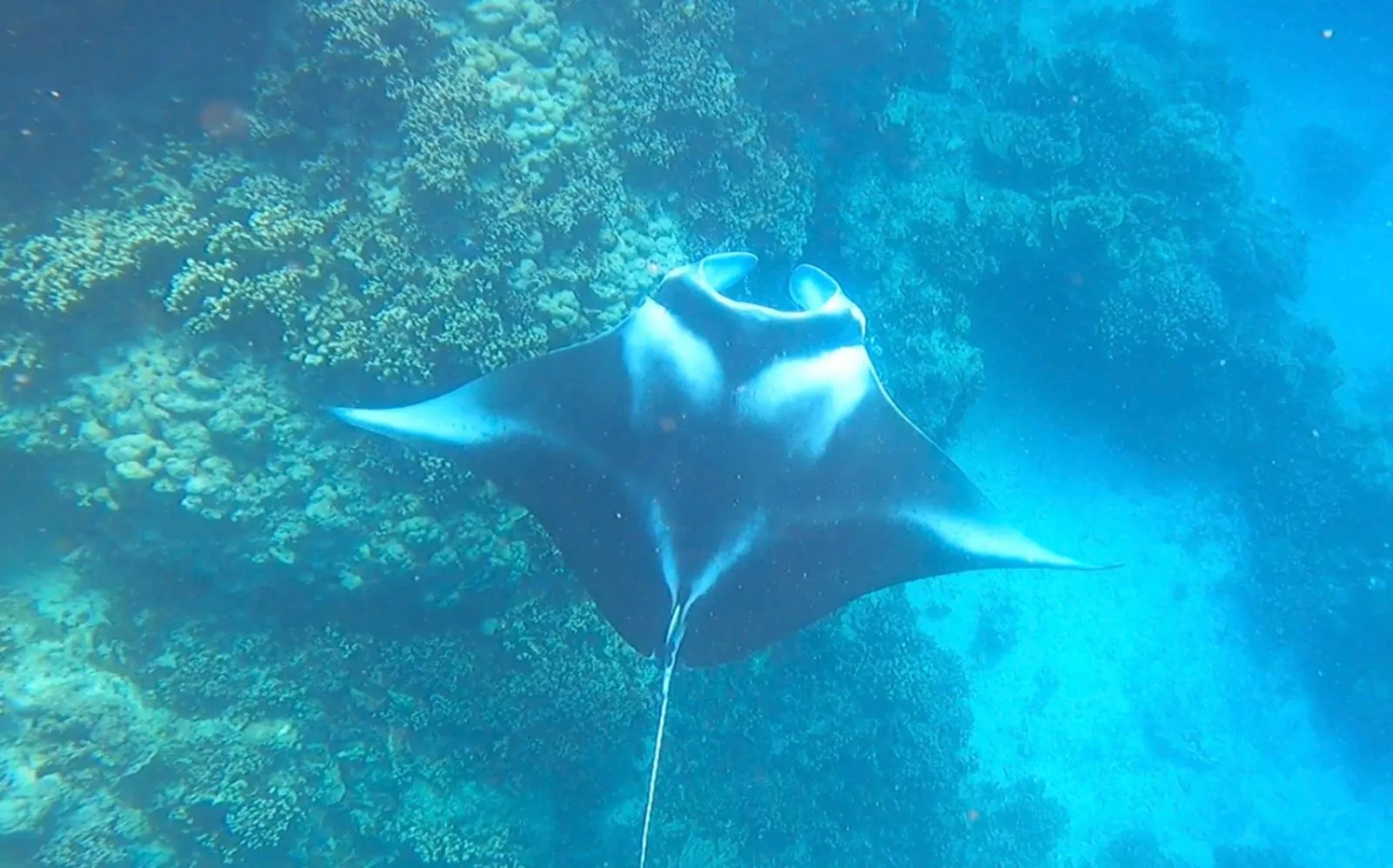
A manta ray moving through the water is one of the most graceful wildlife encounters in French Polynesia. Unlike stingrays, which often rest or feed along the sandy bottom, mantas are large filter-feeding rays that fly through the water on powerful, wing-like fins.
Mantas are sometimes seen in parts of Bora Bora’s lagoon, including deeper areas, but no trip can guarantee them. Tell apart the tours that mention manta sightings from those offering more predictable shallow-water stingray encounters. A good guide knows where mantas have been seen recently, approaches them respectfully and explains that the itinerary may change with the visibility, weather and the animals themselves. Do not chase, touch or block a manta’s path.
Can beginners swim with mantas? Some encounters involve snorkeling in deeper water, so you may need to swim confidently and be comfortable in open water.
The Half-Day Shared Boat Snorkel Tour includes a manta ray cleaning station where guests often report mantas, from $130 per person, rated 5.0/5 from 769 reviews. Treat a manta as a wonderful bonus if you’re lucky, not something to build a trip around. Our manta ray snorkeling page lists the tours that name a manta stop.
Best for: confident snorkelers and wildlife enthusiasts.
12. Explore Bora Bora’s mountains and viewpoints on a 4WD tour
It’s easy to spend a whole vacation looking at Bora Bora’s mountains without ever exploring them. A guided 4WD trip takes you inland and uphill on rough tracks to panoramic viewpoints that ordinary rental cars can’t reach. From above, the lagoon looks like a watercolor, with bands of turquoise around the dark volcanic island.
Tours may also include local history, WWII sites, demonstrations of Polynesian crafts and stops in the Faanui Valley. Tahiti Tourisme lists Bobcat 4x4 Tours and Vavau Adventures among the operators running historical and cultural island tours.
Some roads are steep, rough or private, so a guide is the easy way in: a local guide can explain what you’re seeing and arrange access to suitable viewpoints. Check whether the trip includes hotel pickup, how many viewpoint stops are planned, whether the vehicle has covered seating and how bumpy the ride may be.
Of all the land activities, this one goes best with a lagoon snorkeling trip.
Typical time: 3–4 hours. Best for: travelers who want a break from the water, photographers and history enthusiasts.
13. Discover Bora Bora’s World War II history
Bora Bora’s scenery hides a surprising military history. During World War II the island became an important American naval supply and refueling base. In 1942, about 3,500 US service personnel arrived as part of Operation Bobcat, at a time when the island had around 1,200 residents.
The Americans built roads, military facilities, fuel storage and gun positions. They left in 1946, but the remains of several artillery installations can still be visited. One of the most interesting is the Ha’amaire gun battery at Fitiu’u Point, where displays explain the installations. Some sites need only a short walk; others mean a harder hike or guided access.
It gives you a completely different view of Bora Bora and explains parts of the island’s modern infrastructure. Not every gun emplacement is easy to reach, and some trails cross private land, so don’t follow unverified online directions or enter restricted sites without permission.
Most visitors see these sites on a 4WD tour instead of booking a separate trip.
Best for: history lovers and visitors who like exploring beyond the resort.
14. Hike to a mountain viewpoint
Bora Bora’s mountainous interior has some of the island’s most dramatic scenery. Mount Otemanu rises about 727 m (2,385 ft) above sea level, but its summit is not a standard tourist hike: the upper slopes are steep, exposed and technically difficult. Most visitors should stick to established guided routes and viewpoints instead.
Possible hikes include parts of Mount Pahia, Mount Popoti and routes through the interior, depending on current conditions and access. Tahiti Tourisme recommends mountain hiking as an island activity and warns that some routes are challenging.
Do you need a guide? For the strenuous mountain routes, yes. Trails can be poorly marked, slippery after rain and limited by private land. Bring proper walking shoes, plenty of water, sun protection and clothes for changing weather.
It is rewarding, but not something to improvise. Choose a reputable local guide and don’t attempt the summit of Mount Otemanu.
Typical time: 2–6 hours, depending on the route. Best for: fit travelers who enjoy hiking.
15. Kayak or paddleboard across the lagoon
Not every activity in Bora Bora needs a guide, an engine or a big budget. On a calm morning, kayaking or paddleboarding is one of the loveliest ways to enjoy the lagoon: you move slowly along the shore, watch the colors under the water and take in quiet views of the mountains.
Many of the larger resorts lend non-motorized water-sports equipment to guests, although what is available and included depends on the hotel. Stay in the safe areas your hotel or rental operator recommends, and keep away from boat channels, strong currents, exposed reef passes and areas with property or environmental restrictions. Early morning is often calmer, but check the day’s weather and wind first.
If your hotel includes the equipment, it is one of the best-value ways to enjoy Bora Bora.
Best for: couples, families with suitable equipment and travelers who like gentle exercise.
16. See Bora Bora from a helicopter
You think you know Bora Bora’s lagoon from the beach until you see it from above. From the air you see the whole island at once: the rugged volcanic interior, the rings of reef, the bright shallows and the deep blue Pacific beyond. Scenic helicopter flights are a premium experience and take a fraction of the time of a full-day trip. Some routes include nearby islands or longer sightseeing, depending on the operator.
Is it worth the money? For photographers and couples celebrating a special occasion, it can be. On a limited budget, though, we’d book a snorkeling safari first, because the lagoon’s underwater life is a big part of what makes Bora Bora special.
Check the minimum number of passengers, the flight time, the cancellation policy, any passenger-weight limits and which route is included. It is a memorable splurge, but you can enjoy Bora Bora fully without it.
Typical time: 15–30 minutes in the air, depending on the flight. Best for: photographers, honeymooners and luxury travelers.
17. Enjoy a traditional Polynesian motu picnic
A motu picnic can be much more than lunch with a view. Depending on the tour, it may introduce you to local cooking, music, coconut preparation and the easy rhythm of island life. You might be served poisson cru, raw fish marinated in lime and coconut milk, with grilled food, rice, tropical fruit and other Polynesian dishes. Some trips include demonstrations of traditional skills or music; others are simpler beach picnics chosen for the setting.
The lunch on the Full-Day Snorkel Tour with Lunch on Motu Fanfan includes grilled chicken and fish, raw fish in coconut milk, rice, taro and manioc, banana po’e, coconut bread and fresh fruit. For an adults-only day, the Adults-Only Outrigger Canoe Snorkel Cruise with BBQ Lunch ends at a barbecue on a private motu, costs from $282 per person, is rated 4.9/5 from 202 reviews and caps the group at six couples.
Before booking, check whether the meal is on a private motu, how long you spend there, the menu, vegetarian options, bathroom facilities and whether alcohol is included. A picnic is usually best booked as part of a full-day lagoon trip, unless you specifically want a private or gourmet one.
Best for: couples, families and travelers interested in local food.
18. Visit Vaitape and try local Polynesian food
Bora Bora is more than its luxury resorts, and it’s good to see a little of everyday island life. Vaitape is the main town, with shops, local businesses, restaurants and transport connections. It’s a practical place to pick up supplies, browse local goods or have a casual meal away from the resort restaurants.
Start with poisson cru au lait de coco, the classic Polynesian dish of raw fish, lime and coconut milk. Grilled fish, local seafood dishes and a mix of French and Polynesian cooking are common too. Quality and variety differ from place to place, so look for somewhere busy with local customers instead of assuming the most expensive restaurant serves the most interesting meal.
It is a good outing for seeing Bora Bora as a lived-in island and not only a honeymoon destination.
Best for: independent travelers, food lovers and visitors staying several days.
19. Discover Polynesian traditions and culture
Bora Bora’s scenery can overshadow the culture of the people who live there. Traditional knowledge, Polynesian navigation, oral history, music, food preparation and crafts remain an important part of local identity.
Depending on availability, trips may include coconut demonstrations, visits to family-run workshops, pareu-making, local storytelling or historical sites. Some 4WD cultural tours combine these with viewpoints and WWII history, and Tahiti Tourisme lists cultural island tours with workshops and explanations of the island’s history and traditions.
Look for activities led by local people that explain the meaning of what you’re seeing, instead of traditions staged only for tourists. Respect any limits on photographing people, sacred places and private property.
It is a valuable addition if you’re spending four or more days on the island, especially as part of a local guide’s island tour.
20. Look for humpback whales during the migration season
Every year humpback whales travel through French Polynesian waters to breed, give birth and raise their calves. The main whale-watching period is generally July to November, although sightings vary by place and year.
Bora Bora can offer whale-watching trips, but seeing whales from a boat is different from snorkeling or swimming near them. Encounters are tightly regulated, and operators must follow French Polynesia’s marine mammal protection rules. In June 2026, the French Polynesian government announced measures to strengthen those protections and reduce disturbance from boats and people.
Is Bora Bora a good place for whale watching? Potentially, in season. Whales are wild, moving animals, though, so no operator can guarantee a sighting. If humpbacks are the main reason for your trip, compare whale watching on Moorea as well.
Check that the operator is authorized, what kind of encounter is allowed, the weather-cancellation terms and whether any in-water activity is permitted under the current rules. Treat whales as an exciting extra in season, not a guaranteed highlight.
Which Bora Bora activities are worth paying for?
With so many trips available, it’s easy to book too much. For most visitors, spend your money on experiences that take you somewhere you couldn’t easily reach on your own.
| Experience | Worth booking? | Our recommendation |
|---|---|---|
| Multi-stop snorkeling safari | Definitely | The first paid activity to book |
| Full-day lagoon tour | Definitely, if you like a relaxed pace | Choose it instead of a shorter safari, not necessarily both |
| Shark-and-ray tour | Yes | Look for one that also stops at a coral garden |
| Private lagoon charter | For special occasions | Best for couples wanting privacy or groups sharing costs |
| Jet ski tour | If you enjoy adventure | Fun, but less essential than snorkeling |
| 4WD island tour | Yes, on a longer stay | The best way to reach some of the high viewpoints |
| Sunset cruise | For couples | Beautiful, but optional |
| Helicopter flight | A luxury splurge | Memorable but expensive |
| Matira Beach | Definitely | Visit on your own |
| Kayaking or paddleboarding | Yes | Use resort equipment if it is included |
The three trips we’d book first
- A half-day lagoon snorkeling safari. Coral gardens, reef fish, sharks and rays in one trip, for first-timers. Typical time 3–4 hours; the Reef Discovery Half-Day Snorkel Tour costs from $135 per person.
- A full-day lagoon cruise with a motu lunch. For couples and families who want sightseeing, snorkeling and a leisurely meal. Typical time 5–7 hours; the Full-Day Lagoon Tour with Snorkeling and Motu Lunch costs from $174 per person.
- A guided 4WD island safari. For mountain viewpoints, historical sites and the island’s interior. Typical time 3–4 hours.
Best things to do in Bora Bora by type of traveler
| Traveler | Best experiences |
|---|---|
| Honeymooners | Private lagoon charter, sunset cruise, motu picnic |
| Families with children | Matira Beach, a suitable lagoon trip, a cultural island tour |
| Budget travelers | Matira Beach, Vaitape, hiking with the right guidance, kayaking |
| Snorkeling enthusiasts | Coral Gardens, multi-stop lagoon safari, a manta-focused trip |
| Adventure travelers | Jet skiing, scuba diving, guided mountain hiking |
| Wildlife lovers | Shark-and-ray safari, looking for mantas, whale watching in season |
| Cruise passengers | A short lagoon tour or half-day sightseeing trip with reliable transfers |
If you’re arriving by cruise ship, check the tender schedule carefully. A trip that finishes shortly before the published departure time could leave too little margin for getting back to the tender point.
How many days do you need in Bora Bora?
You can see the highlights in three days, but four or five nights give you a more relaxed trip. Here is a simple plan to start from:
- Day 1, arrival and Matira Beach: arrive, settle into your hotel, swim at Matira if it’s convenient and enjoy your first sunset.
- Day 2, lagoon snorkeling safari: spend the morning snorkeling with a local guide and keep the afternoon free.
- Day 3, the main island: take a guided 4WD tour, visit the historic viewpoints and have a meal around Vaitape.
- Day 4, your special experience: book a private boat, a full-day motu trip, a jet ski tour or a sunset cruise.
Adjust the order for the weather, tour availability and your actual arrival and departure times.
Best time of year for Bora Bora activities
Bora Bora has a tropical climate, and water-based trips run for most of the year. The weather does affect visibility, comfort and which tours can safely go out.
| Months | General conditions | Best activities |
|---|---|---|
| January–March | Hotter, wetter and humid | Flexible snorkeling plans, cultural activities, resort stays |
| April–May | Moving toward drier weather | Lagoon tours, swimming, diving |
| June–August | Generally drier, often windier | Snorkeling, sightseeing, hiking |
| September–October | Often good travel conditions | Lagoon trips, jet skis, wildlife tours |
| November–December | Moving toward the wetter season | Snorkeling and lagoon trips when conditions allow |
May through October is generally Bora Bora’s drier season, but that doesn’t mean every day is calm. Trade winds can affect small-boat trips even in the dry months, and the wetter season can still bring sunshine and clear snorkeling.
Book your most important lagoon trip early in your stay. If the weather cancels it, you’ll have more days to reschedule. Our best time to visit Bora Bora guide goes through the weather month by month.
Practical tips for planning Bora Bora activities
Arrange your pickup location
Many lagoon trips collect guests from their accommodation or from set docks, but the arrangements vary, especially for guests on remote motu resorts. Check the meeting point and whether transfers cost extra before you pay. Our where to stay in Bora Bora guide explains how each area connects to the tours.
Choose tours for your swimming ability
Not every snorkeling tour suits beginners. Some stops involve deep water, getting in from a boat or currents. If you aren’t a confident swimmer, ask whether flotation equipment, in-water guidance or watching from the boat is possible.
Protect the coral and marine life
Don’t touch or stand on coral, keep your distance from sharks and rays, and don’t follow wildlife for photos. Choose operators that focus on watching the animals, not handling or feeding them.
Bring reef-friendly essentials
Pack a well-fitting mask if you have one, a sun-protective rash guard, drinking water, a hat, sunglasses and a dry bag. If you use sunscreen, choose one that meets any local restrictions, and remember that protective clothing means you need less of it.
Book a mix of activities
You don’t need five lagoon tours in five days. One good snorkeling trip, one land activity and time to explore on your own usually give you more variety than several nearly identical boat trips.
Frequently asked questions
What is Bora Bora most famous for?
Its turquoise lagoon, Mount Otemanu, luxury overwater bungalows, coral reefs and guided snorkeling trips with sharks and rays.
What is the number one thing to do in Bora Bora?
For most first-time visitors, a guided lagoon snorkeling tour is the best single activity, because it combines the island’s scenery, tropical marine life and a boat trip around the lagoon.
Are there free things to do in Bora Bora?
Yes. Matira Beach is the standout free attraction. You can also explore parts of Vaitape, enjoy the coastal views and relax on your hotel’s beach. Transport, equipment and access to some sites may still cost money.
Can you swim with sharks in Bora Bora?
Yes. Some guided trips let suitable guests get in the water near blacktip reef sharks. They are wild animals, so a respectful distance, a qualified guide and proper safety procedures are essential.
Can you see manta rays in Bora Bora?
Yes, manta rays can be seen in Bora Bora, but sightings are unpredictable and should never be advertised as guaranteed.
Is Bora Bora good for snorkeling beginners?
It can be. Some guided lagoon trips offer fairly easy snorkeling, with equipment and flotation aids. Beginners should still confirm the swimming requirements, water depth and help from the guide before booking.
Is Bora Bora worth visiting if you don’t like snorkeling?
Yes. Boat sightseeing, Matira Beach, island tours, Polynesian food, cultural activities, sunset cruises, resort stays and scenic flights give you plenty to do.
Can you explore Bora Bora without booking tours?
Yes. With suitable transport, you can explore parts of the main island on your own. Most coral gardens, offshore motu and marine wildlife sites are reached by boat, though.
Is Bora Bora suitable for families?
Yes, although the best activities depend on your children’s ages and swimming ability. Matira Beach, suitable boat trips and cultural tours work well for many families. Operators may set age, height or swimming requirements.
How much money should you budget for activities?
As a rough guide, a couple might budget $300–700 in total for a few shared trips, since the shared snorkel tours on this site start at $113 to $174 per person. Private charters, helicopter flights and premium experiences cost substantially more. Check current prices for your dates.
Are Bora Bora excursions available year-round?
Many are, but the weather, sea conditions and operator schedules can affect departures. Whale watching is seasonal.
Is Bora Bora better for snorkeling or scuba diving?
Both are excellent. Snorkeling is more accessible and shows you much of the lagoon’s marine life without a diving qualification. Scuba diving opens up deeper water and is especially rewarding for certified divers.
Our recommendation: leave the hotel terrace
Bora Bora is beautiful from a hotel terrace, but its best experiences begin when you leave it. Take a boat to the coral gardens. Watch a blacktip reef shark glide over the sand. Swim in water so clear you can see the shadows of fish beneath you. Have lunch on a little motu with Mount Otemanu across the lagoon. Then spend an afternoon doing nothing more ambitious than swimming at Matira Beach.
You don’t need to book everything on this list, or have an unlimited budget. For most travelers, one good snorkeling trip, one island adventure and plenty of time to enjoy the lagoon make a wonderful Bora Bora vacation.
Plan your Bora Bora experiences
- Best Bora Bora snorkeling tours: coral gardens, shark-and-ray encounters and guided lagoon safaris compared.
- Full-day snorkeling tours: motu picnics and full days on the lagoon.
- Private snorkeling tours: private boats for couples and families, with the cost per person.
- Where to stay in Bora Bora: beachfront hotels, luxury resorts and overwater bungalows compared.
Sources
- Tahiti Tourisme — What to do in Bora Bora: activities, hiking and island tour operators.
- Tahiti Tourisme — Bora Bora itinerary: planning a stay on the island.
- Tahiti Tourisme — Diving and snorkeling: dive and snorkel sites.
- Tahiti Tourisme — The American military in Bora Bora: Operation Bobcat and the WWII sites.
- Government of French Polynesia — marine mammal protection, June 2026: the strengthened whale-watching rules.
Tour prices, ratings and review counts are each platform’s figures as checked on 1 October 2026.
Get in the Water With the Rays
Free cancellation up to 24 hours before. Reef Discovery Half-Day Snorkel Tour from $135 per person.
Check Availability & Book